

1,000 kcal buys about one takeaway order or two to three simple home-cooked meals. In our per-serving estimates, a margherita pizza with a Caesar salad is 1,040 kcal and 61 g of protein, while oats for breakfast, a chicken salad and lentil soup add up to 1,020 kcal and 71 g of protein.
Key takeaways
- Most takeaway mains are 560–720 kcal; one side or shared dish takes the order to about 1,000 kcal.
- The same 1,000 kcal covers two or three simple home-cooked meals.
- Home combinations here carry 71–98 g of protein, takeaway orders 50–61 g.
- Fat at 9 kcal per gram and dense bases like dough and noodles explain most of the gap.
- Takeaway fits a balanced week; sharing a side or adding a salad lightens the order.
How much food is 1,000 calories?
A thousand calories is half of 2,000 kcal, the reference day used on many food labels. It sounds like a lot, and it is, but how much food it buys depends almost entirely on what is on the plate. We built 1,000 kcal from dishes in our meal catalog in two ways: as a typical takeaway order, and as simple home-cooked meals. The difference is striking. At the same calories, one side is a single dinner; the other is breakfast, lunch and dinner.
All numbers are our per-serving estimates. Real values depend on the recipe, the oil and the portion you are served, and restaurant portions can be bigger or smaller than ours. "Takeaway" here simply means dishes people often order in; you can make them at home too. None of these meals is good or bad. They are just different ways of spending the same number.
What does 1,000 calories of takeaway look like?
Most takeaway mains in the catalog sit between 560 and 720 kcal on their own. Add one side or a second dish to share, and you reach about 1,000 kcal:
- Pizza and a Caesar salad — 1,040 kcal, 61 g protein. A margherita pizza (560 kcal) plus a chicken Caesar salad (480 kcal). The salad brings most of the protein.
- Pad thai and gyoza — 960 kcal, 50 g protein. Pad thai with chicken (580 kcal) and six gyoza (380 kcal). Noodles, peanuts and dumpling wrappers make it carbohydrate-led.
- Chicken tacos and a quesadilla — 1,000 kcal, 60 g protein. Three small chicken tacos (480 kcal) plus a chicken quesadilla (520 kcal), with tortillas and cheese doing most of the work.
- Iskender with cacık and salad — 1,000 kcal, 50 g protein. Iskender kebab (720 kcal), a bowl of cacık (120 kcal) and a shepherd's salad (160 kcal). The kebab alone is almost three quarters of the total.
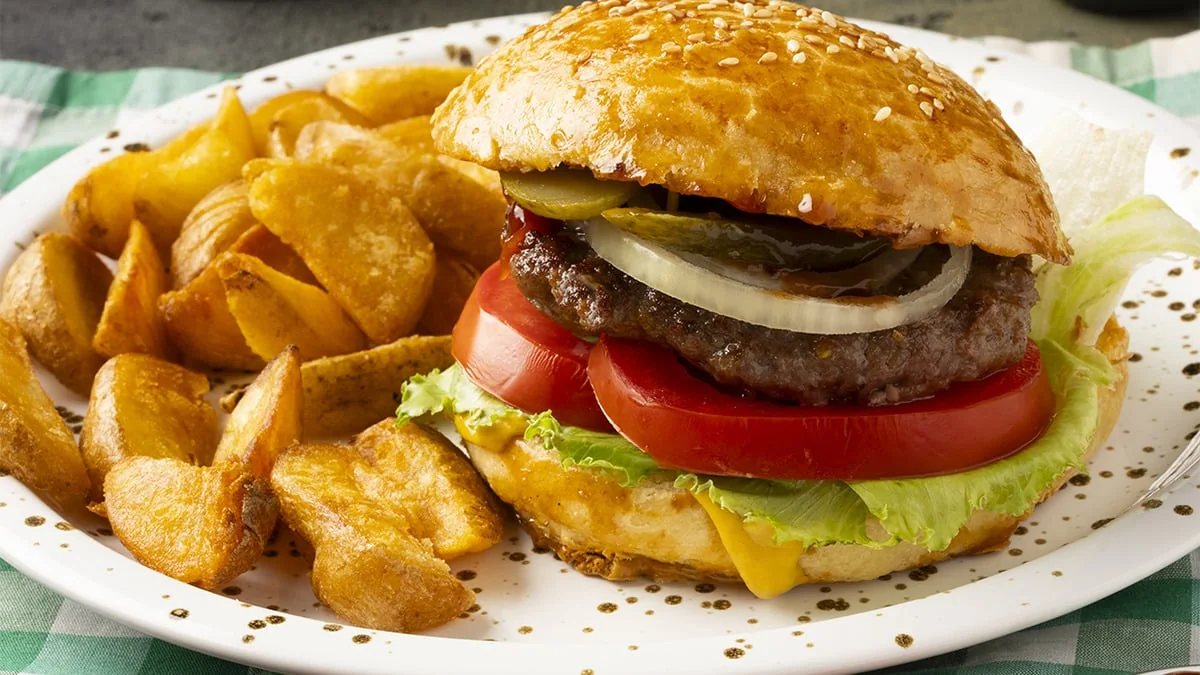
And the classic burger? A hamburger with cheddar is 640 kcal, and a side of coleslaw takes it to 820 kcal before any fries or drink are added. Each of these orders is one meal for one person.
What does 1,000 calories of home cooking look like?
Now the same budget spent on simple home-cooked plates:
- Three meals — 1,020 kcal, 71 g protein. Oats with yogurt and fruit for breakfast (390 kcal), a chicken salad with avocado for lunch (380 kcal) and a bowl of red lentil soup for dinner (250 kcal).
- Two big plates — 970 kcal, 98 g protein. A chicken quinoa power bowl (520 kcal) and grilled fish and vegetables (450 kcal).
- Three meals — 1,010 kcal, 71 g protein. A spinach omelette (300 kcal), a bowl of chili con carne (480 kcal) and yogurt with fruit (230 kcal).
That is the surprising part: 1,000 kcal is roughly one takeaway order or two to three home-cooked meals. The home combinations also carry more protein, 71 to 98 g against 50 to 61 g for the takeaway orders.
Notice also how much of the home plates is vegetables, legumes and yogurt. The lentil soup, the salad greens and the vegetables beside the fish add fibre and volume for relatively few calories, and the WHO recommends at least 400 g of fruit and vegetables a day for adults. A takeaway order can get there too, but usually only when you add the salad yourself.
How do they compare side by side?
| Dish | kcal | Protein | Carbs | Fat |
|---|---|---|---|---|
| Hamburger | 640 | 34 g | 46 g | 34 g |
| Iskender Kebab | 720 | 40 g | 48 g | 40 g |
| Chicken quinoa power bowl | 520 | 50 g | 45 g | 14 g |
| Grilled fish and vegetables | 450 | 48 g | 24 g | 18 g |
| 1,000 kcal option | Meals | kcal | Protein |
|---|---|---|---|
| Pizza and Caesar salad | 1 | 1,040 | 61 g |
| Pad thai and gyoza | 1 | 960 | 50 g |
| Chicken tacos and quesadilla | 1 | 1,000 | 60 g |
| Iskender, cacık and salad | 1 | 1,000 | 50 g |
| Oats, chicken salad, lentil soup | 3 | 1,020 | 71 g |
| Chicken quinoa bowl, grilled fish | 2 | 970 | 98 g |
| Spinach omelette, chili, yogurt and fruit | 3 | 1,010 | 71 g |
Why does takeaway reach 1,000 calories so fast?
It is not about where the food is cooked. It is about what it is built from. Fat provides 9 kcal per gram, while protein and carbohydrates provide 4 kcal, so dishes rich in butter, cheese, oil or fatty meat reach high totals in a small space. A few examples from the comparison above:
- Iskender: 40 g of fat is about 360 kcal, half of its 720 kcal, mostly from döner meat and butter.
- Hamburger: 34 g of fat is about 306 kcal, close to half of 640 kcal.
- Grilled fish and vegetables: 18 g of fat is about 162 kcal, roughly a third of 450 kcal, with 48 g of protein and a plate full of vegetables.
Takeaway dishes also tend to be built on dense bases such as pizza dough, noodles, tortillas and bread, and they rarely come with much vegetable volume. Home meals like the ones above lean on lean protein, legumes and vegetables, which take up more room on the plate for each calorie.
The reverse is true as well. Home-cooked lasagna and mac and cheese are 620 kcal each in our catalog, right in takeaway territory. Our article on what 500 calories looks like shows the same effect at a single-meal level.
Does this mean you should never order takeaway?
No. Takeaway is part of normal life, and a 1,000 kcal dinner fits into a week of eating as long as your overall intake matches your goals. A few simple moves make orders lighter without giving up the food you like:
- Share the second dish. Splitting the gyoza or the quesadilla saves roughly 190 to 260 kcal.
- Add a salad instead of a second main. A shepherd's salad is 160 kcal; a quesadilla is 520 kcal.
- Look for grilled protein. Chicken shish is 380 kcal with 46 g of protein in our estimates.
- Save half for tomorrow. Many takeaway portions split easily into two meals.
Our guides to calorie-smart Asian takeaway and eating out while losing weight have more ordering ideas. If you log your order in Sporty with a photo, you get an estimate of calories and protein in seconds.
What should you keep in mind about these numbers?
- Catalog values are per-serving estimates. Restaurant portions, extra sauce and drinks can change the total a lot.
- Your daily needs depend on your size, age and activity. For many adults, 1,000 kcal is about half a day; for others it is less or more.
- Weight follows your intake across days and weeks, not one meal.
- If you are trying to lose weight, do not go below about 1,200 kcal a day for women or 1,500 kcal for men without medical supervision. Talk to a doctor or registered dietitian if you are pregnant, under 18, have a medical condition or a history of disordered eating.
Frequently asked questions
What does 1,000 calories of food look like?
In our estimates it is a pizza with a Caesar salad, or pad thai with gyoza, or three simple home meals such as oats with yogurt, a chicken salad and lentil soup.
Is a 1,000 calorie meal too much?
Not necessarily. For many adults it is about half a day's energy. What matters for weight is your intake across days and weeks, not one meal.
Why are takeaway meals so high in calories?
They are often built on dense bases such as dough, noodles and tortillas, with cheese, butter or oil. Fat has 9 kcal per gram, more than twice protein or carbohydrates.
How can I make a takeaway order lighter?
Share the second dish, add a salad instead of another main, pick grilled protein or save half for the next day.
Was this article helpful?
No ratings yet — be the first.
Tap a star to rate it — your rating helps us improve and helps other readers.
Sources
This article is general information, not medical advice. If you have a health condition, are pregnant or under 18, talk to a doctor or registered dietitian before changing your diet.