
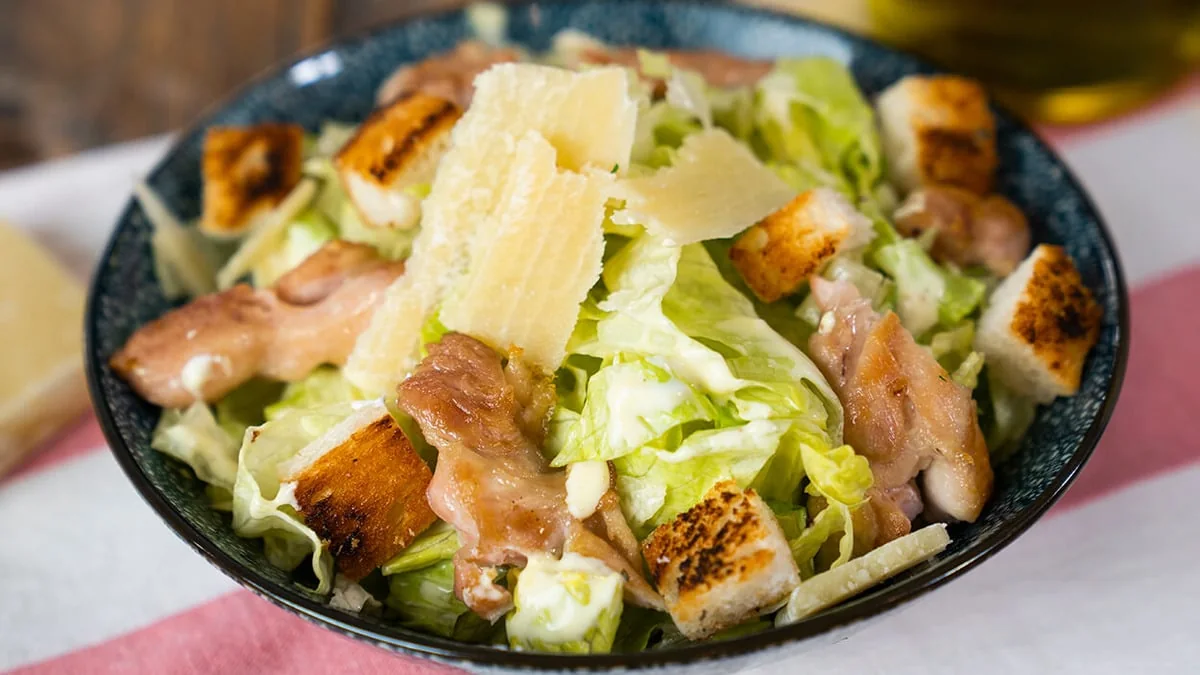
Eight plates of about 500 kcal can look completely different. In Sporty's catalog, a tuna salad at 480 kcal has 52 g of protein, while a mushroom risotto at the same 480 kcal has 12 g. Fat-rich plates like lamb tandır look small; salads and bowls built on lean protein and greens look big.
Key takeaways
- Eight catalog plates between 480 and 520 kcal range from 12 g to 52 g of protein.
- Tuna salad gives 10.8 g of protein per 100 kcal, mushroom risotto 2.5 g.
- Two tablespoons of olive oil are about 240 kcal, roughly half a 480 kcal moussaka.
- Chicken shish plus cacık makes exactly 500 kcal with 53 g of protein.
- No plate is good or bad; balance lower-protein meals across the day.
Do 500 calories always look the same?
No, and that is what makes the number so hard to picture. We took eight lunch and dinner dishes from our meal catalog that each land between 480 and 520 kcal per serving. On a calorie label they are practically twins. On the plate, they could hardly be more different: one is a big bowl of greens with tuna and egg, another is a modest piece of slow-roasted lamb, another a creamy bowl of risotto.
All numbers below are Sporty's per-serving estimates. Real values depend on the recipe, the amount of oil and the portion you are served, so treat them as a guide, not a lab result. And none of these plates is "better" or "worse" than another; they simply spend the same 500 kcal in different ways.
What do the 8 plates contain?
- Tuna salad and yogurt — 480 kcal, 52 g protein. 160 g of tuna, Mediterranean greens, a boiled egg, olive oil and lemon. The most protein of the eight, on a plate that looks large because most of it is leaves.
- Chicken quinoa power bowl — 520 kcal, 50 g protein. 160 g of shredded chicken over quinoa with arugula, corn and avocado. Almost as much protein as the tuna salad, with 45 g of carbohydrates on top.
- Slow-roasted lamb (kuzu tandır) — 520 kcal, 44 g protein. 220 g of lamb shoulder with garlic, thyme and a green salad. Only 4 g of carbohydrates, but 37 g of fat, so the portion of meat is smaller than many people expect for 500 kcal.
- Chicken Caesar salad — 480 kcal, 38 g protein. 150 g of grilled chicken, romaine, 30 g of croutons, parmesan and dressing. The dressing and croutons are where most of its 28 g of fat comes from.
- Shrimp noodles — 500 kcal, 28 g protein. 80 g of dry wheat noodles, 120 g of shrimp, bok choy, carrot and one tablespoon of sesame oil. Exactly 500 kcal, with 64 g of carbohydrates.
- Lentil soup and bulgur salad — 510 kcal, 24 g protein. A bowl of red lentil soup plus a herb bulgur salad. Two dishes on the table, 82 g of carbohydrates and the lowest fat of the eight at 10 g.
- Eggplant moussaka — 480 kcal, 22 g protein. One eggplant, 100 g of ground beef, onion, tomato, pepper and two tablespoons of olive oil. Those two tablespoons alone are roughly 240 kcal, about half the plate (USDA FoodData Central lists olive oil at about 120 kcal per tablespoon).
- Mushroom risotto — 480 kcal, 12 g protein. 80 g of arborio rice, 150 g of mushrooms, stock, parmesan and butter. Comforting and rich, with the least protein in the group.
Which 500-calorie plate has the most protein?
The spread is the surprising part. At the same calorie level, protein ranges from 12 g to 52 g, more than four times as much. A simple way to compare is protein per 100 kcal:
| Plate | kcal | Protein | Protein per 100 kcal |
|---|---|---|---|
| Tuna salad and yogurt | 480 | 52 g | 10.8 g |
| Chicken quinoa bowl | 520 | 50 g | 9.6 g |
| Slow-roasted lamb | 520 | 44 g | 8.5 g |
| Chicken Caesar salad | 480 | 38 g | 7.9 g |
| Shrimp noodles | 500 | 28 g | 5.6 g |
| Lentil soup and bulgur salad | 510 | 24 g | 4.7 g |
| Eggplant moussaka | 480 | 22 g | 4.6 g |
| Mushroom risotto | 480 | 12 g | 2.5 g |
Protein provides 4 kcal per gram, so the 52 g in the tuna salad accounts for about 208 kcal, roughly 43 % of the plate. In the risotto, 12 g of protein is only 48 kcal, about 10 %. The 10–35 % range for protein applies to the whole day, not to each plate, so a lower-protein meal is fine when other meals make up for it. How much you need in total depends on your weight and activity, which our guide on how much protein per day explains.
Where do the calories come from on each plate?
The same 500 kcal is built from very different ingredients. Fat provides 9 kcal per gram, carbohydrates and protein 4 kcal, so a few grams of fat move the total far more than the same weight of vegetables. Here are the four most different plates side by side:
| Dish | kcal | Protein | Carbs | Fat |
|---|---|---|---|---|
| Tuna salad and yogurt | 480 | 52 g | 28 g | 18 g |
| Slow-Roasted Lamb | 520 | 44 g | 4 g | 37 g |
| Lentil soup and bulgur salad | 510 | 24 g | 82 g | 10 g |
| Mushroom Risotto | 480 | 12 g | 66 g | 17 g |
- Fat-led plates: the lamb (37 g fat, about 333 kcal) and the moussaka (33 g fat, about 297 kcal) get roughly 60 % of their energy from fat. That is why these portions look compact.
- Carbohydrate-led plates: the lentil soup and bulgur salad (82 g carbs, about 328 kcal) and the risotto (66 g carbs, about 264 kcal) get more than half their energy from carbohydrates.
- Protein-led plates: the tuna salad and the chicken quinoa bowl put the biggest share into protein, and fill the rest of the plate with greens and grains.
Which 500-calorie plates keep you full longest?
Fullness is personal, but two features tend to help: protein and volume. The tuna salad, chicken quinoa bowl and Caesar salad combine a lot of protein with a lot of leaves, so they look big and eat slowly. The lentil soup and bulgur salad is lower in protein but brings legumes, whole grain and a full bowl of soup, which many people find very filling. The lamb and moussaka are rich and satisfying in flavour, but the plate itself is smaller.
None of this means you should avoid risotto or moussaka. If you enjoy them, a practical move is to pair them with something that adds protein or volume elsewhere in the day, such as yogurt, eggs or a bigger salad at another meal.
Can you build your own 500-calorie plate?
Yes, and simple catalog combinations show how. A chicken shish (380 kcal, 46 g protein) with a bowl of cacık (120 kcal, 7 g protein) comes to exactly 500 kcal and 53 g of protein, more than any single dish above. The pattern is the same one the protein leaders use: a lean protein, plenty of vegetables or yogurt, and measured oil.
If you are standing in front of your fridge with 500 kcal left for the day, our guide on what to eat with 500 calories left walks through a plate template, macro split and restaurant tips. If you would rather not do the maths, you can photograph your plate in Sporty to get an estimate of calories and protein.
What should you keep in mind about these numbers?
- Catalog numbers are per-serving estimates. A restaurant portion, extra oil or a second helping of bread can change the total a lot.
- One meal is not the whole picture. What matters for weight is your intake across the day and the week.
- 500 kcal is a common size for a main meal, not a rule. Your own needs depend on your body size, age and activity.
- If your daily target leaves very little room for meals, it may be too low: intakes below about 1,200 kcal for women or 1,500 kcal for men should only be followed under medical supervision. Talk to a doctor or registered dietitian if you are pregnant, have a medical condition or a history of disordered eating.
Frequently asked questions
What does a 500 calorie meal look like?
It depends on what it is made of. A tuna salad with greens and egg (480 kcal) fills a large bowl, while slow-roasted lamb (520 kcal) is a compact portion because fat has 9 kcal per gram.
Which 500 calorie meal has the most protein?
Of the eight plates here, tuna salad and yogurt has the most, about 52 g at 480 kcal in Sporty's estimates. Chicken shish with cacık reaches 53 g at exactly 500 kcal.
Is a 500 calorie meal enough?
For many adults a 500 kcal main meal is a common size, but needs depend on body size, age and activity. Your total for the day and week matters more than one plate.
Why are some 500 calorie portions so small?
Fat provides 9 kcal per gram versus 4 kcal for protein and carbohydrates. Dishes with more oil, butter or fatty meat reach 500 kcal with less food on the plate.
Sources
This article is general information, not medical advice. If you have a health condition, are pregnant or under 18, talk to a doctor or registered dietitian before changing your diet.