

A high-protein diet helps weight loss mainly by keeping you fuller and protecting muscle while you eat less. In a meta-analysis of 24 trials with equal calories, higher-protein diets led to about 0.9 kg more fat loss and 0.4 kg more lean mass kept. It improves a calorie deficit; it does not replace it.
Key takeaways
- High-protein weight-loss plans usually aim for about 1.4–2.0 g per kg a day, within 10–35% of calories.
- With calories matched, higher protein led to modestly more fat loss and less loss of lean mass.
- Protein's biggest practical benefit is fullness, which makes a deficit easier to keep.
- Build each meal around a protein food and swap, rather than add, to keep calories in check.
- People with kidney disease should check with a doctor before increasing protein.
What counts as a high-protein diet?
There is no single official definition. In practice, a "high-protein" weight-loss diet means eating noticeably more protein than the minimum, usually toward the upper part of the healthy range, while keeping total calories in a deficit.
The reference points that matter:
- The minimum. The Recommended Dietary Allowance for adults is 0.8 g per kg of body weight a day. EFSA's population reference intake for European adults is very similar, at 0.83 g/kg.
- The healthy range. The US National Academies set an acceptable range of 10–35% of daily calories from protein.
- For people who exercise. The International Society of Sports Nutrition (ISSN) considers 1.4–2.0 g/kg a day sufficient for most exercising people to build and maintain muscle.
Here is what those numbers mean for a 70 kg adult eating about 1,700 kcal a day:
| Reference | Calculation | Protein per day |
|---|---|---|
| RDA | 0.8 g × 70 kg | 56 g |
| ISSN, lower end | 1.4 g × 70 kg | 98 g |
| ISSN, upper end | 2.0 g × 70 kg | 140 g |
| 25% of 1,700 kcal | 425 kcal ÷ 4 kcal per gram | ≈ 106 g |
| 35% of 1,700 kcal (top of range) | 595 kcal ÷ 4 kcal per gram | ≈ 149 g |
So a high-protein plan for this person typically lands somewhere around 100–140 g a day, which is still inside the acceptable range. Our article on how much protein you need per day covers the full calculation, and the calculator below does it for you.
0.8 g/kg is the adult RDA; 1.4–2.0 g/kg is the ISSN range for people who exercise. Kidney disease needs medical advice.
What does the research show?
The most useful evidence comes from trials that compared diets with the same calories but different amounts of protein, because that isolates the effect of protein itself. A 2012 meta-analysis in the American Journal of Clinical Nutrition pooled 24 such randomised trials with 1,063 adults, lasting about 12 weeks on average. Compared with standard-protein diets, the higher-protein diets led to:
- about 0.8 kg more weight loss and 0.9 kg more fat loss;
- about 0.4 kg more fat-free mass kept, which includes muscle;
- a smaller drop in resting energy expenditure, by roughly 140 kcal a day;
- greater fullness in 3 of the 5 studies that measured it.
The authors described these benefits as modest, and that is the right way to read them. A high-protein diet does not replace the calorie deficit; it helps the deficit go better. You lose a little more fat, keep a little more muscle, and many people find it easier to stay full.
Why does more protein help during a diet?
It helps you feel full
Protein-rich meals tend to keep hunger at bay, as several of the trials above reported. When you are eating less than you burn, that matters more than almost anything else, because hunger is the most common reason people abandon a plan.
It protects muscle
In a deficit the body can draw on muscle as well as fat. Enough protein, together with resistance training, limits that loss. The ISSN notes that lean, resistance-trained people in a calorie deficit may need even more, around 2.3–3.1 g/kg, to keep as much muscle as possible. For most people trying to lose weight, the 1.4–2.0 g/kg range is plenty. See body recomposition for how training and protein work together.
It softens the slowdown in energy use
As you lose weight, your body uses less energy. The meta-analysis found that this drop was smaller on higher-protein diets. It is not a large effect, but over months it helps keep your deficit from shrinking quite as quickly.
What does a high-protein day look like?
Here is a day of about 1,700 kcal built from dishes in our meal catalog. The numbers are Sporty's per-serving estimates; real values depend on recipe and portion.
| Meal | Dish | Calories | Protein |
|---|---|---|---|
| Breakfast | Oats, yogurt and fruit | 390 kcal | 22 g |
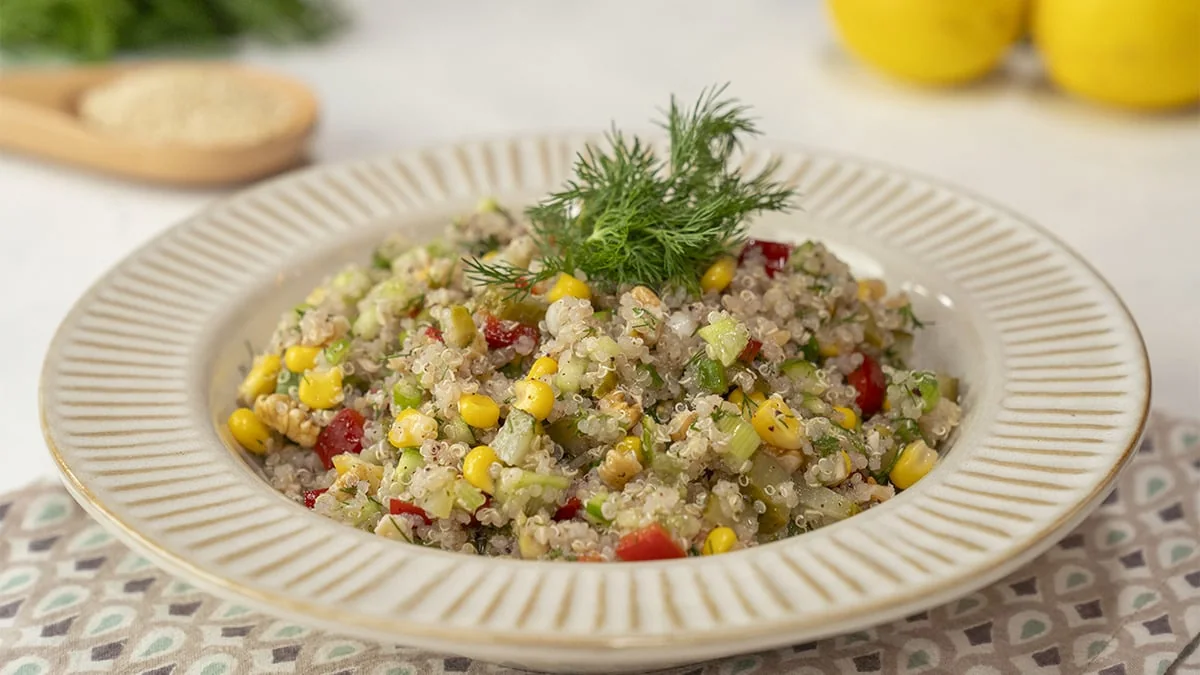
| Lunch | Chicken quinoa power bowl | 520 kcal | 50 g |
| Snack | Yogurt and fruit | 230 kcal | 16 g |
| Dinner | Chicken shish with shepherd's salad | 540 kcal | 49 g |
| Total | 1,680 kcal | 137 g |
That is about 2.0 g/kg for a 70 kg person, and protein provides roughly a third of the calories, within the 10–35% range. Notice there is nothing unusual on the list: yogurt, chicken, grains, salad and fruit. The trick is to make a protein food the centre of each meal rather than an afterthought.
A quick way to compare dishes is protein per 100 kcal. Chicken shish gives about 12 g per 100 kcal, the chicken quinoa bowl about 9.6 g, and a cottage cheese and walnut fruit bowl about 9.3 g. By comparison, mantı gives about 4.6 g and lahmacun about 4.7 g per 100 kcal. Those dishes still fit a plan; they simply make it harder to reach a high protein target within the same calories.
What are the common mistakes?
- Adding protein on top instead of swapping. A shake or bar added to an unchanged day raises calories. Use protein foods to replace something, not to pile on.
- Choosing protein that comes with a lot of fat. Eggs with sucuk have 24 g of protein but 450 kcal, about 5.3 g per 100 kcal, less than half the protein density of chicken shish.
- Forgetting plant protein and fibre. Lentils, chickpeas and beans add both. Our guide to budget-friendly high-protein foods lists affordable options.
- Skipping strength training. Protein protects muscle best when the muscle is being used.
- Believing the myths. Extra protein does not turn straight into muscle, and claims such as "you can only use 30 g at a time" are more nuanced than they sound. We checked these claims in 6 protein myths.
Who should be careful?
For healthy adults, intakes within the ranges above are widely used. If you have kidney disease, are pregnant or breastfeeding, are under 18, or have a history of disordered eating, talk to a doctor or registered dietitian before raising your protein intake or starting a diet. As always, women should not go below about 1,200 kcal a day, and men below about 1,500 kcal, without medical supervision.
Turkish cooking makes this easier than it sounds: grilled chicken and köfte, yogurt, lor, eggs, lentils and chickpeas are already everyday foods. Most of the time you do not need new products; making the protein part of familiar meals a little bigger and the bread or pilaf a little smaller is enough.
Sporty shows your protein next to your calories for every meal you log, so you can see at a glance whether a day is on track for both.
Frequently asked questions
How much protein should I eat to lose weight?
Many people aim for about 1.4–2.0 g per kg of body weight a day, which the ISSN considers sufficient for most exercising people. That is roughly 100–140 g for a 70 kg adult.
Can you lose weight just by eating more protein?
Not on its own. Weight loss still needs a calorie deficit. Protein makes the deficit easier to keep and helps protect muscle, but extra protein on top of your usual food adds calories.
Is a high-protein diet safe?
For healthy adults, intakes within the 10–35% of calories range are widely used. People with kidney disease, and anyone pregnant or under 18, should get advice from a doctor or dietitian first.
Do I need protein shakes?
No. Food such as chicken, fish, eggs, yogurt, cottage cheese and legumes can cover your target. A shake is simply a convenient option when it replaces something else.
Was this article helpful?
No ratings yet — be the first.
Tap a star to rate it — your rating helps us improve and helps other readers.
Sources
This article is general information, not medical advice. If you have a health condition, are pregnant or under 18, talk to a doctor or registered dietitian before changing your diet.