
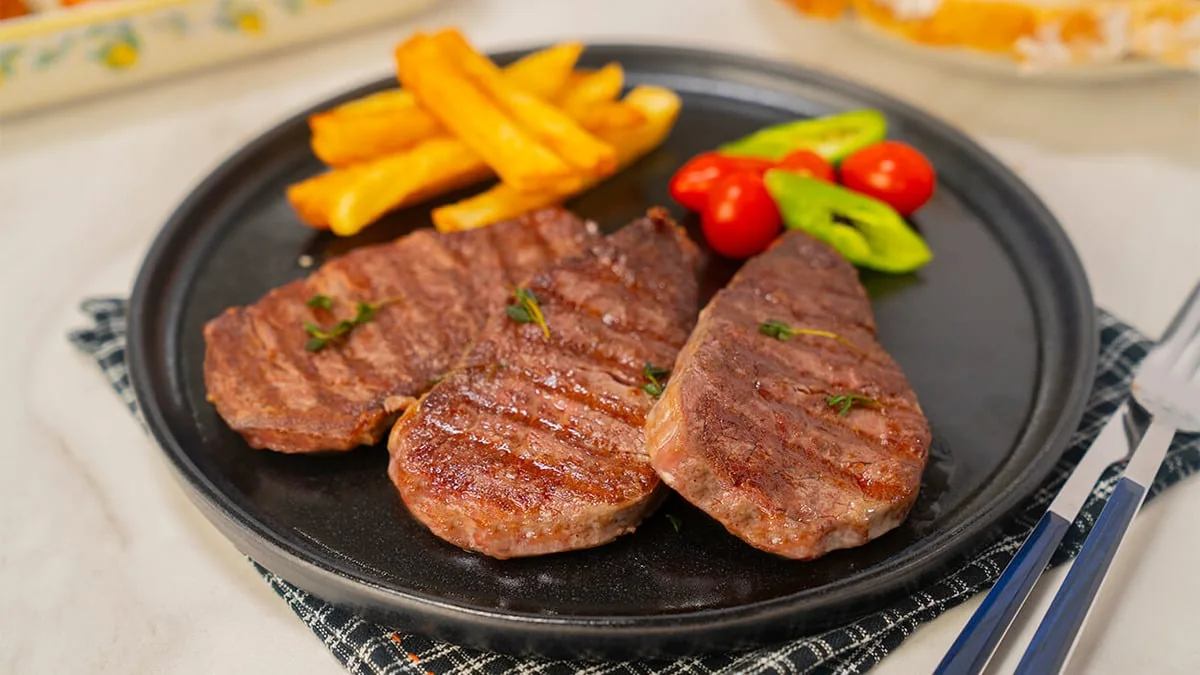
Body recomposition means losing fat while keeping or gaining muscle. It works best with a small calorie deficit of about 250–500 kcal or eating near maintenance, 1.4–2.0 g of protein per kg a day spread over meals, and regular strength training. Because muscle can offset fat loss, track your waist and strength, not just the scale.
Key takeaways
- Recomposition targets body composition, so the scale can move slowly while fat goes down.
- A small deficit of about 250–500 kcal, or eating near maintenance, protects muscle better than a large one.
- The ISSN recommends 1.4–2.0 g protein per kg for exercising people; 112–160 g a day at 80 kg.
- Regular strength training is what gives your body a reason to keep and build muscle.
- Judge progress on waist, strength and photos over 2–4 weeks, not daily weight.
What is body recomposition?
Body recomposition means changing what your body is made of rather than only what it weighs: losing fat while keeping or gaining muscle at the same time. Because fat goes down while muscle stays the same or goes up, the scale can move slowly, or barely at all, even while your waist gets smaller and you get stronger.
That makes recomposition a different goal from classic weight loss. The priority is not the fastest drop on the scale but keeping the muscle you have, and ideally adding some, while body fat slowly falls. Nutrition does most of the work on the fat side; regular strength training gives the body a reason to keep and build muscle.
Who can realistically recompose?
Recomposition tends to be most noticeable in people who are new to strength training, people returning after a long break and people with more body fat to lose. For them, a training stimulus combined with enough protein can support muscle gain even with a modest calorie deficit. Lean, experienced lifters usually see much slower changes and often alternate between dedicated phases of gaining and losing instead.
Results also depend on age, sleep, stress and consistency, so no one can promise a specific amount of fat lost or muscle gained in a given time. What you can control is the setup: calories, protein and regular training.
How many calories should you eat for recomposition?
The usual approach is a small calorie deficit or eating close to maintenance. Start by estimating your maintenance calories (TDEE) with the Mifflin-St Jeor equation multiplied by an activity factor; what your maintenance number means explains the steps.
| Example | Resting energy (Mifflin-St Jeor) | Maintenance at 1.55 | Small deficit (250–500 kcal) |
|---|---|---|---|
| Man, 30 years, 80 kg, 180 cm | 1,780 kcal | ≈ 2,760 kcal | ≈ 2,260–2,510 kcal |
| Woman, 30 years, 65 kg, 165 cm | ≈ 1,370 kcal | ≈ 2,120 kcal | ≈ 1,620–1,870 kcal |
Using the rough rule that 1 kg of body fat holds about 7,700 kcal (an approximation, not an exact figure), a 500 kcal daily deficit corresponds to about 0.45 kg of fat a week and a 250 kcal deficit to about 0.23 kg. For recomposition, the slower end is often the better fit: a large deficit makes it harder to keep muscle and to train well. Whatever the goal, do not go below about 1,200 kcal (women) or 1,500 kcal (men) a day without medical supervision.
How much protein do you need to keep and build muscle?
Protein is the nutrient that matters most here. The RDA of 0.8 g per kg of body weight is a minimum for healthy adults, not a target for building muscle. The International Society of Sports Nutrition (ISSN) position stand says 1.4–2.0 g per kg a day is sufficient for most exercising people. For resistance-trained people eating in a calorie deficit, it notes that higher intakes of 2.3–3.1 g per kg may be needed to maximise retention of lean mass.
- 80 kg: 1.4–2.0 g/kg is 112–160 g of protein a day.
- 65 kg: 1.4–2.0 g/kg is 91–130 g a day.
Spread it across meals. The ISSN gives a general guide of about 0.25 g per kg per meal, or 20–40 g, and notes that strength training and protein work together to stimulate muscle protein synthesis. Four meals of about 30–40 g each cover most targets. At 4 kcal per gram, 156 g of protein is 624 kcal, about 27% of a 2,320 kcal day, well inside the 10–35% range for protein. More detail is in how much protein you need per day.
Find your own range with the calculator:
Daily protein calculator
0.8 g/kg is the adult RDA; 1.4–2.0 g/kg is the ISSN range for people who exercise. Kidney disease needs medical advice.
Which meals make high protein easier?
When calories are limited, dishes with a lot of protein per calorie make the target much easier. Sporty's per-serving estimates (real values depend on recipe and portion):
| Dish | kcal | Protein | Protein per 100 kcal |
|---|---|---|---|
| Chicken shish | 380 | 46 g | 12.1 g |
| Poached chicken with vegetables | 340 | 40 g | 11.8 g |
| Tuna salad and yogurt | 480 | 52 g | 10.8 g |
| Grilled fish and vegetables | 450 | 48 g | 10.7 g |
| Protein shake | 300 | 30 g | 10.0 g |
| Grilled sirloin steak and asparagus | 580 | 54 g | 9.3 g |
| Cottage cheese and walnut fruit bowl | 280 | 26 g | 9.3 g |
| Grilled chicken, bulgur and cacık | 640 | 58 g | 9.1 g |
A chicken shish plate is one of the easiest ways to get a large protein serving for under 400 kcal.
What does a recomposition day look like?
An example for the 80 kg man above, aiming for about 2,300 kcal and 150–160 g of protein:
| Meal | Dish | kcal | Protein |
|---|---|---|---|
| Breakfast | Oats, yogurt and fruit | 390 | 22 g |
| Lunch | Grilled chicken, bulgur and cacık | 640 | 58 g |
| Snack | Hummus and raw vegetables | 260 | 11 g |
| Dinner | Grilled sirloin steak and asparagus, bulgur pilaf, shepherd's salad | 1,030 | 65 g |
| Total | 2,320 | 156 g |
That is about 1.95 g of protein per kg, with carbohydrates from oats, bulgur and vegetables to fuel training. A smaller person would scale the portions down, for example by swapping the steak dinner for grilled fish and vegetables. After a training session, a normal meal like the lunch above works as the recovery meal; see what to eat after a workout.
What role does training play?
Food alone cannot build muscle. Recomposition relies on regular strength training that works the major muscle groups and gets gradually more challenging over time, for example by adding weight or repetitions. The exact programme matters less than doing it consistently for months. If you are new to it, a qualified trainer can help you learn safe technique. Everyday movement and steps still help with energy balance, but they are a complement to, not a replacement for, strength work.
How do you know recomposition is working?
Because the scale can stay flat, judge progress on several signals over two to four weeks rather than on daily weigh-ins:
- waist measurement going down while weight changes little;
- clothes fitting differently;
- steady progress in the weights or repetitions you can lift;
- photos in the same light and position every few weeks.
Daily weight also moves with water and food in the gut, as explained in water weight vs fat loss. Sporty logs meals from a photo and shows calories and protein together, which makes it easier to check that intake matches the plan before you change anything.
Who should get individual advice?
This is general information, not medical advice. If you have kidney disease, are pregnant or breastfeeding, are under 18, have a medical condition or a history of disordered eating, talk to a doctor or registered dietitian before raising protein or starting a calorie deficit.
Frequently asked questions
Can you lose fat and gain muscle at the same time?
Yes, especially if you are new to strength training, returning after a break or have more body fat to lose. It needs enough protein, a small deficit or maintenance calories and regular strength training.
How much protein do I need for body recomposition?
The ISSN says 1.4–2.0 g per kg a day suits most exercising people, and notes that resistance-trained people in a deficit may need more, up to 2.3–3.1 g per kg. At 80 kg, 1.4–2.0 g/kg is 112–160 g a day.
Should I eat in a deficit or at maintenance?
If you have fat to lose, a small deficit of about 250–500 kcal a day is a common choice. Leaner, experienced lifters often do better near maintenance, accepting slower changes.
Why is my weight not changing during recomposition?
Muscle gain can offset fat loss, and water also moves the scale day to day. Check waist measurement, strength progress and photos over two to four weeks.
Sources
This article is general information, not medical advice. If you have a health condition, are pregnant or under 18, talk to a doctor or registered dietitian before changing your diet.