

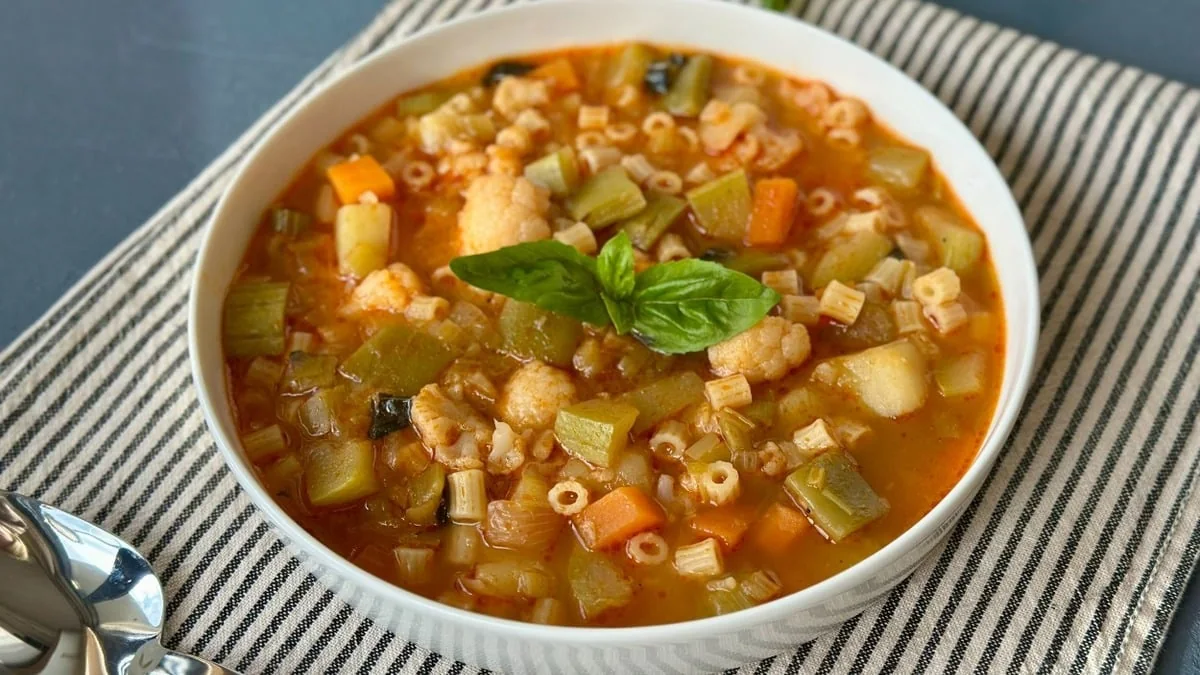
Most Italian mains sit between about 480 and 620 kcal in Sporty's estimates, so sauce, oil, cheese and portion size decide the total. Minestrone is about 260 kcal, tuna pasta 540 kcal with 32 g of protein, and lasagna 620 kcal. Tomato sauces, a vegetable starter and sharing pizza keep meals lighter.
Key takeaways
- Pasta, risotto and pizza mains land around 480–620 kcal per serving in Sporty's estimates.
- Protein varies more than calories: tuna pasta has 32 g, mushroom risotto 12 g for similar energy.
- Olive oil and cheese add up fast because fat has 9 kcal per gram; a tablespoon of oil is about 120 kcal.
- Minestrone plus tuna pasta is about 800 kcal with 42 g of protein; bruschetta plus lasagna is 880 kcal with 38 g.
- Tomato sauces, a vegetable starter, a shared pizza and a side salad are the easiest lighter choices.
Can Italian food fit into a weight-loss plan?
Yes. Italian cooking is built on tomatoes, vegetables, beans, olive oil, fish and grains, and many of its classic dishes are moderate in calories. The same kitchen also gives us lasagna, creamy risotto and pizza with extra cheese. The gap between a light and a heavy Italian meal is rarely one ingredient. It is usually the sauce, the amount of oil and cheese, the size of the pasta portion and what arrives before and after the main course.
The numbers in this guide are Sporty's per-serving estimates for popular Italian dishes. Real values depend on the recipe, the restaurant and the portion, so use them as a realistic starting point rather than exact figures.
How do popular Italian dishes compare?
Here are six common choices side by side, from a vegetable soup to a baked pasta:
| Dish | kcal | Protein | Carbs | Fat |
|---|---|---|---|---|
| Minestrone | 260 | 10 g | 42 g | 6 g |
| Caprese Salad | 320 | 16 g | 8 g | 25 g |
| Tuna Pasta | 540 | 32 g | 70 g | 14 g |
| Mushroom Risotto | 480 | 12 g | 66 g | 17 g |
| Margherita Pizza | 560 | 23 g | 72 g | 20 g |
| Lasagna | 620 | 32 g | 52 g | 30 g |
A wider look at the menu, sorted by calories, with protein per 100 kcal as a simple hint of how filling a dish may be:
| Dish | Calories | Protein | Fat | Protein per 100 kcal |
|---|---|---|---|---|
| Minestrone | 260 kcal | 10 g | 6 g | 3.8 g |
| Bruschetta | 260 kcal | 6 g | 11 g | 2.3 g |
| Caprese salad | 320 kcal | 16 g | 25 g | 5.0 g |
| Vegetable frittata | 340 kcal | 22 g | 23 g | 6.5 g |
| Mushroom risotto | 480 kcal | 12 g | 17 g | 2.5 g |
| Potato gnocchi | 480 kcal | 12 g | 15 g | 2.5 g |
| Tuna pasta | 540 kcal | 32 g | 14 g | 5.9 g |
| Pesto pasta | 560 kcal | 17 g | 25 g | 3.0 g |
| Shrimp pasta | 560 kcal | 30 g | 17 g | 5.4 g |
| Margherita pizza | 560 kcal | 23 g | 20 g | 4.1 g |
| Spaghetti bolognese | 620 kcal | 32 g | 20 g | 5.2 g |
| Lasagna | 620 kcal | 32 g | 30 g | 5.2 g |
Three things stand out. First, most pasta, risotto and pizza mains sit between about 480 and 620 kcal, so no single dish breaks a plan on its own. Second, protein varies much more than calories: tuna pasta brings 32 g, while mushroom risotto and gnocchi bring 12 g for a similar amount of energy. Third, the lightest dishes are the soups, salads and egg dishes, which work well as a starter or as a lighter main.
Where do the calories in Italian food come from?
Three things explain most of the difference between a lighter and a heavier plate.
Olive oil and cheese
Fat provides 9 kcal per gram, against 4 kcal for protein and carbohydrate. That is why one tablespoon of olive oil adds roughly 120 kcal, and why caprese salad, made from tomato, mozzarella and oil, gets about 70% of its 320 kcal from fat (25 g × 9 = 225 kcal). In lasagna, 30 g of fat from cheese, béchamel and meat supplies about 270 kcal, or around 44% of the dish. Olive oil is mostly unsaturated fat and a normal part of a healthy diet; the point is simply that a generous pour counts.
The sauce: tomato, cream or pesto
Tomato-based sauces such as marinara, arrabbiata or a simple ragù are usually lighter than sauces built on cream, butter or cheese. Pesto is made from basil, pine nuts, cheese and oil, so it is full of flavour but energy-dense: pesto pasta in the catalog has 25 g of fat and 560 kcal, with only 17 g of protein. Tuna pasta lands at a similar calorie count with 14 g of fat and almost twice the protein.
The pasta, rice or dough portion
Pasta, risotto rice, gnocchi and pizza dough supply most of the carbohydrate. Margherita pizza's 72 g of carbs provide about 288 kcal, roughly half the pizza. Restaurant pasta portions are often larger than a home portion, so the size of the plate matters as much as the recipe. The guide to lighter pasta meals explains how to weigh and log pasta at home.
How do lighter and heavier Italian meals compare?
An Italian meal is often more than one dish. Here is how typical combinations add up from the same catalog estimates:
| Meal | Calories | Protein |
|---|---|---|
| Bruschetta + lasagna | 880 kcal | 38 g |
| Caprese salad + margherita pizza | 880 kcal | 39 g |
| Minestrone + tuna pasta | 800 kcal | 42 g |
| Caprese salad + half a margherita pizza | 600 kcal | 28 g |
| Minestrone + vegetable frittata | 600 kcal | 32 g |
Starting with a vegetable soup instead of a bread-based starter, and sharing a pizza with a salad on the side, brings the total down without leaving the cuisine. The lighter meals are not lower in protein either: minestrone with tuna pasta has the most protein of the five.
What are smart picks on an Italian menu?
- Starters. Minestrone (about 260 kcal) or a green salad. Bruschetta is moderate at 260 kcal, but on top of a full main and a bread basket it is often where the total climbs.
- Pasta. Tomato-based sauces with fish, seafood, lean meat or beans. Tuna pasta (540 kcal, 32 g protein) and shrimp pasta (560 kcal, 30 g) offer more protein than pesto pasta or mushroom risotto. Spaghetti bolognese is about 620 kcal with 32 g of protein.
- Pizza. A simple margherita (560 kcal per serving in the catalog) leaves more room than pizzas loaded with extra cheese and cured meats. Sharing one and adding a salad works well; see the margherita pizza page.
- Main courses. Grilled fish, chicken or veal with vegetables are often the lightest full meals. Grilled fish and vegetables is about 450 kcal with 48 g of protein.
- Baked dishes. Lasagna and other baked pastas are rich; a smaller piece next to a large salad keeps them in the plan.
- Brunch. A vegetable frittata is about 340 kcal with 22 g of protein, a good fit for a late breakfast.
What simple habits make Italian meals lighter?
- Decide about the bread basket. Bread dipped in oil before the meal adds up quickly. Have a piece if you want it, then let the basket go.
- Choose tomato over cream. It is the single easiest swap on most menus.
- Control the finishing touches. Grated parmesan and a last drizzle of oil are often added at the table, so you can decide how much.
- Add vegetables. A side salad or grilled vegetables brings volume and fibre for few calories.
- Share or save half. Restaurant pasta and pizza portions are easy to split.
- Keep an eye on drinks. Alcohol provides 7 kcal per gram, so wine with dinner counts; water alongside helps.
If you log your meals, a photo is usually enough: Sporty can estimate a mixed plate such as pasta with salad from a picture, and you can adjust the portion afterwards. The Mediterranean diet guide has more dishes built on the same ingredients, and the restaurant guide covers ordering habits in any cuisine.
Does one big Italian dinner ruin a calorie deficit?
No. Weight change depends on your intake across weeks, not on a single evening. A rich dinner uses part of the week's deficit, so progress slows a little rather than stopping. There is no need to compensate by eating very little the next day: going below about 1,200 kcal a day for women or 1,500 kcal for men should only happen under medical supervision.
This article is general information, not medical advice. If you have a medical condition, are pregnant, under 18 or have a history of disordered eating, talk to a doctor or registered dietitian about what suits you.
Frequently asked questions
What is the lowest-calorie Italian dish?
Among the catalog dishes, minestrone and bruschetta are the lightest at about 260 kcal per serving. Minestrone also brings 10 g of protein and plenty of vegetables, which makes it a useful starter.
Is pizza or pasta lighter?
They are close. A margherita pizza serving is about 560 kcal and spaghetti bolognese about 620 kcal in Sporty's catalog. The toppings, sauce and portion size matter more than the choice between them.
Is pesto healthy when losing weight?
Pesto can fit, but it is energy-dense because it contains oil, nuts and cheese. Pesto pasta is about 560 kcal with 25 g of fat and only 17 g of protein, so a smaller portion with a protein side helps.
How many calories are in lasagna?
Sporty estimates a serving of lasagna at about 620 kcal with 32 g of protein and 30 g of fat. A smaller piece with a large salad is an easy way to keep it in your plan.
Was this article helpful?
No ratings yet — be the first.
Tap a star to rate it — your rating helps us improve and helps other readers.
Sources
This article is general information, not medical advice. If you have a health condition, are pregnant or under 18, talk to a doctor or registered dietitian before changing your diet.