
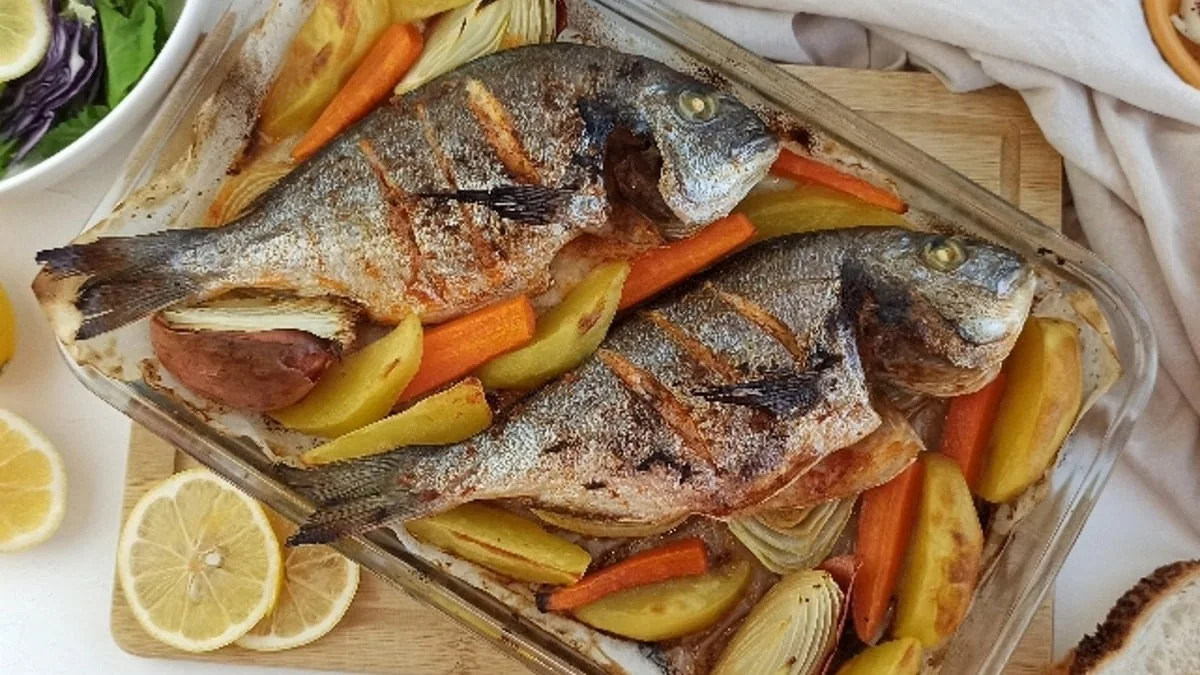
Most classic Mediterranean dishes are moderate in calories. In Sporty's estimates, gazpacho is about 170 kcal, Greek salad 290 kcal, baked sea bream 400 kcal with 42 g of protein and seafood paella 560 kcal. Olive oil and cheese add most of the energy, so portions of those matter more than the dish itself.
Key takeaways
- The Mediterranean diet is a flexible eating pattern built on vegetables, pulses, whole grains, olive oil and fish, not a fixed menu.
- Vegetable dishes, soups and dips mostly fall between about 170 and 320 kcal per serving (Sporty estimates).
- Fish dishes bring the protein: baked sea bream gives 42 g for about 400 kcal.
- Fat has 9 kcal per gram, so each extra 10 g of olive oil adds about 90 kcal.
- A full day of catalog dishes can come to about 1,770 kcal with 103 g of protein.
What is a Mediterranean diet, really?
The Mediterranean diet is not a fixed menu or a set of rules. It is a broad way of eating that grew out of the food traditions of countries around the Mediterranean Sea, from Italy, Greece and Spain to southern France, Turkey, Lebanon and the wider Levant. The details differ from kitchen to kitchen, but the same building blocks keep coming back: plenty of vegetables, fruit, pulses such as chickpeas, lentils and beans, whole grains, olive oil as the main cooking fat, fish and seafood, nuts and herbs, with smaller amounts of cheese, yogurt and meat.
That pattern lines up well with general international guidance. The WHO healthy diet fact sheet recommends at least 400 g of fruit and vegetables a day, says carbohydrates should come mainly from whole grains, vegetables, fruit and pulses, and states that unsaturated fats, such as those in fish, nuts and olive oil, are preferable to saturated fat. A Mediterranean-style plate makes those targets easy to reach without feeling like a diet.
What it does not do on its own is guarantee weight loss. Weight change still depends on your total energy intake over days and weeks. The good news is that many classic Mediterranean dishes are filling for their calories, which makes a moderate calorie deficit easier to live with.
How many calories do classic Mediterranean dishes have?
The numbers below are Sporty's per-serving estimates for well-known dishes from across the region. Real values depend on the recipe, the portion and especially how much olive oil goes in, so read them as a realistic guide rather than exact figures.
| Dish | Origin | Calories | Protein | Carbs | Fat |
|---|---|---|---|---|---|
| Gazpacho | Spain | 170 kcal | 3 g | 16 g | 11 g |
| Baba ganoush with cucumber | Levant | 180 kcal | 4 g | 12 g | 14 g |
| Ratatouille | France | 220 kcal | 5 g | 26 g | 12 g |
| Tabbouleh | Levant | 240 kcal | 6 g | 30 g | 11 g |
| Minestrone | Italy | 260 kcal | 10 g | 42 g | 6 g |
| Hummus and raw vegetables | Levant | 260 kcal | 11 g | 34 g | 10 g |
| Greek salad | Greece | 290 kcal | 9 g | 13 g | 23 g |
| Stuffed vine leaves | Turkey | 300 kcal | 5 g | 42 g | 13 g |
| Caprese salad | Italy | 320 kcal | 16 g | 8 g | 25 g |
| Baked sea bream | Region-wide | 400 kcal | 42 g | 12 g | 20 g |
| Mediterranean chickpea salad | Region-wide | 430 kcal | 19 g | 58 g | 14 g |
| Grilled fish and vegetables | Region-wide | 450 kcal | 48 g | 24 g | 18 g |
| Tuna pasta | Italy | 540 kcal | 32 g | 70 g | 14 g |
| Seafood paella | Spain | 560 kcal | 32 g | 66 g | 17 g |
Two things stand out. Vegetable dishes, soups and dips mostly sit between about 170 and 320 kcal, so they work well as starters, sides or light lunches. Fish dishes bring the protein: baked sea bream gives 42 g of protein for 400 kcal, and grilled fish with vegetables 48 g for 450 kcal. Pasta and rice dishes such as tuna pasta and paella are more energy-dense, but they are still complete meals with a fair amount of protein.
Where do the calories in Mediterranean food come from?
Mostly from olive oil, cheese, bread and the starch on the plate. Olive oil is a sensible everyday fat, but like every fat it has 9 kcal per gram, so every extra 10 g poured over a salad adds about 90 kcal. This is why some dishes that look light are not that low in calories. In a Greek salad, the 23 g of fat supply about 207 kcal, roughly 70% of the 290 kcal total. Caprese is similar: 25 g of fat, about 225 of its 320 kcal, mostly from mozzarella and oil.
None of this makes these dishes a problem. It just means the dressing and the cheese are where portions matter most. A few practical habits help:
- Measure the oil once in a while. Pour it into a spoon instead of straight from the bottle to see how much you really use.
- Treat feta, mozzarella and halloumi as flavour, not the base. A generous handful of tomatoes with a smaller piece of cheese keeps the taste.
- Watch the bread basket. Bread with dips is part of the tradition; deciding on one or two pieces up front is easier than counting later.
- Let pulses do the filling. Chickpeas, beans and lentils add protein and fibre for relatively few calories. The fibre guide explains why that helps with fullness.
What does a Mediterranean day of eating look like?
Here is one example day built only from catalog dishes. It is not a meal plan to copy, just a way to see how the numbers add up.
| Meal | Dish | Calories | Protein |
|---|---|---|---|
| Breakfast | Oats, yogurt and fruit | 390 kcal | 22 g |
| Lunch | Mediterranean chickpea salad | 430 kcal | 19 g |
| Snack | Hummus and raw vegetables | 260 kcal | 11 g |
| Dinner | Baked sea bream + Greek salad | 690 kcal | 51 g |
| Total | 1,770 kcal | 103 g |
For many adults that total is a reasonable level for gradual weight loss, but the right number depends on your size, age and activity. The guide to calories for weight loss shows how to estimate your own target. If you need more energy, a portion of whole-grain bread or a piece of fruit fills the gap; if you need less, swapping the Greek salad for a plain tomato and cucumber salad with a spoon of oil saves a good share of the calories. Please do not go below about 1,200 kcal a day for women or 1,500 kcal for men without medical supervision.
Which swaps keep the Mediterranean flavour with fewer calories?
You do not need to give up any dish. Small changes in what you pair with it usually matter more:
- Soup before the main. Minestrone (260 kcal) or gazpacho (170 kcal) as a starter takes the edge off hunger before a heavier main course.
- Fish instead of a second starch. Baked sea bream with ratatouille comes to about 620 kcal and 47 g of protein, compared with 1,100 kcal and 64 g for paella plus tuna pasta shared across one evening.
- Vegetable dips with vegetables. Baba ganoush with cucumber sticks is 180 kcal; adding bread is fine, just decide how much.
- Half-and-half pasta plates. Pair a smaller serving of pasta with a big salad rather than a full plate on its own.
Portion size is where most of the difference lies. If you do not want to weigh food, the hand-based portion guide gives a simple way to estimate oil, cheese and starch.
Is eating out Mediterranean-style easy?
Usually, yes. Greek, Italian, Spanish and Lebanese menus almost always offer grilled fish, grilled chicken, vegetable starters and salads. Asking for dressing on the side and choosing between bread and a starchy side, rather than having both, keeps a restaurant meal close to what you would eat at home. The restaurant guide covers more ordering habits.
If you log meals, a photo is often enough: Sporty can estimate a mixed plate such as fish, salad and bread from a picture, and you can correct the portion if it looks off.
Who should get personal advice first?
This article is general information, not medical advice. A Mediterranean-style pattern suits most people, but if you are pregnant, under 18, have kidney disease, diabetes, a history of disordered eating or follow a medically prescribed diet, talk to a doctor or registered dietitian before changing how you eat. The WHO also advises keeping salt below 5 g a day, which is worth remembering with olives, feta and cured fish.
Frequently asked questions
Is the Mediterranean diet good for weight loss?
It can make weight loss easier because many of its dishes are filling for their calories, but weight still depends on your total intake. Olive oil, cheese and bread portions matter most.
How many calories are in a Greek salad?
In Sporty's catalog a Greek salad with feta, olives and olive oil is about 290 kcal per serving. Around 70% of that comes from fat, mostly the oil and cheese.
Is olive oil fattening?
No single food is fattening on its own, but olive oil is energy-dense at 9 kcal per gram. Using a spoon instead of pouring from the bottle keeps portions predictable.
Which Mediterranean dishes are highest in protein?
Fish dishes lead in the catalog: grilled fish and vegetables has about 48 g of protein and baked sea bream about 42 g per serving. Pulse dishes such as chickpea salad add a moderate amount.
Sources
This article is general information, not medical advice. If you have a health condition, are pregnant or under 18, talk to a doctor or registered dietitian before changing your diet.