
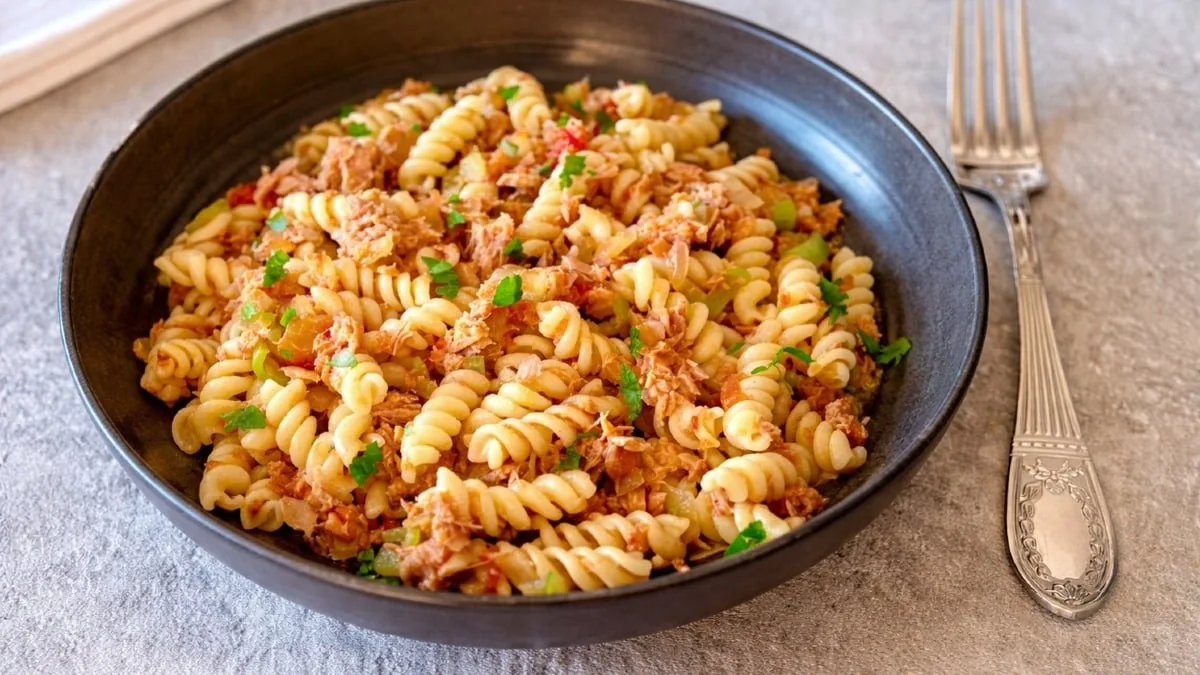
Yes, pasta can fit a weight-loss plan when your total calories fit. Plain dry pasta has about 370 kcal per 100 g and cooks into roughly 230 g at about 160 kcal per 100 g. Portion size, oil, cheese and creamy sauces usually decide whether a pasta meal is light or heavy, more than the pasta itself.
Key takeaways
- Pasta is not uniquely fattening; weight follows your overall calorie balance over weeks.
- Dry pasta has about 370 kcal per 100 g and roughly 2.3 times its weight once cooked, so check which weight you are logging.
- Oil, cheese and creamy sauces often make a bigger difference than the pasta itself.
- Weighing the dry pasta, adding vegetables and a protein, and measuring oil make pasta meals lighter and more filling.
- Trials of pasta within low-GI diets found no weight gain, but pasta alone is not a weight-loss food.
Does pasta make you gain weight?
No single food makes you gain or lose weight. Body weight follows your overall energy balance over weeks: if you regularly eat more energy than you use, you gain; if you eat less, you lose. Pasta is mostly carbohydrate, and carbohydrates provide 4 kcal per gram, the same as protein. It is not a special fattening food, and cutting it out completely is not required to lose weight.
What pasta does have is a reputation built on how it is often served: a large bowl, a generous pour of oil or butter, a creamy sauce, a mountain of cheese and garlic bread on the side. Each of those adds up quickly. The pasta itself is usually only part of the story, which is good news, because it means you can keep the dish you enjoy and adjust the parts around it.
How many calories are in pasta?
According to USDA FoodData Central, plain dry wheat pasta has about 370 kcal per 100 g, and plain cooked pasta has about 160 kcal per 100 g. The difference is water: pasta absorbs water as it cooks, so 100 g of dry pasta becomes roughly 230 g on the plate (370 ÷ 160 ≈ 2.3). This is the most common source of confusion when people log pasta. Always check whether a label or app entry refers to dry or cooked weight.
| Dry pasta | Approximate cooked weight | Approximate kcal (pasta only) |
|---|---|---|
| 50 g | ≈ 115 g | ≈ 185 kcal |
| 75 g | ≈ 175 g | ≈ 280 kcal |
| 100 g | ≈ 230 g | ≈ 370 kcal |
| 125 g | ≈ 290 g | ≈ 460 kcal |
Cooked weights vary with the shape and how long you cook it, so treat them as estimates. Weighing dry pasta before cooking is the simplest way to stay consistent. If you do not have a scale, a guide to portion sizes without a scale can help you estimate with your hands and bowls.
How do popular pasta dishes compare?
Here are Sporty's per-serving estimates for some well-known pasta and noodle dishes. Real values depend on the recipe and portion, but the pattern is useful.
| Dish (one serving) | kcal | Protein (g) | Carbs (g) | Fat (g) |
|---|---|---|---|---|
| Vegetable noodles | 450 | 14 | 70 | 13 |
| Potato gnocchi with tomato sauce | 480 | 12 | 72 | 15 |
| Shrimp noodles | 500 | 28 | 64 | 14 |
| Tuna pasta | 540 | 32 | 70 | 14 |
| Shrimp pasta | 560 | 30 | 70 | 17 |
| Pesto pasta | 560 | 17 | 68 | 25 |
| Pad thai with chicken | 580 | 32 | 66 | 20 |
| Spaghetti bolognese | 620 | 32 | 74 | 20 |
| Lasagna | 620 | 32 | 52 | 30 |
| Mac and cheese | 620 | 24 | 64 | 29 |
Two things stand out. First, the carbohydrate content is similar across most dishes, because most use around 100 g of dry pasta or noodles. Second, the biggest differences come from fat and protein. Tuna pasta and pesto pasta have the same calories, yet tuna pasta has nearly twice the protein (32 g vs 17 g), and protein tends to help many people feel full. Pesto, cheese sauces and béchamel push fat up, which is why lasagna and mac and cheese sit at the top. A spaghetti bolognese with lean beef lands in between.
How do you make a pasta meal lighter?
You do not need special diet pasta. A few practical changes usually do more:
- Weigh the dry pasta. Moving from 100 g to 75 g of dry pasta saves about 90 kcal, while the plate still looks full once you add vegetables.
- Add vegetables to the pan. Cherry tomatoes, spinach, courgette, mushrooms, peppers or broccoli add volume, fibre and colour for relatively few calories.
- Include a protein. Tuna, shrimp, chicken, lean minced meat, lentils, chickpeas or beans turn pasta into a more complete meal.
- Measure the oil. One tablespoon of olive oil (about 13.5 g) carries roughly 120 kcal, because fat provides 9 kcal per gram. Pouring from the bottle can easily double that.
- Choose tomato-based sauces more often. Tomato, garlic, herbs and chilli are lighter than cream, butter or large amounts of cheese. Grate cheese finely so a little goes further.
- Serve a side salad. A shepherd's salad or green salad first adds crunch and volume to the meal.
Worked example: a lighter tuna pasta
Start from the tuna pasta estimate in the table: 540 kcal with 100 g of dry pasta. Use 75 g of dry pasta instead (about 90 kcal less), keep the 120 g of tuna, measure one tablespoon of olive oil for the sauce, and add 150 g of cherry tomatoes and spinach. The result is roughly 450–480 kcal, with protein still around 30 g and a bigger, more colourful plate. These are rough estimates; your exact numbers depend on the brands and amounts you use.
What about whole-wheat pasta, noodles and gnocchi?
Whole-wheat pasta has similar calories per gram to regular pasta but more fibre. The Dietary Guidelines for Americans recommend making at least half of your grains whole grains, and the WHO advises eating whole grains as part of a healthy diet. If you like the taste, whole-wheat pasta is an easy way to get there; if you prefer regular pasta, adding vegetables and legumes also raises fibre.
Rice noodles, wheat noodles and gnocchi follow the same logic: the noodle or dumpling sets a base, and the sauce, oil and toppings decide the rest. For more on how carbohydrates fit into your day, see carbs explained.
What does the research say about pasta and weight?
A 2018 systematic review and meta-analysis in BMJ Open pooled 32 randomised trial comparisons with 2,448 adults. When pasta was eaten as part of a low-glycaemic-index dietary pattern, body weight was on average 0.63 kg lower than with higher-glycaemic-index diets, and the authors rated the certainty of evidence as moderate. None of the trials tested pasta alone, the median intake that could be estimated was about 3.3 servings a week, and one author disclosed support from a pasta maker. The fair conclusion is modest: pasta did not cause weight gain in these trials, not that pasta causes weight loss.
Who should get personal advice?
This article is general information, not medical advice. If you have diabetes, kidney disease, coeliac disease or another medical condition, are pregnant or breastfeeding, are under 18, or have a history of disordered eating, talk to a doctor or registered dietitian about carbohydrate portions and calorie targets. Logging your pasta meals with a photo or a short description in Sporty can show you how each bowl fits into the calories you have left for the day, without turning dinner into a test.
Frequently asked questions
How much pasta should I eat per portion when losing weight?
Many people find 60–80 g of dry pasta per meal works well when it is paired with vegetables and a protein. The right amount depends on your calorie target and the rest of the dish.
Should I log pasta dry or cooked?
Either works as long as the entry matches. Dry pasta has about 370 kcal per 100 g and cooked pasta about 160 kcal per 100 g, so mixing them up can create a large error.
Is whole-wheat pasta lower in calories?
Not really; its calories per gram are similar to regular pasta. It does have more fibre, which counts toward the whole grains that dietary guidelines recommend.
Can I eat pasta at night and still lose weight?
Yes. Total calories over the day and week matter more than the time you eat. A measured portion with vegetables and protein fits an evening meal as well as a lunch.
Sources
This article is general information, not medical advice. If you have a health condition, are pregnant or under 18, talk to a doctor or registered dietitian before changing your diet.