

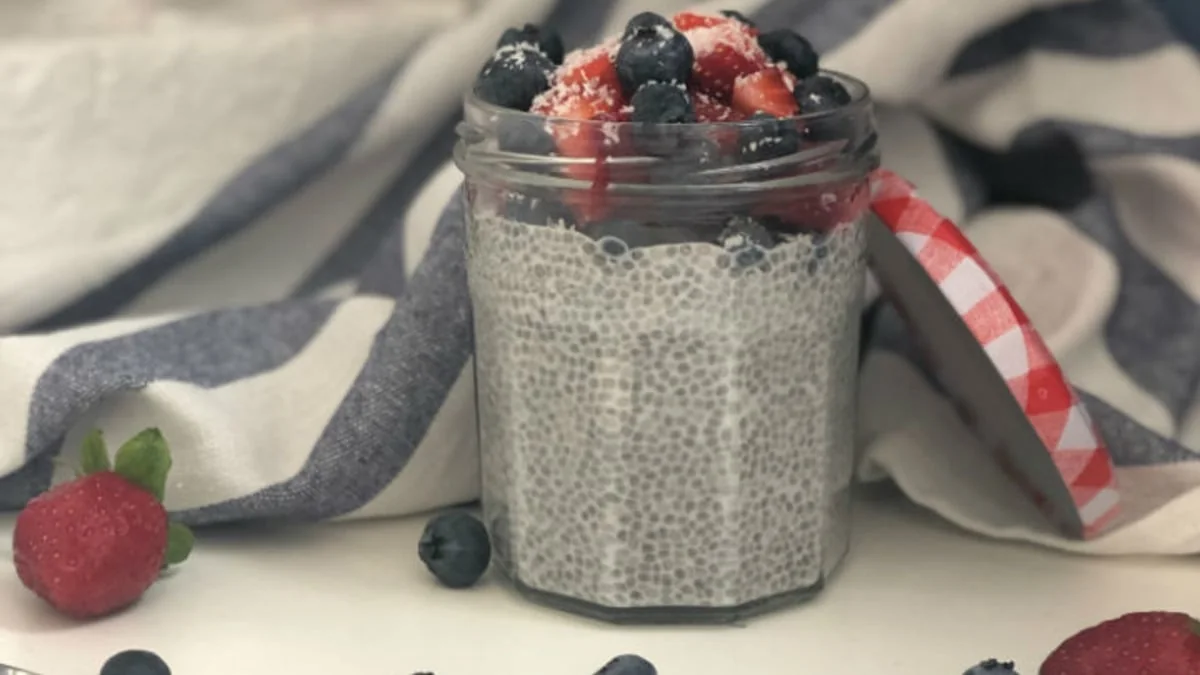
You can enjoy something sweet and still lose weight if it fits your daily calories. WHO advises keeping free sugars below 10% of energy, about 50 g on 2,000 kcal. Swapping a granola bowl for yogurt and fruit saves about 190 kcal, and swapping pancakes for protein pancakes adds 17 g of protein.
Key takeaways
- Weight loss depends on total calories over time, so a planned dessert does not undo progress.
- WHO advises less than 10% of energy from free sugars, about 50 g a day on 2,000 kcal; the NHS sets 30 g for adults.
- Sweet dishes built on yogurt, fruit or cottage cheese bring protein and stay under 300 kcal.
- Simple swaps between similar sweet dishes save about 70 to 190 kcal each in Sporty's catalog.
- Planning a daily sweet and eating regular meals with protein makes cravings easier to handle.
Can you eat dessert and still lose weight?
Yes. Weight loss comes down to your overall calorie balance over days and weeks, not to whether a single food is sweet. A dessert that fits your daily calories will not undo your progress, while trying to ban sugar completely often backfires when a strong craving finally wins. The more useful questions are how much, how often and what else you pair it with.
Sugar does deserve some attention, though. Sweet foods are easy to eat quickly, often bring little protein or fibre, and the calories add up without much fullness. The aim of this guide is not to remove sweetness from your life, but to make room for it in a way that fits your goal.
How much sugar is a sensible limit?
Health bodies set limits for free sugars: sugars added to food and drinks, plus the sugars in honey, syrups and fruit juices. The sugar naturally found in whole fruit, vegetables and milk does not count as free sugar.
| Guideline | Limit | What it means in practice |
|---|---|---|
| WHO | Less than 10% of daily energy | About 50 g, or about 12 level teaspoons, on 2,000 kcal a day |
| WHO (extra benefit) | 5% or less of daily energy | About 25 g on 2,000 kcal a day |
| NHS (UK), adults | No more than 30 g a day | Roughly 7 sugar cubes |
Because sugar is a carbohydrate with 4 kcal per gram, 50 g of free sugars is about 200 kcal and 30 g is about 120 kcal. Those calories are easy to reach without a dessert at all: sweetened tea, a glass of juice and a flavoured yogurt can take up a big share. Our guide to sugar limits and hidden sources covers where it hides.
On a food label, the NHS treats more than 22.5 g of total sugars per 100 g as high and 5 g or less per 100 g as low. That quick check helps when comparing biscuits, cereals or yogurts in the shop.
Lighter desserts and sweet breakfasts that satisfy
Sweet dishes made with yogurt, fruit, oats or cottage cheese bring sweetness together with protein and fibre. Figures are Sporty's per-serving estimates; real values depend on recipe and portion.
| Dish | kcal | Protein | Carbs | Fat |
|---|---|---|---|---|
| Homemade protein bar | 220 | 10 g | 24 g | 9 g |
| Yogurt and fruit | 230 | 16 g | 32 g | 5 g |
| Cottage cheese and walnut fruit bowl | 280 | 26 g | 22 g | 8 g |
| Chia pudding | 300 | 9 g | 30 g | 16 g |
| Smoothie bowl | 340 | 9 g | 62 g | 7 g |
| Crêpes with fruit and yogurt | 360 | 12 g | 46 g | 14 g |
| Protein pancakes | 380 | 30 g | 40 g | 10 g |
The yogurt and fruit bowl and the cottage cheese bowl stand out: under 300 kcal with 16–26 g of protein, which makes them more filling than a sweet with the same calories and almost no protein. Chia pudding is higher in fat from the seeds but still lands at about 300 kcal.
Which sweet swaps save the most calories?
You do not need to give up a sweet breakfast or dessert to save calories. Swapping one dish for a similar one often does the job. All numbers are our catalog estimates.
| Instead of | Try | kcal saved | Protein change |
|---|---|---|---|
| Homemade granola with yogurt (420 kcal) | Yogurt and fruit (230 kcal) | 190 | +2 g |
| French toast (420 kcal) | Chia pudding (300 kcal) | 120 | −7 g |
| Açaí bowl (380 kcal) | Cottage cheese and walnut fruit bowl (280 kcal) | 100 | +19 g |
| Pancakes (450 kcal) | Protein pancakes (380 kcal) | 70 | +17 g |
| Waffles (430 kcal) | Crêpes with fruit and yogurt (360 kcal) | 70 | +1 g |
Smaller tweaks help as well. The NHS suggests gradually cutting the sugar you add to hot drinks and cereal, reducing sugar in recipes, choosing tinned fruit in juice rather than syrup, and keeping fruit juice and smoothies to no more than 150 ml a day. At 4 kcal per gram, every teaspoon of sugar you leave out of your tea adds up across a day of several glasses.
What about Turkish desserts?
Baklava, künefe, sütlaç and other traditional desserts are part of celebrations, family visits and bayram tables, and there is no reason to treat them as forbidden. Syrup-soaked pastries tend to be dense in sugar and fat, while milk puddings are usually lighter, but the recipe and portion make the biggest difference. A few habits keep them in balance:
- Choose the portion before you start. One or two pieces on a small plate are easier to enjoy and log than eating from the tray.
- Have it after a meal, not instead of one. A plate with protein and vegetables first means you come to dessert less hungry.
- Share. Splitting a portion of künefe at a restaurant halves the calories and keeps the experience.
- Log it honestly. A dessert you record is a planned part of your week, not a failure.
If dessert runs over on a bayram or a family visit, there is no need to make up for it the next day by skipping meals. Going back to your usual meals is enough, because what matters is your average across the week, not one day.
Practical ways to handle sweet cravings
- Plan a daily sweet. Knowing that yogurt with fruit or a small square of chocolate is part of today's plan takes the urgency out of a craving.
- Eat regular meals with protein. Long gaps followed by intense hunger make it harder to stop at one biscuit. Our list of snacks under 200 calories can bridge the gap.
- Keep fruit within reach. The CDC suggests having fruits and vegetables on hand to grab quickly; a bowl of fruit on the table is an easy first option.
- Do not keep large packs at arm's length. Buy single portions when you can, or move the tin out of sight.
- Notice the trigger. If cravings arrive with stress, boredom or tiredness, a short walk, a call or an early night may help more than food. Our guide on emotional eating has more ideas.
- Reward yourself without food. The CDC suggests non-food rewards for progress, such as a new book or an outing.
Logging sweets in Sporty, by photo or by name, shows how a dessert fits into your calories for the day, so you can decide whether to have it now or plan it for later.
When to get extra support
If thoughts about food, guilt after eating or cycles of restriction and bingeing take up a lot of your day, talk to a doctor or registered dietitian. The same applies if you have diabetes or another condition that affects how you handle sugar. This guide is general information, not medical advice.
Frequently asked questions
What can I eat when I crave something sweet on a diet?
Yogurt with fruit, a cottage cheese and fruit bowl or chia pudding are about 230 to 300 kcal in Sporty's catalog and bring more protein than most sweets. Fresh fruit is also an easy first option.
Does fruit sugar count towards the sugar limit?
Sugar naturally found in whole fruit does not count as free sugar. Fruit juice and smoothies do, which is why the NHS suggests no more than 150 ml a day.
Is it OK to have dessert every day while losing weight?
It can be, as long as it fits your daily calories and you still eat enough protein, fruit and vegetables. A small planned portion is easier to keep up than a strict ban.
How many calories are in a teaspoon of sugar?
Sugar provides 4 kcal per gram, so the calories depend on how much the teaspoon holds. WHO's 50 g, about 12 level teaspoons, comes to about 200 kcal.
Sources
This article is general information, not medical advice. If you have a health condition, are pregnant or under 18, talk to a doctor or registered dietitian before changing your diet.