

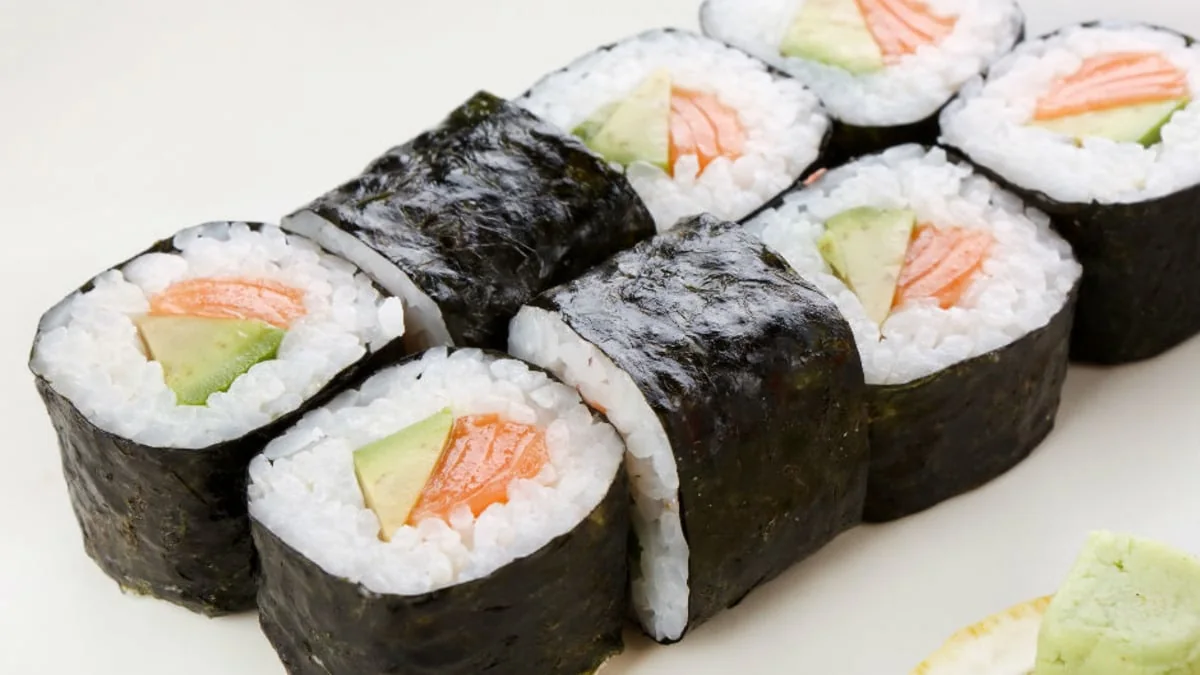
In Sporty's catalog, sushi rolls are the lightest at about 420 kcal per serving, a poke bowl is 540 kcal and ramen 560 kcal. The poke bowl wins on protein with 34 g, against 30 g for ramen and 18 g for sushi. Sushi is the most carbohydrate-heavy: two-thirds of its calories come from rice.
Key takeaways
- Sushi rolls 420 kcal, poke bowl 540 kcal, ramen 560 kcal (Sporty per-serving estimates).
- Per 100 kcal, the poke bowl has 6.3 g of protein, ramen 5.4 g and sushi rolls 4.3 g.
- Two-thirds of the sushi rolls' calories come from carbohydrate; poke and ramen are more balanced.
- WHO recommends less than 5 g of salt a day and names soy sauce as a high-sodium condiment.
- The NHS advises pregnant women to avoid sushi made with raw fish, even if frozen first.
How do sushi, poke and ramen compare side by side?
Sushi, poke and ramen are now ordered everywhere from Tokyo and Honolulu to London, São Paulo and İstanbul, and all three have a reputation as a "lighter" takeaway. But they are very different meals: one is mostly rice, one is a rice bowl topped with raw fish and avocado, and one is noodles in broth with pork and egg. We compared them using our meal catalog. All numbers are Sporty's per-serving estimates; real values depend on the recipe, the restaurant and the size of the serving.
| Dish | kcal | Protein | Carbs | Fat |
|---|---|---|---|---|
| Sushi Rolls | 420 | 18 g | 70 g | 7 g |
| Poke Bowl | 540 | 34 g | 60 g | 18 g |
| Ramen | 560 | 30 g | 66 g | 18 g |
The catalog servings behind those numbers:
- Sushi rolls: 200 g of cooked sushi rice with 50 g of salmon and 30 g of tuna, nori, cucumber, soy sauce and wasabi. 420 kcal, 18 g protein.
- Poke bowl: 120 g of marinated raw salmon over 180 g of sushi rice, with half an avocado, edamame, cucumber, seaweed and a tablespoon of soy sauce. 540 kcal, 34 g protein.
- Ramen: 100 g of ramen noodles with 100 g of pork chashu, a soft-boiled egg, broth, spring onion and nori. 560 kcal, 30 g protein.
Which one has the most calories?
Ramen, at 560 kcal, but only just. The poke bowl is 20 kcal behind at 540 kcal, which is close enough that a little more dressing or a bigger scoop of rice would change the order. Sushi rolls are clearly the lightest at 420 kcal: 120 kcal less than the poke bowl and 140 kcal less than ramen.
On a 2,000 kcal day, the sushi rolls are 21% of your energy, the poke bowl 27% and the ramen 28%. All three are normal-sized main meals; none of them is a snack, and none of them is unusually heavy.
Where do the calories come from?
Protein and carbohydrates have about 4 kcal per gram and fat about 9, so each meal can be split by source:
| Meal | From protein | From carbs | From fat |
|---|---|---|---|
| Sushi rolls | 17% | 67% | 15% |
| Poke bowl | 25% | 44% | 30% |
| Ramen | 21% | 47% | 29% |
(Percentages are rounded and calculated from the catalog grams, so they do not add up to exactly 100.) Sushi is a rice meal: two-thirds of its calories come from 70 g of carbohydrate, the most of the three, and it has only 7 g of fat. The poke bowl and the ramen have the same 18 g of fat, from salmon and avocado in one and from pork chashu and egg in the other. The poke bowl is the most balanced split.
Who wins on protein?
The poke bowl. It has the most protein in total (34 g) and per calorie: 6.3 g per 100 kcal, against 5.4 g for ramen and 4.3 g for sushi rolls. The reason is simple: 120 g of salmon, compared with 80 g of fish in the sushi.
That makes sushi the lightest option but also the one with the least protein. If a sushi platter tends to leave you hungry an hour later, the easiest fix is to add protein rather than more rice. In the catalog, sushi rolls plus a bowl of tom yum goong (hot and sour shrimp soup, 230 kcal and 24 g protein) come to 650 kcal and 42 g of protein.
The number nobody counts: salt
All three meals lean on salty seasonings. Sushi and poke come with soy sauce, and ramen broth is usually seasoned with soy sauce, miso or salt. The World Health Organization lists soy sauce and fish sauce among high-sodium condiments and advises limiting them when cooking. It recommends less than 5 g of salt a day for adults (2,000 mg of sodium), just under a teaspoon, while the average adult intake worldwide was about 11 g of salt a day in 2021.
Our catalog does not have per-dish salt values, so we cannot tell you which of the three is saltiest. A few simple habits help with all of them: dip sushi lightly instead of soaking the rice, ask for poke dressing on the side, and leave some of the ramen broth in the bowl. More detail in our guide to salt and sodium daily limits.
What about the fish?
Both sushi and poke help with a goal most people miss. The NHS recommends at least 2 portions of fish a week, including 1 of oily fish, with a portion of around 140 g. Salmon counts as oily fish; fresh and canned tuna do not. The poke bowl's 120 g of salmon is close to one oily-fish portion, while the sushi rolls' 50 g of salmon is about a third of one.
Raw fish needs one caution. The NHS advises pregnant women to avoid sushi made with raw fish, even if it has been frozen first, and raw shellfish; sushi made with cooked fish or cooked shellfish is fine. It also advises older people, young children and anyone with a weakened immune system to avoid raw or lightly cooked shellfish. Ramen, with cooked pork and egg, avoids the question entirely.
How do they compare with other Japanese and Asian favourites?
| Dish (Sporty estimate) | Calories | Protein |
|---|---|---|
| Tom yum goong | 230 kcal | 24 g |
| Onigiri rice balls | 280 kcal | 10 g |
| Gyoza | 380 kcal | 18 g |
| Teriyaki chicken with rice | 520 kcal | 42 g |
| Teriyaki salmon | 520 kcal | 38 g |
| Pad thai with chicken | 580 kcal | 32 g |
Most Asian takeaway mains land between about 400 and 600 kcal, just like our three. The bigger differences are in protein and in what you add on the side. For more ideas, see our guides to lighter Japanese food choices and calorie-smart Asian takeaway.
How can you adjust each one?
- Sushi: pick rolls and nigiri with more fish, add a protein-rich soup or side, and go easy on mayonnaise-based and fried rolls, which are not included in our numbers.
- Poke: ask for half rice and half salad leaves if you want a lighter bowl, and get creamy or sweet dressings on the side.
- Ramen: enjoy the noodles and toppings, leave some broth, and add extra vegetables if the shop offers them.
So which should you order?
The one you feel like eating. None of these is a "good" or "bad" choice. If you are tracking calories, the numbers say: sushi rolls are the lightest but lowest in protein, the poke bowl gives the most protein for its calories, and ramen is the highest in calories by a small margin. If you would rather not look anything up, Sporty can estimate a sushi platter, poke bowl or ramen from a photo.
This is general information, not medical advice. If you are pregnant, have high blood pressure or kidney disease, talk to a doctor or registered dietitian about raw fish and salt.
Frequently asked questions
Which has fewer calories, sushi or poke?
In Sporty's catalog, sushi rolls are about 420 kcal and a poke bowl about 540 kcal per serving. The poke bowl has more protein (34 g vs 18 g).
How many calories are in a bowl of ramen?
Our catalog estimate for ramen with pork chashu and a soft-boiled egg is about 560 kcal and 30 g of protein. Real values depend on the broth, noodle portion and toppings.
Is a poke bowl healthy?
It can be a balanced meal: in our catalog it has 34 g of protein and a fairly even split of calories. Watch creamy or sweet dressings, which add calories quickly.
Can I eat sushi while pregnant?
The NHS advises pregnant women to avoid sushi made with raw fish, even if previously frozen, and raw shellfish. Sushi made with cooked fish or cooked shellfish is fine.
Can I eat sushi, poke or ramen while losing weight?
Yes. Weight change depends on your total intake over time. All three fit into a balanced day; logging the meal makes it easier to plan the rest.
Was this article helpful?
No ratings yet — be the first.
Tap a star to rate it — your rating helps us improve and helps other readers.
Sources
This article is general information, not medical advice. If you have a health condition, are pregnant or under 18, talk to a doctor or registered dietitian before changing your diet.