

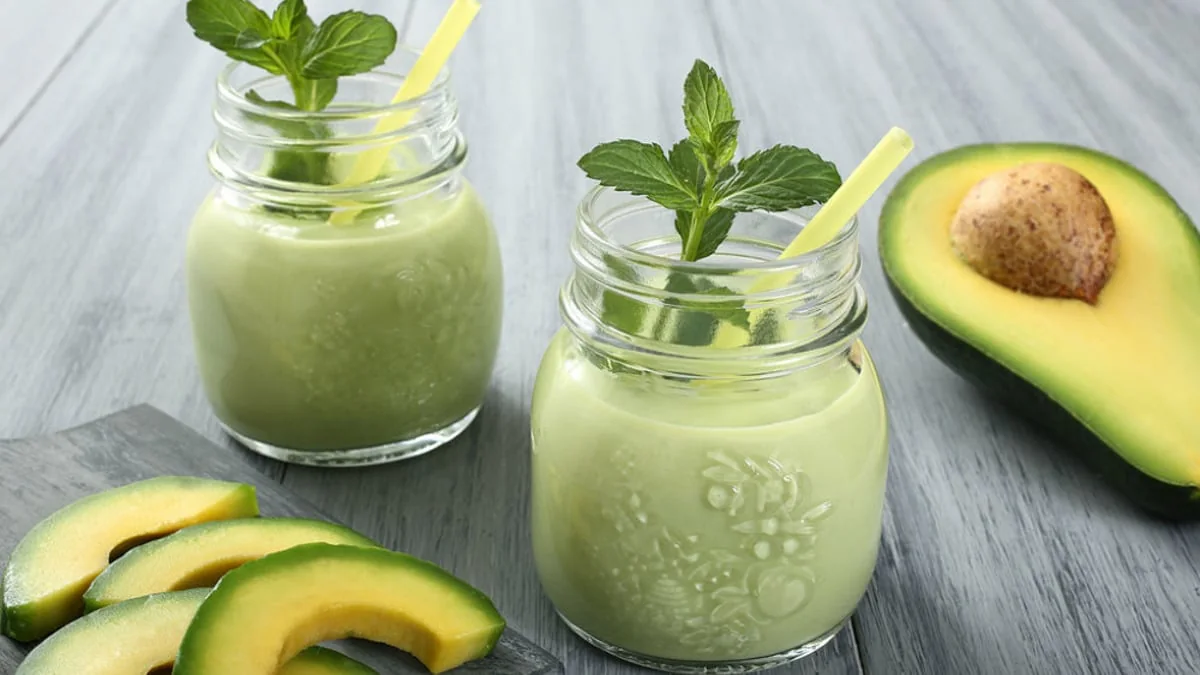
Smoothies can work for weight loss when they replace a meal or snack rather than come on top of one. A filling smoothie has a clear protein source such as milk, yogurt or protein powder, some fibre from oats, chia or whole fruit, and measured rich extras like nut butter, avocado and honey, which add calories quickly.
Key takeaways
- A smoothie is a meal in a glass: count it as breakfast or a snack, not as a drink alongside one.
- In our catalog, four smoothies and smoothie bowls of 280–380 kcal carry anywhere from 7 g to 30 g of protein.
- Protein, oats or chia and whole fruit make a smoothie more filling than fruit and juice alone.
- Nut butter, avocado, honey and juice raise the total fastest; measure them rather than pouring.
- Blending does not change calories: the same ingredients as a bowl or a glass carry the same energy.
Can smoothies help you lose weight?
A smoothie is neither a weight-loss shortcut nor a trap. Weight loss comes from eating a little less energy than you use over time, and a smoothie simply contributes its calories to that total. The question is what it replaces. A 300 kcal smoothie instead of a 450 kcal breakfast helps; the same smoothie drunk alongside breakfast adds 300 kcal to the day.
The other question is whether it keeps you full. Many smoothies are mostly fruit, juice and a spoon of honey. They taste great, go down in two minutes and can leave you hungry again by mid-morning. Others, built around milk, yogurt or protein powder with oats or chia, hold you much longer for a similar number of calories. The difference is in the recipe, not in the blender.
How do four real smoothies compare?
Here are four blended breakfasts from our meal catalog. The numbers are our per-serving estimates; real values depend on the recipe, the milk you use and the size of your portion.
| Dish | kcal | Protein | Carbs | Fat |
|---|---|---|---|---|
| Protein Shake | 300 | 30 g | 30 g | 6 g |
| Avocado Smoothie | 280 | 8 g | 30 g | 15 g |
| Smoothie Bowl | 340 | 9 g | 62 g | 7 g |
| Açaí Bowl | 380 | 7 g | 64 g | 12 g |
| Smoothie | What is in it | kcal | Protein | Protein per 100 kcal |
|---|---|---|---|---|
| Protein shake | 250 ml low-fat milk, 25 g whey, half a banana, cocoa | 300 | 30 g | 10.0 g |
| Avocado smoothie | 80 g avocado, 200 ml milk, half a banana, honey | 280 | 8 g | 2.9 g |
| Smoothie bowl | Banana, 100 g frozen berries, 150 ml plant milk, 30 g oats, chia | 340 | 9 g | 2.6 g |
| Açaí bowl | 100 g açaí purée, banana, 30 g granola, almonds, coconut | 380 | 7 g | 1.8 g |
All four sit between 280 and 380 kcal, yet protein ranges from 7 g to 30 g. The smoothie bowl and the açaí bowl get most of their energy from fruit and grains: 62 g and 64 g of carbohydrates. The avocado smoothie gets about half its energy from fat (15 g, roughly 135 kcal at 9 kcal per gram). The protein shake puts 40 % of its energy into protein. None of these is good or bad; they simply do different jobs.
Why can a smoothie leave you hungry?
Three things tend to make a smoothie less filling:
- Low protein. A review by Leidy and colleagues in 2015 found that higher-protein meals give a modest increase in fullness, and suggested roughly 25–30 g of protein per meal. Most fruit-based smoothies are far below that.
- Drinking it fast. A glass you finish in two minutes can feel less like a meal than a bowl you eat with a spoon, even at the same calories. This varies a lot between people.
- Juice as the base. Juice adds sugar and energy without much bulk. The NHS counts juice and smoothies as at most one of your 5 A Day, up to a combined 150 ml, however much you drink, because blending and juicing release the sugars in fruit.
The WHO counts sugars naturally present in fruit juices and honey as free sugars and recommends keeping free sugars below 10 % of daily energy. On a 2,000 kcal day, that is less than 200 kcal, or about 50 g of sugar. A large juice-based smoothie with honey can use a good share of that before lunch.
How do you build a filling smoothie?
Think of a smoothie as a meal and build it the way you would build a plate:
- Start with protein. Milk, a soy drink, plain or strained yogurt, cottage cheese or a scoop of protein powder. Aim for at least 20 g if the smoothie replaces breakfast.
- Add fibre and slow carbohydrates. 30–50 g of oats or a spoon of chia seeds make the drink thicker and more substantial than fruit alone.
- Use whole fruit, not juice. A banana or 80 g of frozen berries counts as a fruit portion and keeps the fibre. Frozen fruit also makes the texture thick without extra ingredients.
- Measure the rich extras. Nut butter, seeds, avocado, coconut and honey are where calories climb fastest. At 9 kcal per gram of fat, every 10 g of fat adds 90 kcal. A teaspoon is usually enough for flavour.
- Add volume cheaply. Ice, water, spinach or cucumber make a bigger glass with very few calories.
What does a filling smoothie look like in practice?
Blending does not change calories. The oats, yogurt and fruit bowl in our catalog, 50 g of oats, 150 g of strained yogurt, banana, blueberries and walnuts, comes to about 390 kcal with 22 g of protein. Put the same ingredients in a blender with a little water or milk and you have a smoothie with the same numbers: enough protein, plenty of fibre from the oats and fruit, and a modest 9 g of fat.
Three easy adjustments to the smoothies above:
- Avocado smoothie: keep the avocado for creaminess, skip the honey and add 150 g of plain yogurt. It moves from a mostly fat-based drink to one with a solid protein share.
- Smoothie bowl: swap the plant milk for a soy drink or dairy milk, or stir in yogurt, to raise the 9 g of protein. Keep the oats and chia; they are what make it filling.
- Açaí bowl: use half the granola and add more fresh berries for volume, plus a protein topping such as yogurt.
If you want more breakfast ideas with similar numbers, see our high-protein breakfast ideas.
Should a smoothie replace a meal or a snack?
Either can work, as long as you count it. A 300–400 kcal smoothie with 20–30 g of protein is a reasonable breakfast for many adults. A smaller one, around 150–200 kcal, can be a snack: half the portion, or milk and fruit without the extras. What tends to cause trouble is the in-between case: a large smoothie as a drink next to a meal, or as an extra on the way home from the gym.
Logging helps here because drinks are easy to forget. With Sporty, you can describe the smoothie by voice or text, ingredient by ingredient, and see what it contributes to your calories left for the day. If drinks in general add up for you, our guide to liquid calories covers juices, coffees and soft drinks.
Who should be careful with smoothie diets?
Replacing one meal with a balanced smoothie is ordinary eating. Living on smoothies alone, or using them to push intake very low, is different. Do not go below about 1,200 kcal a day for women or 1,500 kcal a day for men without medical supervision. If you have diabetes, kidney disease, are pregnant, under 18 or have a history of disordered eating, talk to a doctor or registered dietitian before changing your diet this way. And if a smoothie leaves you hungry an hour later, that is not a lack of willpower: it is a sign that the recipe needs more protein or fibre.
Frequently asked questions
Are smoothies good for weight loss?
They can be, if a smoothie replaces a meal or snack and contains protein and fibre. A fruit-and-juice smoothie drunk alongside a meal adds calories without much fullness.
How many calories should a meal-replacement smoothie have?
For many adults, around 300–400 kcal with 20–30 g of protein works as a breakfast. Your own target depends on your size, activity and goals.
What can I add to a smoothie to make it more filling?
Add a protein source such as milk, yogurt or protein powder, and fibre from oats, chia seeds or whole fruit. Ice and leafy greens add volume for very few calories.
Is a smoothie healthier than eating the fruit whole?
Whole fruit keeps its structure and takes longer to eat, which many people find more filling. Smoothies are still a useful way to eat fruit, ideally with protein and without added juice.
Was this article helpful?
No ratings yet — be the first.
Tap a star to rate it — your rating helps us improve and helps other readers.
Sources
This article is general information, not medical advice. If you have a health condition, are pregnant or under 18, talk to a doctor or registered dietitian before changing your diet.