

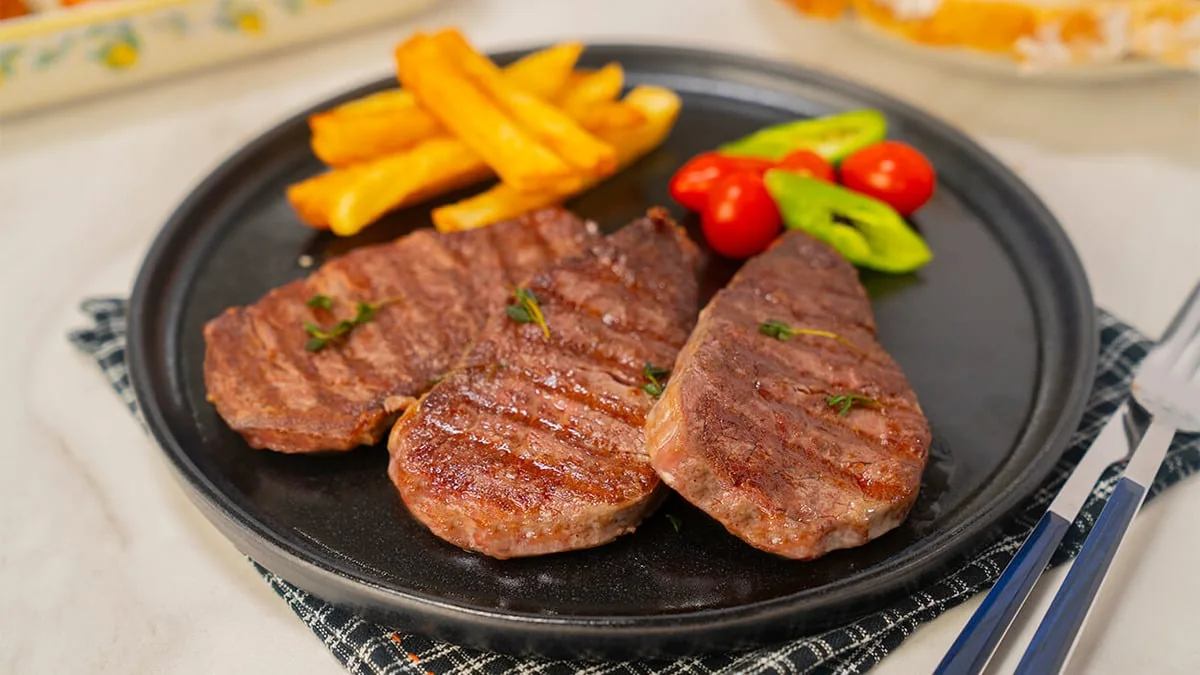
Health guidelines do not say to stop eating meat, but to limit red and processed meat. The WHO's cancer agency classes processed meat as carcinogenic and red meat as probably carcinogenic, mainly for bowel cancer. The NHS advises that people eating more than 90 g a day cut down to an average of 70 g or less.
Key takeaways
- Red meat is mammal muscle meat; processed meat is salted, cured, fermented or smoked, such as sucuk, pastırma, salami and ham.
- IARC classes processed meat as Group 1 and red meat as Group 2A; the groups show strength of evidence, not size of risk.
- The NHS advises cutting down to about 70 g of cooked red and processed meat a day on average if you eat more than 90 g.
- Meat still provides protein, iron, zinc and vitamin B12, and the WHO says it can be part of a healthy diet.
- Mixing pulses into meat dishes and rotating chicken, fish, eggs and beans are simple ways to eat less.
What counts as red meat and processed meat?
The two terms are often mixed up, but health agencies define them separately:
- Red meat is the muscle meat of mammals. The WHO lists beef, veal, pork, lamb, mutton, horse and goat. Kuzu şiş, beef köfte, lamb chops and the meat in döner all count.
- Processed meat is meat that has been salted, cured, fermented, smoked or otherwise processed to add flavour or keep it longer. The NHS gives sausages, bacon, ham, salami, corned beef, sliced luncheon meats and pâtés as examples, and notes that chicken and turkey versions of sliced meats count too. In a Turkish kitchen, that means sucuk, pastırma, salam and sosis.
Fresh chicken, turkey and fish are not red meat, and fresh minced beef is still red meat rather than processed meat, as long as nothing has been added to preserve it.
What did the WHO cancer agency conclude?
In 2015 the International Agency for Research on Cancer (IARC), the WHO's cancer agency, evaluated the evidence and published its conclusions in The Lancet Oncology. The WHO summarises them like this:
| Red meat | Processed meat | |
|---|---|---|
| IARC group | Group 2A: probably carcinogenic to humans | Group 1: carcinogenic to humans |
| Basis | Limited evidence in people, strong mechanistic evidence | Sufficient evidence, mainly from studies in people |
| Main cancer linked | Colorectal (bowel) cancer | Colorectal (bowel) cancer |
| Other possible links | Pancreatic and prostate cancer | Stomach cancer, not conclusive |
One point is widely misunderstood. The WHO explains that these groups describe how strong the evidence is, not how likely you are to get cancer. Processed meat sits in Group 1 because the evidence that it raises bowel cancer risk is convincing, not because a slice of salami is as risky as everything else in that group. The WHO also says the risk increases with the amount eaten, and that the original assessment could not determine whether there is a safe level.
Do the guidelines say to stop eating meat?
No. The WHO states that meat can be part of a healthy diet and provides important nutrients. What many national guidelines recommend is to limit red and processed meat, not to cut it out. The WHO is developing its own guideline on animal-source foods that will include recommendations on red and processed meat.
Meat has real nutritional value. The NHS notes that red meat provides protein, iron, zinc and B vitamins, and that meat is one of the main sources of vitamin B12. Iron is the reason red meat matters most to some people, especially women with heavy periods. If you eat less red meat, it is worth paying attention to pulses, leafy greens and other iron sources.
How much red meat is too much?
The NHS gives one of the clearest numbers: if you eat more than 90 g of red or processed meat a day (cooked weight), cut down to 70 g or less. If you go over on one day, eat less on the following days so that your average stays at about 70 g. Over a week, that is roughly 490 g of cooked red and processed meat in total.
To see what that means on a plate, here are some of the NHS's approximate cooked weights:
| Portion | Approx. red or processed meat |
|---|---|
| Grilled 8 oz beef steak | 163 g |
| Large döner kebab | 130 g |
| Cooked breakfast with 2 sausages and 2 rashers of bacon | 130 g |
| 5 oz rump steak | 102 g |
| 3 thin slices of roast lamb, beef or pork | 90 g |
| Quarter-pound beef burger | 78 g |
| Slice of ham | 23 g |
So a large döner on Monday, a burger on Wednesday and a steak at the weekend already add up to about 310 g (130 + 78 + 102), leaving room for a few smaller portions in home cooking. It is a weekly average, not a daily ban.
How do typical meat dishes compare on calories?
Guidelines on red meat are about long-term health rather than weight, but the two often point in the same direction. Here are Sporty's per-serving estimates for some familiar dishes; real values depend on recipe and portion.
| Dish | Main meat | kcal | Protein |
|---|---|---|---|
| İskender | Döner (red meat) | 720 | 40 g |
| Adana kebab | Minced lamb or beef | 620 | 36 g |
| Grilled sirloin steak and asparagus | Beef | 580 | 54 g |
| Eggs with sucuk | Sucuk (processed) | 450 | 24 g |
| White bean stew with beef | A little beef with beans | 450 | 28 g |
| Chicken shish | Chicken breast | 380 | 46 g |
Sucuklu yumurta is a good example of where processed meat sneaks in: it is a breakfast many people eat every weekend, and it brings 38 g of fat per serving in our estimate. Our guide on which kebab is lightest compares more grilled options.
Practical ways to eat less red and processed meat
- Let pulses do part of the work. Etli kuru fasulye and etli nohut use a small amount of beef to flavour a large pot of beans or chickpeas. The NHS suggests exactly this: use smaller amounts of meat and add vegetables, pulses or starchy foods to stews and casseroles. See our comparison of lentils, chickpeas and beans.
- Rotate proteins across the week. Chicken, fish, eggs, yogurt and pulses can cover most meals, with red meat on a few days rather than every day.
- Make sucuk and pastırma a garnish, not the base. A few slices with eggs and vegetables go a long way compared with half a sucuk per person.
- Choose lean cuts and trim the fat when you do eat red meat.
- Watch the salt. The WHO names processed meats such as bacon, ham and salami as major sources of salt in many diets.
The WHO's healthy diet guidance also notes that, for many adults, moving towards plant protein may bring health benefits, particularly when the shift is away from red meat. You do not need to go vegetarian to get there; small, regular swaps add up.
Does cooking method matter?
Cooking meat at very high temperatures, especially over an open flame or until well done, produces compounds called HCAs and PAHs. The US National Cancer Institute says these caused cancer in animals at very high doses, but studies in people have not established a definite link. Sensible habits are to avoid charring, turn meat often and cut away burnt parts.
Who should get personal advice?
These are population guidelines. If you have a family history of bowel cancer, iron deficiency, kidney disease, are pregnant or are planning big changes to your diet, talk to your doctor or a registered dietitian. If you want to see how often red and processed meat appear in your week, logging your meals in Sporty for a week or two makes the pattern easy to spot.
Frequently asked questions
Is processed meat as dangerous as smoking?
No. The WHO explains that IARC groups reflect the strength of the evidence, not how likely a food is to cause cancer. Being in the same group does not mean the same level of risk.
Is sucuk a processed meat?
Yes. Sucuk is a cured, fermented sausage, so it counts as processed meat, as do pastırma, salami, sosis and ham.
Is chicken red meat?
No. Chicken and turkey are poultry. Processed chicken or turkey products, such as sliced deli meats, still count as processed meat.
How much red meat can I eat per week?
The NHS advises an average of no more than 70 g of cooked red and processed meat a day if you currently eat more than 90 g, which is roughly 490 g a week.
Was this article helpful?
No ratings yet — be the first.
Tap a star to rate it — your rating helps us improve and helps other readers.
Sources
- WHO, Cancer: Carcinogenicity of the consumption of red meat and processed meat (Q&A)
- Bouvard et al. 2015, Carcinogenicity of consumption of red and processed meat (IARC Monograph Working Group, Lancet Oncol)
- NHS, Meat in your diet
- WHO, Healthy diet fact sheet
- NIH National Cancer Institute, Chemicals in meat cooked at high temperatures and cancer risk
This article is general information, not medical advice. If you have a health condition, are pregnant or under 18, talk to a doctor or registered dietitian before changing your diet.