
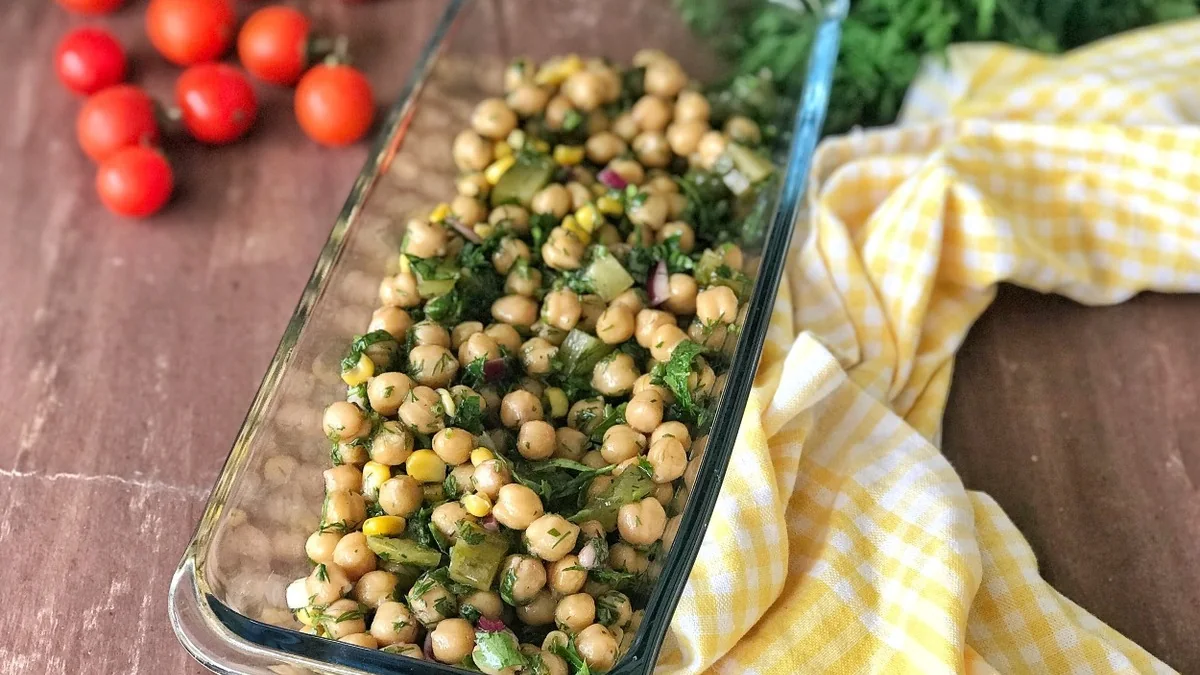
You need the same protein as meat-eaters: at least 0.8 g per kg of body weight a day, or 1.4–2.0 g/kg if you train. Tofu, lentils, chickpeas and beans, plus dairy and eggs for vegetarians, make this realistic. Include a protein-rich food at every main meal and vary your sources across the day.
Key takeaways
- Adults need at least 0.8 g of protein per kg a day; 1.4–2.0 g/kg if they exercise regularly.
- In Sporty's estimates, a tofu and vegetable sauté gives 32 g protein for 420 kcal.
- You do not need to combine proteins at every meal; variety across the day is enough.
- Protein per 100 kcal helps you compare dishes when you are in a calorie deficit.
- Vitamin B12, iron, calcium, omega-3 and iodine need more attention than protein on a vegan diet.
How much protein do you need if you do not eat meat?
The same amount as anyone else. The US National Academies set the adult Recommended Dietary Allowance (RDA) at 0.8 g of protein per kg of body weight per day, and the European Food Safety Authority (EFSA) arrives at almost the same figure, 0.83 g/kg. These values are meant to cover the needs of nearly all healthy adults, whatever their diet.
If you train regularly or want to keep muscle while losing fat, the International Society of Sports Nutrition (ISSN) position stand on protein and exercise suggests 1.4–2.0 g/kg a day. For a 70 kg (154 lb) adult that works out as follows:
| Situation | Guideline | Daily protein at 70 kg |
|---|---|---|
| Healthy adult, minimum | 0.8 g/kg (RDA) | 56 g |
| Healthy adult, EFSA reference | 0.83 g/kg | about 58 g |
| Regular exercise or fat loss | 1.4–2.0 g/kg (ISSN) | 98–140 g |
Reaching 56 g on a varied vegetarian or vegan diet is usually straightforward. Reaching 100 g or more takes a little more planning, because many plant foods bring carbohydrate and fat along with their protein. Our main guide to how much protein you need per day covers the targets in more detail. To get your own range:
Daily protein calculator
0.8 g/kg is the adult RDA; 1.4–2.0 g/kg is the ISSN range for people who exercise. Kidney disease needs medical advice.
Which plant-based dishes give the most protein?
The table below uses Sporty's per-serving estimates for popular plant-based and vegetarian dishes from around the world. Real values depend on recipe and portion. The last column shows protein per 100 kcal, a quick way to see which meals are protein-dense rather than just large.
| Dish (one serving) | Energy | Protein | Protein per 100 kcal |
|---|---|---|---|
| Tofu and vegetable sauté (vegan) | 420 kcal | 32 g | 7.6 g |
| Red lentil soup (vegan) | 250 kcal | 13 g | 5.2 g |
| Lentil salad (vegan) | 320 kcal | 16 g | 5.0 g |
| Tofu and broccoli rice (vegan) | 460 kcal | 22 g | 4.8 g |
| Protein-packed vegan salad with chickpeas and quinoa | 420 kcal | 20 g | 4.8 g |
| Mediterranean chickpea salad (vegan) | 430 kcal | 19 g | 4.4 g |
| Chickpea stew (vegan) | 360 kcal | 16 g | 4.4 g |
| Hummus and raw vegetables (vegan) | 260 kcal | 11 g | 4.2 g |
| Minestrone (vegan) | 260 kcal | 10 g | 3.8 g |
| Falafel plate (vegan) | 420 kcal | 15 g | 3.6 g |
| Cottage cheese and walnut fruit bowl (vegetarian) | 280 kcal | 26 g | 9.3 g |
| Protein pancakes (vegetarian) | 380 kcal | 30 g | 7.9 g |
| Vegetable omelette (vegetarian) | 320 kcal | 22 g | 6.9 g |
Two patterns stand out. Soy foods such as tofu lead the vegan list, and dairy and eggs give vegetarians an easy boost. Pulses sit in the middle: according to USDA FoodData Central, one cup of cooked lentils (198 g) has about 17.9 g of protein for 230 kcal, plus a lot of fibre. Fried dishes such as falafel still provide useful protein but carry more fat per gram of protein.
Do you need to combine proteins at every meal?
No. Many plant proteins are lower in one or more essential amino acids than animal proteins, which is where the old advice to "combine" beans and grains at each meal came from. In practice, your body draws on everything you eat over the day. Eating a mix of pulses, soy, whole grains, nuts and seeds across your meals covers the gaps without careful pairing on each plate.
What does matter is the total. A plate of vegetables and rice may be filling and nutritious, but with no pulses, tofu, dairy or eggs it can be low in protein. A simple rule is to include at least one protein-rich plant food in every main meal.
What does a high-protein meat-free day look like?
Here are two example days built only from the catalog dishes above. They are illustrations, not meal plans; add drinks, bread, fruit or snacks to match your own calorie target.
| Meal | Vegetarian day | Protein | Vegan day | Protein |
|---|---|---|---|---|
| Breakfast | Protein pancakes | 30 g | Smoothie bowl with plant milk and chia | 9 g |
| Lunch | Mediterranean chickpea salad | 19 g | Protein-packed vegan salad | 20 g |
| Snack | Cottage cheese and walnut fruit bowl | 26 g | Hummus and raw vegetables | 11 g |
| Dinner | Tofu and broccoli rice | 22 g | Red lentil soup, then tofu and vegetable sauté | 45 g |
| Total | about 1,550 kcal | 97 g | about 1,690 kcal | 85 g |
For a 70 kg adult, the vegetarian day gives about 1.4 g/kg, the bottom of the ISSN range, and the vegan day about 1.2 g/kg, well above the RDA. The weakest point of the vegan day is breakfast: swapping the smoothie bowl for a soy yogurt with seeds or a tofu scramble would close most of the gap. For more morning ideas, see high-protein breakfast ideas.
How can you add protein to plant-based meals?
- Put a pulse in every main meal. Lentils, chickpeas and beans work in soups, salads, stews and curries. A chickpea stew or a lentil salad is an easy base.
- Use soy. Tofu, tempeh, edamame and soy milk are among the most protein-dense plant foods, as the tofu sauté in the table shows.
- Top grains with seeds and nuts. Pumpkin seeds on a quinoa salad add protein, though they also add fat, so a small handful is enough.
- If you eat dairy and eggs, yogurt, cottage cheese and eggs lift breakfast and snacks quickly.
- Double the protein part, not the whole dish. Adding extra tofu or chickpeas raises protein more than adding extra rice or pasta.
Does plant protein make weight loss harder?
Not necessarily, but calories deserve attention. Protein from pulses comes packaged with carbohydrate, and dishes such as falafel or hummus come with oil. That is not a problem in itself; fibre from pulses supports fullness, as our guide to how much fibre you need explains. It simply means that, if you are in a calorie deficit, choosing dishes with more protein per 100 kcal helps you reach your target without overshooting your calories.
Compare the tofu sauté (7.6 g per 100 kcal) with the falafel plate (3.6 g per 100 kcal): both are around 420 kcal, but one gives more than twice the protein. Tracking a few days, for example with photo logging in Sporty, is a quick way to see where your own meals land.
Which other nutrients should you watch without meat?
Protein is rarely the main gap in a well-planned meat-free diet. According to the NHS, the nutrients that need more attention, especially on a vegan diet, are:
- Vitamin B12: vegan sources are limited, so fortified foods or a supplement may be needed.
- Iron: plant iron is absorbed less well; pairing pulses and greens with vitamin C-rich foods helps, and tea or coffee is best kept away from main meals.
- Calcium: calcium-set tofu, fortified unsweetened soya or oat drinks, tahini and pulses are good sources.
- Omega-3, iodine and selenium: walnuts, chia, hemp and linseed help with omega-3; fortified foods or supplements may be needed for the others.
If you are pregnant or breastfeeding, planning a vegan diet for a child, living with kidney disease or have a history of disordered eating, talk to a doctor or registered dietitian before changing your protein intake or diet pattern.
Frequently asked questions
Can you build muscle on plant protein?
Yes, if total protein and training are adequate. Aim for the ISSN range of 1.4–2.0 g/kg a day and spread protein-rich plant foods such as tofu and pulses across your meals.
Is plant protein lower quality?
Many plant proteins are lower in one or more essential amino acids than animal proteins. Eating a variety of pulses, soy, grains, nuts and seeds over the day covers this for most people.
Do vegans need protein powder?
Not usually. Powder is a convenience, not a requirement; tofu, lentils, chickpeas and beans can cover most targets, but a plant protein powder can help on busy days or high targets.
How much protein is in lentils?
According to USDA FoodData Central, one cup of cooked lentils (198 g) has about 17.9 g of protein and 230 kcal. Values vary with variety and cooking.
Sources
This article is general information, not medical advice. If you have a health condition, are pregnant or under 18, talk to a doctor or registered dietitian before changing your diet.