
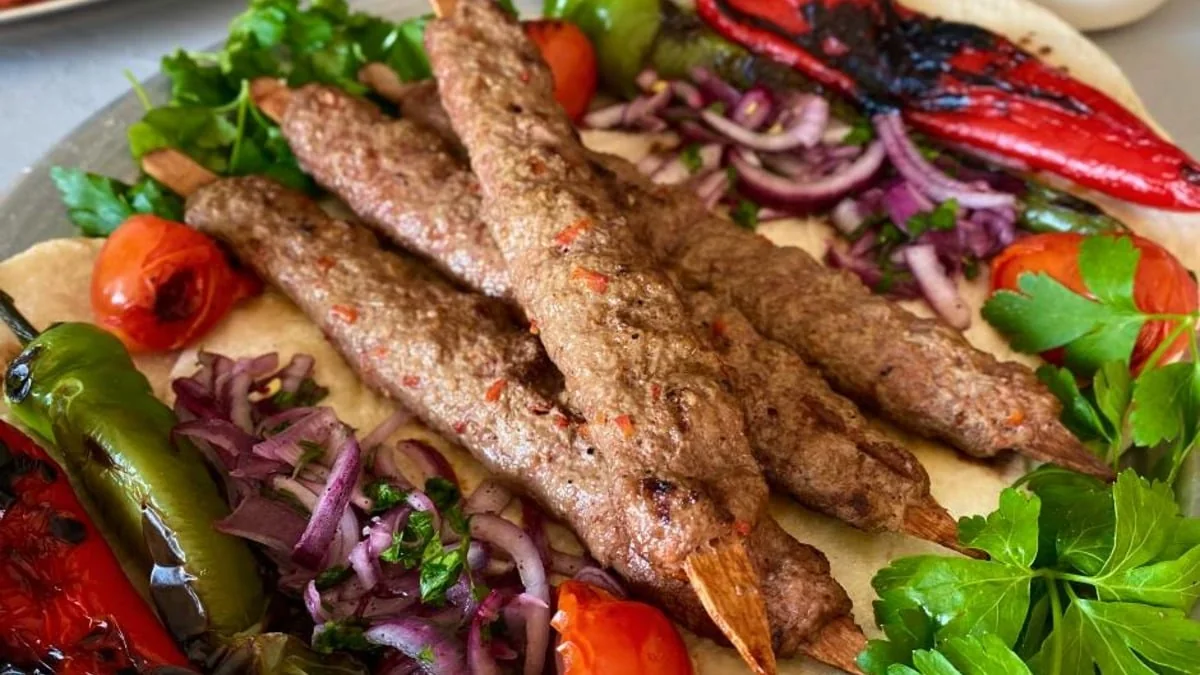
Chicken shish (tavuk şiş) is the lightest kebab in Sporty's catalog at about 380 kcal per serving, with 46 g of protein. İskender is the heaviest at about 720 kcal, nearly twice as much, because butter and pide add fat and carbohydrates. Adana kebab sits at 620 kcal and the chicken döner wrap at 560 kcal.
Key takeaways
- Chicken shish: about 380 kcal and 46 g protein; İskender: about 720 kcal (Sporty estimates).
- Half of İskender's calories come from fat, mostly butter and döner meat.
- Chicken shish gives 12.1 g of protein per 100 kcal, over twice the Adana or İskender.
- IARC classifies red meat as Group 2A and processed meat such as sucuk as Group 1.
- Bread is the largest single source of salt in Türkiye; WHO advises under 5 g of salt a day.
Which kebab has the fewest calories?
Chicken shish (tavuk şiş) is the lightest kebab in our meal catalog, at about 380 kcal per serving. At the other end, an İskender is about 720 kcal, almost twice as much (1.9 times). Between them sit kuzu tandır, the chicken döner wrap, a grilled köfte plate and the Adana kebab.
All numbers are Sporty's per-serving estimates. Real values depend on the cut of meat, the grill, the bread and the portion your kebab shop serves, so treat them as a realistic guide rather than exact figures.
| Kebab (catalog serving) | Calories | Protein | Carbs | Fat | Protein per 100 kcal |
|---|---|---|---|---|---|
| Chicken shish: 200 g chicken breast, peppers, onion | 380 kcal | 46 g | 8 g | 18 g | 12.1 g |
| Kuzu tandır: 220 g lamb shoulder, green salad | 520 kcal | 44 g | 4 g | 37 g | 8.5 g |
| Chicken döner wrap: 120 g döner in lavash | 560 kcal | 38 g | 50 g | 22 g | 6.8 g |
| Grilled köfte, roasted potatoes and piyaz | 590 kcal | 46 g | 48 g | 22 g | 7.8 g |
| Adana kebab: 150 g minced lamb, 60 g lavash | 620 kcal | 36 g | 40 g | 34 g | 5.8 g |
| İskender: 150 g döner, 80 g pide, yogurt, butter | 720 kcal | 40 g | 48 g | 40 g | 5.6 g |
Note that the servings are not identical. The chicken shish and tandır estimates include no bread, while the Adana comes with lavash and İskender sits on pide. That is how these dishes are usually served, and it is a big part of the difference.
Why is İskender almost twice a chicken shish?
Three things add up: the meat, the bread and the butter. İskender has 40 g of fat. At 9 kcal per gram, that is about 360 kcal, or half of the whole plate. The 80 g of pide underneath adds most of the 48 g of carbohydrates. The İskender calorie page breaks it down further.
The Adana kebab follows the same pattern at a smaller scale: minced lamb is fattier than chicken breast, and the lavash adds carbohydrates. About half of its 620 kcal comes from fat.
Kuzu tandır is an interesting middle case. It has almost no carbohydrates (4 g), but 37 g of fat from the lamb shoulder, which is why it lands at 520 kcal. Chicken shish wins because it combines lean meat and no bread: 46 g of protein, roughly 48% of its calories.
Which kebab gives the most protein?
In grams, the chicken shish and the köfte plate tie at 46 g. Per calorie, the chicken shish is far ahead with 12.1 g of protein per 100 kcal, more than twice the Adana (5.8 g) and İskender (5.6 g). If you are eating in a calorie deficit, that ratio matters: a 2015 review in the American Journal of Clinical Nutrition linked roughly 25 to 30 g of protein per meal with better appetite and weight management, though it described the effect on fullness as modest. Every kebab here clears 30 g; the chicken shish does it for the fewest calories. For the full ranking, see 10 Turkish dishes with the most protein per calorie.
How do kebabs compare with burgers, burritos and wraps?
Kebab is one of the world's great grilled street foods, so it is fair to compare it with the international options in the same catalog. A beef cheeseburger is about 640 kcal with 34 g of protein, which puts it between the Adana kebab and İskender. A beef burrito is about 650 kcal with 34 g. A grilled chicken wrap is 480 kcal with 34 g, and chicken fajitas are 460 kcal with 38 g. Gyros and shawarma are close cousins of döner, so the chicken döner wrap (560 kcal, 38 g) is a reasonable reference for them too. The pattern holds across cuisines: grilled chicken without much bread is the lightest, and fattier minced meat plus bread, cheese or butter pushes the total up.
How do you build a lighter kebab plate?
Sides change the total as much as the kebab itself. Some combinations using catalog numbers:
| Plate | Calories | Protein |
|---|---|---|
| Chicken shish + shepherd's salad | 540 kcal | 49 g |
| Chicken shish + cacık | 500 kcal | 53 g |
| Chicken shish + bulgur pilaf | 670 kcal | 54 g |
| Adana kebab + shepherd's salad | 780 kcal | 39 g |
| İskender + cacık | 840 kcal | 47 g |
Practical ordering tips:
- Ask for the butter on the side with İskender, or for less of it. Butter is the easiest part to scale.
- Treat the lavash as a side. Eat as much as you want rather than everything that arrives.
- Fill half the plate with salad and grilled vegetables. Çoban salata, közlenmiş biber and sumac onions add volume for few calories.
- Choose şiş over kıyma when you want a lighter meal: chunks of lean meat usually carry less fat than minced meat.
What does the evidence say about red meat?
Adana, İskender and tandır are red meat; chicken shish is not. The World Health Organization's cancer agency (IARC) classifies red meat (beef, lamb, veal, goat and other mammalian muscle meat) as Group 2A, "probably carcinogenic to humans", based on limited evidence from human studies and strong mechanistic evidence. Processed meat, meaning meat transformed by salting, curing, fermentation or smoking, such as sucuk, salami and sausages, is Group 1.
Two points keep this in proportion. Group 1 and 2A describe how strong the evidence is, not how large the risk is. And WHO itself states that meat can be part of a healthy diet and provides important nutrients, while noting that many national guidelines recommend limiting red and processed meat. In practice, that means variety: rotate red-meat kebabs with chicken, fish and legume dishes across the week.
Is salt the hidden factor?
Often, yes. Kebab plates combine grilled seasoned meat, bread, pickles and salty sides. In the SALTURK II study of 657 adults in four large Turkish cities, average salt intake measured from 24-hour urine was 14.8 g a day, and bread was the largest single source at about 34%. WHO recommends less than 5 g of salt per day for adults. Skipping extra salt at the table and going easy on the bread basket are two easy steps. The chicken shish calorie page has more tips, and if you are choosing between fast options, see döner vs burger vs pizza. Sporty can also estimate a kebab plate from a photo, sides included.
This is general information, not medical advice. If you have high blood pressure, kidney disease or a history of disordered eating, talk to a doctor or registered dietitian about what suits you.
Frequently asked questions
What is the lowest-calorie kebab?
In Sporty's catalog it is chicken shish, at about 380 kcal per serving with 46 g of protein. Real values depend on the portion and how it is served.
How many calories are in an Adana kebab?
About 620 kcal per serving in our catalog, for 150 g of minced lamb with 60 g of lavash and grilled vegetables, with 36 g of protein.
How many calories are in İskender?
About 720 kcal per serving in our catalog, with 40 g of protein and 40 g of fat. Asking for less butter is the easiest way to lighten it.
Is red meat in kebabs unhealthy?
WHO's cancer agency classifies red meat as probably carcinogenic (Group 2A), and WHO notes meat can still be part of a healthy diet. Many guidelines recommend limiting red and processed meat and varying protein sources.
Can I eat kebab while trying to lose weight?
Yes. Weight change depends on your total intake over time. Choosing şiş, adding salad and logging the plate makes it easy to fit a kebab into your day.
Sources
This article is general information, not medical advice. If you have a health condition, are pregnant or under 18, talk to a doctor or registered dietitian before changing your diet.