

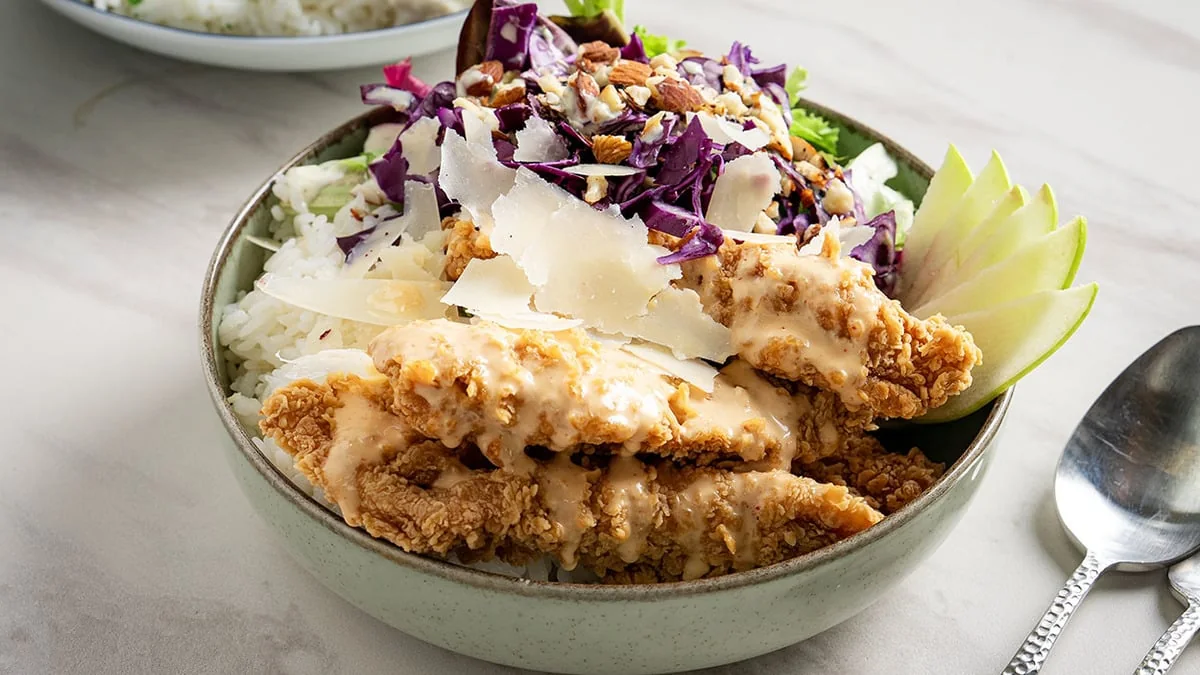
A balanced grain bowl combines about a quarter bowl of cooked grain such as rice, quinoa or bulgur, a palm-sized portion of protein, at least half the bowl of vegetables and one measured spoon of sauce or fat. Built this way, most bowls land around 450–600 kcal with 30 g of protein or more.
Key takeaways
- Use four parts: grain, protein, plenty of vegetables and a small, measured sauce.
- Half the bowl as vegetables keeps the volume high and the calories moderate.
- Whole grains such as bulgur, quinoa and brown rice add fibre; the Dietary Guidelines suggest making at least half your grains whole.
- Sauce, oil, avocado and crispy toppings decide most of the difference between a 450 and a 650 kcal bowl.
- Change the grain or the sauce portion to scale a bowl up or down without a new recipe.
What goes into a balanced grain bowl?
A grain bowl is one of the easiest meals to get right because it has a built-in structure. Instead of following a recipe, you fill the bowl with four parts and adjust the amounts. That makes it a good fit for weekday lunches, meal prep and dinners that use up what is already in the fridge.
- Grain (about a quarter of the bowl): rice, quinoa, bulgur, farro, barley, buckwheat or noodles.
- Protein (about a quarter): chicken, salmon, tuna, eggs, beef, tofu, tempeh, chickpeas or lentils.
- Vegetables (half or more): leafy greens, roasted vegetables, cucumber, tomatoes, cabbage, carrots, broccoli or edamame.
- Sauce and extras (one measured spoon or two): a dressing, yogurt sauce, avocado, seeds, nuts, cheese or pickles.
This is close to the plate model in the Dietary Guidelines for Americans, which suggest filling about half the plate with vegetables and fruit and making at least half of your grains whole grains. The World Health Organization also recommends at least 400 g of fruit and vegetables a day for adults, and a bowl with two big handfuls of vegetables covers a good part of that.
How much grain should a bowl have?
The grain is the main energy source in the bowl, so its portion has a big effect on the total. As a guide from USDA FoodData Central, 100 g of cooked white rice has about 130 kcal, cooked quinoa about 120 kcal and cooked bulgur about 83 kcal. Plain cooked pasta has about 160 kcal per 100 g.
| Cooked grain | kcal per 100 g | kcal in 150 g |
|---|---|---|
| Bulgur | 83 | about 125 |
| Quinoa | 120 | about 180 |
| White rice | 130 | about 195 |
| Pasta | 160 | about 240 |
The differences look small per 100 g, but they add up in a meal you eat several times a week, so it helps to weigh the grain a few times until you know what your usual portion looks like. For most people, 100–150 g of cooked grain (roughly a fist-sized portion, or 50–70 g dry) is a sensible starting point for one bowl. If you trained that day or have a larger energy target, add more. If you want a lighter bowl, keep the grain smaller and add extra vegetables instead. Whole grains such as bulgur, quinoa and brown rice bring more fibre than refined white rice, which helps a bowl feel more filling. Our guide to carbohydrates explains why the type of carbohydrate matters as well as the amount.
How do real grain bowls compare?
The table shows several bowls from our meal catalog. These are our per-serving estimates, and real values depend on recipe and portion.
| Bowl | kcal | Protein | Carbs | Fat |
|---|---|---|---|---|
| Protein-packed vegan salad (chickpeas, quinoa) | 420 | 20 g | 44 g | 18 g |
| Tofu and broccoli rice | 460 | 22 g | 60 g | 15 g |
| Chicken quinoa power bowl | 520 | 50 g | 45 g | 14 g |
| Poke bowl | 540 | 34 g | 60 g | 18 g |
| Bibimbap | 560 | 28 g | 72 g | 18 g |
| Honey mustard chicken bowl | 590 | 40 g | 58 g | 20 g |
| Teriyaki meatball bowl | 610 | 34 g | 66 g | 22 g |
| Ribeye steak bowl | 620 | 42 g | 50 g | 27 g |
The range is 420 to 620 kcal, and the gap comes mostly from three things: how much rice is in the bowl, the fat in the protein (ribeye versus chicken breast) and the sauce. The chicken quinoa power bowl gives the most protein for its calories, while the poke bowl gets more of its energy from sushi rice and avocado.
How do you choose the protein?
A palm-sized portion of cooked meat or fish, or a generous scoop of beans or tofu, gives most bowls 25–50 g of protein. Lean options such as chicken breast, white fish, tuna and tofu keep the calories lower, while salmon, beef and crispy coatings add more fat. Plant proteins such as chickpeas and lentils also add fibre and some carbohydrate, so a bowl built on them can use a little less grain. If you are working towards a daily protein target, a bowl is an easy meal to cover a third of it.
Why is the sauce the part to measure?
Sauces are where a light bowl quietly becomes a heavy one. Fat has about 9 kcal per gram, compared with 4 kcal for protein and carbohydrate, so oil-based dressings, mayonnaise sauces, tahini and avocado add up quickly. According to USDA FoodData Central, one tablespoon of olive oil has about 120 kcal and one tablespoon of regular mayonnaise about 95 kcal.
- Measure the dressing with a spoon instead of pouring from the bottle.
- Thin creamy sauces with plain yogurt, lemon juice or vinegar.
- Pick one rich topping, such as avocado or cheese or nuts, rather than all three.
- Keep sweet glazes such as teriyaki or honey mustard to a spoonful and add fresh herbs or chilli for flavour.
How can you adjust a bowl to your calorie target?
Example: someone with a 1,800 kcal daily target who wants a 500 kcal lunch could build a bowl with 120 g cooked quinoa (about 145 kcal), 120 g grilled chicken breast, a large handful of greens and roasted vegetables, and one tablespoon of olive oil with lemon. The same bowl with a double scoop of rice, extra avocado and a creamy dressing could easily reach 750 kcal or more.
- Lighter: halve the grain, double the vegetables, use a yogurt or vinegar-based dressing.
- More filling: add beans, lentils or edamame alongside the main protein.
- Bigger: on training days, add more grain or a piece of fruit rather than more sauce.
Grain bowls also work well for weekly meal prep: cook one grain and one or two proteins, chop vegetables, and keep sauces in separate jars until you eat. One batch of grain can become several different bowls simply by changing the sauce and vegetables each day. Whatever your target, avoid cutting so hard that a proper meal no longer fits. Intakes below about 1,200 kcal a day for women or 1,500 kcal for men should only happen under medical supervision, and if you are pregnant, under 18 or have a medical condition, a doctor or registered dietitian can advise on what suits you.
When the bowl is ready, a photo in Sporty logs it with its ingredients and shows how many calories you have left for the day. If the sauce is hidden underneath, add a short note so the estimate includes it.
Frequently asked questions
How many calories should a grain bowl have?
It depends on your daily target, but many balanced bowls land around 450–600 kcal. The bowls in our meal catalog range from 420 to 620 kcal per serving.
What is the healthiest grain for a bowl?
Any grain can fit, but whole grains such as bulgur, quinoa, brown rice and barley bring more fibre than refined white rice. The Dietary Guidelines suggest making at least half of your grains whole.
How much rice should I put in a bowl?
About 100–150 g of cooked rice, roughly a fist-sized portion, is a sensible start for one bowl. Cooked white rice has about 130 kcal per 100 g according to USDA FoodData Central.
Can I make grain bowls ahead for the week?
Yes. Cook the grain and protein in batches, keep them chilled, and store chopped vegetables and sauces separately so the bowl stays fresh until you eat.
Was this article helpful?
No ratings yet — be the first.
Tap a star to rate it — your rating helps us improve and helps other readers.
Sources
This article is general information, not medical advice. If you have a health condition, are pregnant or under 18, talk to a doctor or registered dietitian before changing your diet.