
Calorie guide · Korean
Bibimbap with beef and eggcalories and macros
One serving of Bibimbap with beef and egg has about 560 kcal, with 28 g protein, 72 g carbohydrates and 18 g fat. That is roughly 20% of calories from protein, 51% from carbs and 29% from fat.
Where the calories come from
- Protein28 g20%
- Carbs72 g51%
- Fat18 g29%
Bibimbap is a Korean bowl of 200 g of cooked rice topped with 80 g of seasoned beef, sautéed spinach, carrot and bean sprouts, a fried egg and 1 tbsp of spicy gochujang. A serving is roughly 560 kcal with 28 g of protein: the rice supplies most of the 72 g of carbohydrates, while the beef and egg provide much of the 18 g of fat.
Nutrition per serving
| Nutrient | Amount | Share of calories |
|---|---|---|
| Calories | 560 kcal | 100% |
| Protein | 28 g | 20% |
| Carbs | 72 g | 51% |
| Fat | 18 g | 29% |
What's in a typical serving
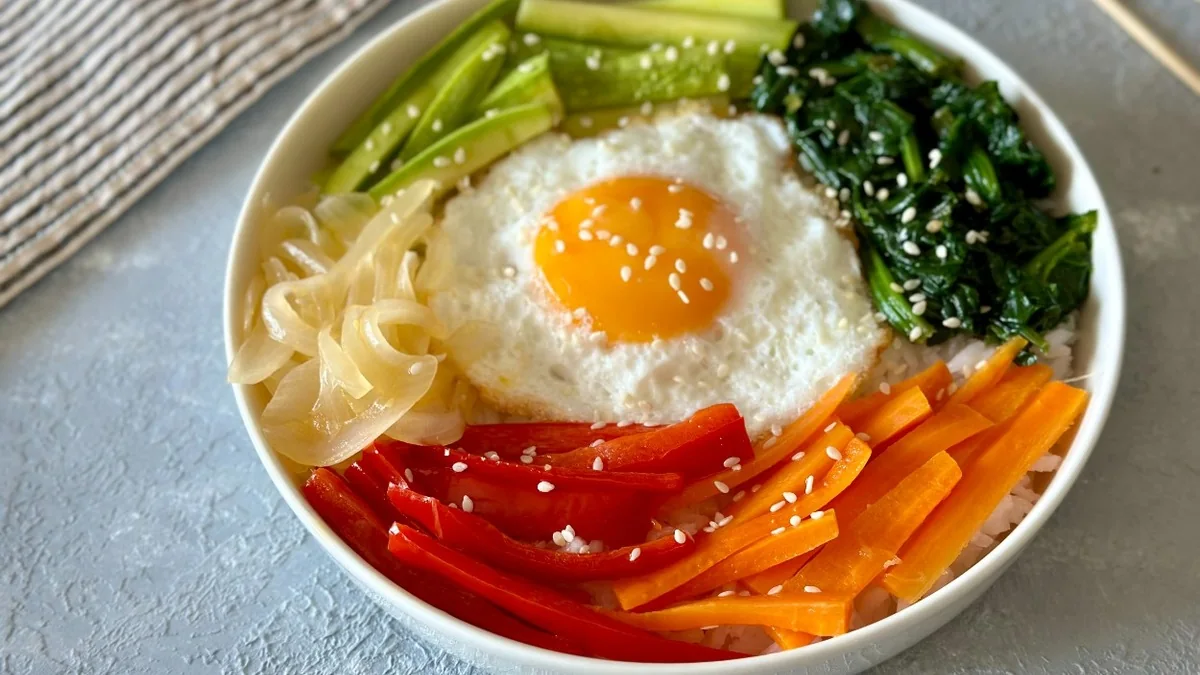
Korean rice bowl with seasoned beef, sautéed vegetables and a fried egg, finished with spicy gochujang.
- 200g Rice (cooked)
- 80g Beef
- 1 Egg
- Spinach, Carrot, Bean Sprouts
- 1 tbsp Gochujang
How to make it lighter
- Use a smaller scoop of rice and double the spinach, carrot and bean sprouts, so the bowl looks just as full.
- Cook the egg in a non-stick pan with very little oil, or use a soft-boiled egg instead of a fried one.
- Choose a lean cut of beef or swap part of it for tofu, and go easy on any sesame oil added at the end.
Lighter alternatives
Frequently asked questions
How many calories are in Bibimbap with beef and egg?
A typical serving of Bibimbap with beef and egg has about 560 kcal. The exact number depends on the recipe, the amount of oil or butter and the portion size.
Is Bibimbap with beef and egg high in protein?
Yes. With about 28 g of protein per serving (20% of its calories), Bibimbap with beef and egg is a good protein source.
Can I eat Bibimbap with beef and egg while losing weight?
Yes, if it fits your daily calorie target. Weight loss depends on your total intake over time, not on a single dish; portion size and added fats make the biggest difference.
Values are Sporty catalog estimates per serving, calculated from USDA FoodData Central values for the listed ingredients. Real values vary with recipe, oil and portion size.