
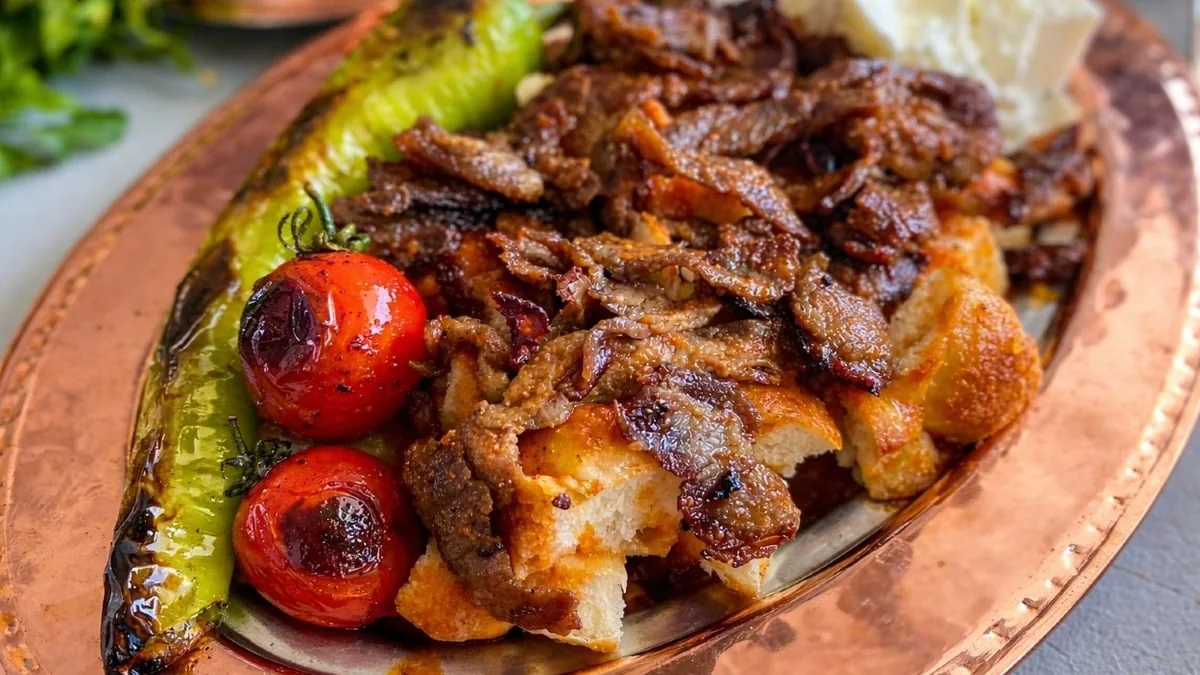
An İskender, at about 720 kcal per serving, equals roughly 168 minutes of steady walking for a 70 kg adult, more than WHO's 150 minutes of weekly activity. A chicken shish is about 89 minutes and lentil soup about 58. These are rough perspectives: food is not something you need to earn or burn off.
Key takeaways
- For a 70 kg adult walking at about 3.5 MET, minutes ≈ kcal ÷ 4.2875.
- İskender (about 720 kcal) equals roughly 168 minutes of walking; chicken shish about 89.
- Body size, pace and terrain change the numbers a lot, so treat them as a rough guide.
- Food choices usually move energy balance more than extra exercise does.
- Walking is worth it for heart, mood and sleep, whatever the calorie count.
Why look at food in walking minutes?
A calorie number on its own is abstract. "720 kcal" is hard to picture; "about 2 hours and 48 minutes of walking" is not. That translation is the only goal of this article: to give a rough sense of scale. It is not a rule that food has to be "earned" or "burned off". You eat to live, to enjoy and to share a table, and your body uses energy all day long, even while you sleep.
It also shows something useful: exercise is great for health, but it is a slow way to change your energy balance. What and how much you eat usually moves the number much more.
How did we calculate the minutes?
We used the standard MET method from the Compendium of Physical Activities. One MET is roughly the energy you use sitting at rest, and a walk at a comfortable, steady pace of about 4 to 4.7 km/h is listed at around 3.5 MET. The formula is:
- kcal per minute = MET × 3.5 × body weight (kg) ÷ 200
- For a 70 kg adult: 3.5 × 3.5 × 70 ÷ 200 = 4.2875 kcal per minute
- So minutes ≈ dish kcal ÷ 4.2875, rounded to the nearest minute.
The dish calories are Sporty's per-serving estimates from our meal catalog. Real values depend on the recipe and the size of your portion, and real energy use depends on your body, pace and terrain. Treat every number below as a rough perspective, not a target.
How many minutes of walking is each dish?
| Dish | Calories (per serving) | Walking minutes (70 kg) |
|---|---|---|
| İskender | 720 kcal | about 168 min (2 h 48 min) |
| Hamburger | 640 kcal | about 149 min |
| Adana kebab | 620 kcal | about 145 min |
| Mantı | 560 kcal | about 131 min |
| Chicken döner wrap | 560 kcal | about 131 min |
| Margherita pizza | 560 kcal | about 131 min |
| Karnıyarık | 460 kcal | about 107 min |
| Eggs with sucuk | 450 kcal | about 105 min |
| Lahmacun | 430 kcal | about 100 min |
| Chicken shish | 380 kcal | about 89 min |
| Red lentil soup | 250 kcal | about 58 min |
| Shepherd's salad | 160 kcal | about 37 min |
What stands out in these numbers?
- İskender is close to three hours. In our catalog an İskender is about 720 kcal, mostly from döner meat, pide and butter. At this pace that is about 168 minutes, more than the 150 minutes of moderate activity the WHO recommends for adults across a whole week.
- A chicken shish is about half of that. At about 380 kcal it equals roughly 89 minutes, and it has more protein than İskender (46 g against 40 g). Our guide to which kebab is lightest compares all the grills.
- Three very different dishes tie. Mantı, a chicken döner wrap and a margherita pizza are all about 560 kcal, so each is about 131 minutes.
- A bowl of lentil soup is under an hour. At about 250 kcal it is roughly 58 minutes, and a shepherd's salad is about 37.
Why are these numbers only a rough guide?
Several things change the result, sometimes a lot:
- Body size. The formula scales with weight. A 55 kg person uses about 3.37 kcal per minute at the same pace, so İskender would be about 214 minutes. A 90 kg person uses about 5.51 kcal per minute, or about 131 minutes.
- Pace. The Compendium lists brisk walking for exercise, at about 5.6 to 6.3 km/h, at around 4.8 MET. For a 70 kg adult that is about 5.88 kcal per minute, which turns İskender into about 122 minutes and lentil soup into about 43.
- Resting energy is included. The MET formula counts all the energy used during the walk, including about 1 MET your body would use sitting still anyway. Only around 2.5 of the 3.5 MET is extra, so the real "extra" burn is smaller than the table suggests.
- Hills, heat and fitness also shift energy use, and calorie estimates for food have their own margin.
So should you walk off your meals?
No. Thinking of food as something to pay back with exercise can turn meals into a source of guilt, and that is not a healthy relationship with food or movement. Your daily needs are covered mostly by your basal metabolism and normal daily activity, not by planned workouts. A big celebration meal does not need a three-hour walk the next morning.
What the table really shows is that small food choices and regular movement work best together. If weight loss is your goal, a moderate calorie deficit over time is what matters; our guide to the calorie deficit explains how it works. Choosing lighter dishes more often usually changes that balance more than adding extra exercise.
Why is walking still worth it?
Calories are the least interesting reason to walk. The WHO links regular physical activity with a lower risk of heart disease, high blood pressure, type 2 diabetes and some cancers, along with better mood, sleep and thinking. Walking is free, gentle on joints and easy to fit into a day: a walk after dinner, getting off the bus one stop early or taking the stairs.
If you want a realistic daily target, see how many steps a day help with weight loss. And if you'd like to keep an eye on both food and steps, Sporty can log a meal from a photo and show your steps from your phone's health app in one place.
How can you add more walking without counting minutes?
- Attach it to a habit. A short walk after lunch or dinner is easy to remember and pleasant after a big meal.
- Walk with someone. A friend, a family member or a phone call makes the time pass quickly.
- Split it up. Several short walks across the day count just as much as one long one.
- Build up slowly. If you are not active now, start with what feels comfortable and add a few minutes each week.
Who should get personal advice?
This is general information, not medical advice. If you are pregnant, under 18, living with a heart condition, diabetes or kidney disease, or have a history of eating disorders or compulsive exercise, talk to a doctor or registered dietitian before changing how you eat or move. If thinking about food in exercise minutes makes you anxious, it is fine to skip this kind of comparison altogether.
Frequently asked questions
How long do you have to walk to burn off an İskender?
For a 70 kg adult walking at a steady pace (about 3.5 MET), an İskender of about 720 kcal equals roughly 168 minutes. It is a rough perspective, not something you need to do after eating.
How do you calculate calories burned walking?
Multiply the activity's MET value by 3.5 and your weight in kg, then divide by 200 to get kcal per minute. For 70 kg at 3.5 MET, that is about 4.29 kcal per minute.
Do heavier people burn more calories walking?
Yes, at the same pace energy use rises with body weight. At 3.5 MET a 90 kg person uses about 5.51 kcal per minute and a 55 kg person about 3.37.
Should I exercise to make up for a big meal?
No. Food is not something to pay back with exercise, and one meal does not decide your progress. If eating or exercise feels compulsive, talk to a doctor or dietitian.
Sources
This article is general information, not medical advice. If you have a health condition, are pregnant or under 18, talk to a doctor or registered dietitian before changing your diet.