

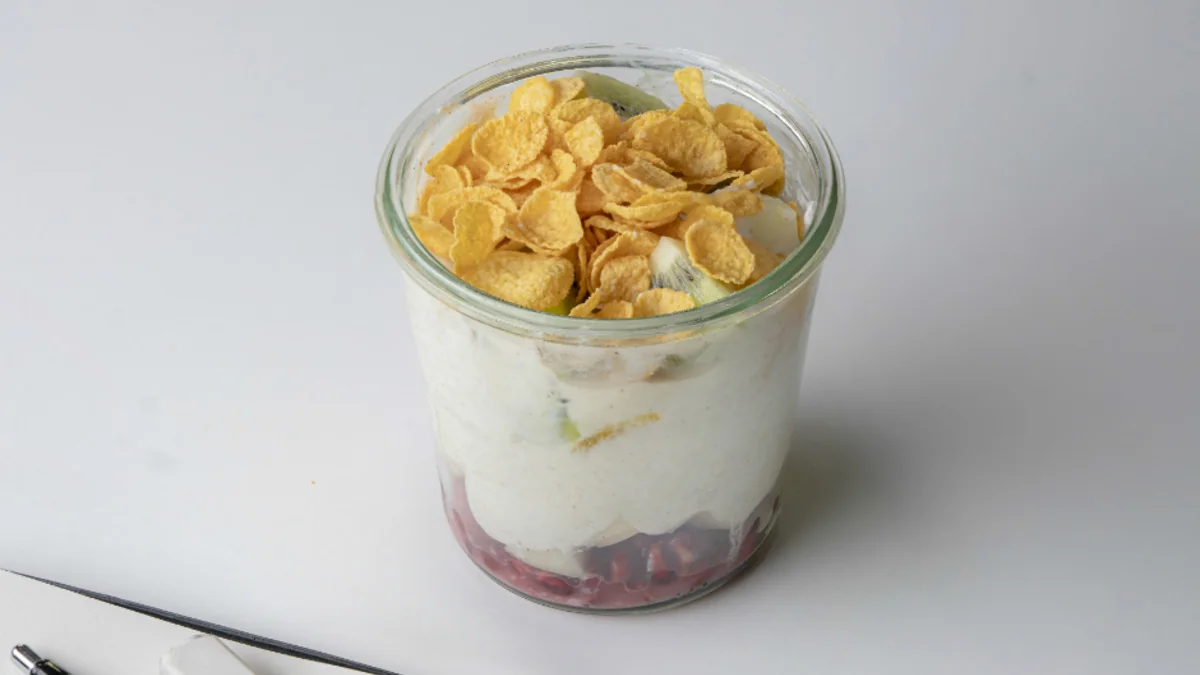
The best high-protein desserts start with yogurt, cottage cheese, milk or eggs instead of flour and cream, and use fruit, cocoa or cinnamon for sweetness. In Sporty's estimates, a cottage cheese fruit bowl gives 26 g of protein for 280 kcal, about three times the protein per calorie of pancakes or waffles.
Key takeaways
- Judge desserts by protein per 100 kcal: dairy-based ones come out on top.
- A cottage cheese fruit bowl has about 26 g protein for 280 kcal in Sporty's estimates.
- Chia pudding and açaí bowls look healthy but are not high in protein on their own.
- Protein does not cancel sugar: WHO advises keeping free sugars below 10% of daily energy.
- Measure energy-dense toppings like nuts, granola and chocolate chips.
What makes a dessert "high-protein"?
Most classic desserts are built from flour, sugar and fat: cakes, pastries, pancakes, waffles and ice cream. They are enjoyable, but they bring relatively little protein for their calories. A high-protein dessert flips the base: instead of flour and cream, it starts with foods such as yogurt, cottage cheese, milk, eggs or a protein powder, and uses fruit, cocoa, cinnamon or vanilla for flavour.
That shift is useful if you are trying to reach a daily protein target, or if you like to finish dinner with something sweet without adding a whole extra meal's worth of calories. A simple yardstick is protein per 100 kcal: the higher it is, the more protein you get for the energy.
How do high-protein desserts compare with classic ones?
The table below uses Sporty's per-serving estimates (real values depend on recipe and portion). Protein per 100 kcal is calculated from those numbers.
| Dish | kcal | Protein | Protein per 100 kcal |
|---|---|---|---|
| Protein shake (milk, whey, banana) | 300 | 30 g | 10.0 g |
| Cottage cheese and walnut fruit bowl | 280 | 26 g | 9.3 g |
| Protein pancakes | 380 | 30 g | 7.9 g |
| Yogurt and fruit | 230 | 16 g | 7.0 g |
| Homemade protein bar | 220 | 10 g | 4.5 g |
| Crêpes | 360 | 12 g | 3.3 g |
| Chia pudding | 300 | 9 g | 3.0 g |
| Pancakes | 450 | 13 g | 2.9 g |
| Waffles | 430 | 11 g | 2.6 g |
| Açaí bowl | 380 | 7 g | 1.8 g |
Two things stand out. First, dairy-based desserts sit at the top: a cottage cheese fruit bowl gives about three times as much protein per calorie as pancakes or waffles. Second, "healthy-looking" desserts are not automatically high in protein. A chia pudding or an açaí bowl can be a fine choice, but on their own they are fruit-and-fat desserts, not protein ones.
Which high-protein desserts are easy to make at home?
1. Cottage cheese fruit bowl
Cottage cheese with berries or sliced fruit, a few walnuts and a pinch of cinnamon. It needs no cooking and is one of the highest-protein options in the table. If you prefer a smoother texture, blend the cottage cheese first.
2. "Cheesecake" yogurt bowl
Thick plain yogurt mixed with vanilla and a little lemon zest, topped with crushed wholegrain biscuit or oats and fruit. It tastes like cheesecake filling for a fraction of the effort. The NHS notes that plain lower-fat yogurts usually do not contain added sugars, while flavoured ones should be checked on the label.
3. Chocolate yogurt mousse
Stir unsweetened cocoa powder into thick yogurt, sweeten lightly with mashed banana or a small amount of honey, and chill. A spoon of protein powder makes it richer in protein if you already use one; you do not need it, as our guide on whether you need protein powder explains.
4. Protein pancakes with fruit
Made with eggs, oats and yogurt or protein powder, they work as a warm dessert as well as a breakfast. Sporty's estimate is 380 kcal with 30 g of protein per serving. Top with fruit and yogurt rather than syrup and butter.
5. Baked fruit with yogurt
A baked apple or pear with cinnamon and a few raisins, served with a big spoon of thick yogurt. The NHS suggests baked fruit as a way to use fruit for sweetness instead of added sugar.
6. Frozen yogurt bark
Spread thick yogurt on a lined tray, scatter berries and chopped nuts over it, freeze and break into pieces. Keep it in the freezer for a cold dessert in summer.
7. Chia pudding made with milk and yogurt
If you like chia pudding, making it with milk and stirring in yogurt before serving raises the protein compared with a water- or plant-drink-based version.
How much sugar is sensible in a dessert?
Protein does not cancel out sugar. WHO recommends keeping free sugars below 10% of daily energy, which is about 50 g (roughly 12 teaspoons) for someone eating around 2,000 kcal, and says that going down to 5% or less may bring further benefits. The NHS sets a maximum of 30 g of free sugars a day for adults.
Free sugars include sugar added to food, plus the sugars in honey, syrups and fruit juices. The sugars naturally present in milk and whole fruit do not count. That is why fruit, yogurt and cottage cheese make such a good base: they taste sweet without using much of your free-sugar budget. A teaspoon of honey on a yogurt bowl is fine; a pour of syrup over a stack of pancakes adds up quickly. Our guide to sugar limits and hidden sources covers this in detail.
Are shop-bought protein desserts worth it?
Protein puddings, protein ice creams and protein bars can be convenient, but read the label. Check the protein per portion, the calories and the sugar, and compare them with a simple yogurt bowl. Some products are genuinely high in protein; others are regular snacks with a small amount of added protein and a large price premium. The NHS advises checking flavoured dairy products for added sugar, and the same habit works for any dessert marketed as "high-protein".
How do high-protein desserts fit into a weight-loss plan?
- Plan it in. If you know you like something sweet after dinner, leave room for it in your day rather than treating it as a slip.
- Count it as protein. A 26 g protein dessert can do the job of a protein snack; you may need less protein elsewhere.
- Watch the toppings. Nuts, nut butter, granola and chocolate chips are tasty but energy-dense. Measure them with a spoon.
- Keep the portion honest. A "healthy" dessert eaten in a double portion still adds up.
If you are logging, a photo of your bowl or a quick description such as "200 g cottage cheese, a handful of berries, 3 walnut halves, 1 tsp honey" is enough for Sporty to estimate it, and you can adjust the portion before you save. For more sweet-craving strategies, see lighter desserts and swaps.
A note on protein: most healthy adults can eat higher-protein desserts without concern. If you have kidney disease, talk to your doctor or a registered dietitian before increasing your protein intake.
Frequently asked questions
What is the highest-protein dessert?
Among Sporty's estimates, a protein shake (30 g protein for 300 kcal) and a cottage cheese fruit bowl (26 g for 280 kcal) give the most protein per calorie. Thick yogurt-based desserts follow closely.
Are protein bars a good dessert?
They can be convenient, but check the label. Sporty's estimate for a homemade protein bar is 220 kcal with 10 g of protein, which is less protein per calorie than a yogurt or cottage cheese bowl.
Can I eat dessert while losing weight?
Yes. Planning a dessert into your day, choosing a protein-rich base and keeping toppings measured lets you enjoy something sweet within your calorie target.
Does the sugar in fruit and yogurt count as free sugar?
No. The NHS does not count sugars naturally present in whole fruit and milk as free sugars. Honey, syrups and fruit juice do count.
Was this article helpful?
No ratings yet — be the first.
Tap a star to rate it — your rating helps us improve and helps other readers.
Sources
This article is general information, not medical advice. If you have a health condition, are pregnant or under 18, talk to a doctor or registered dietitian before changing your diet.