

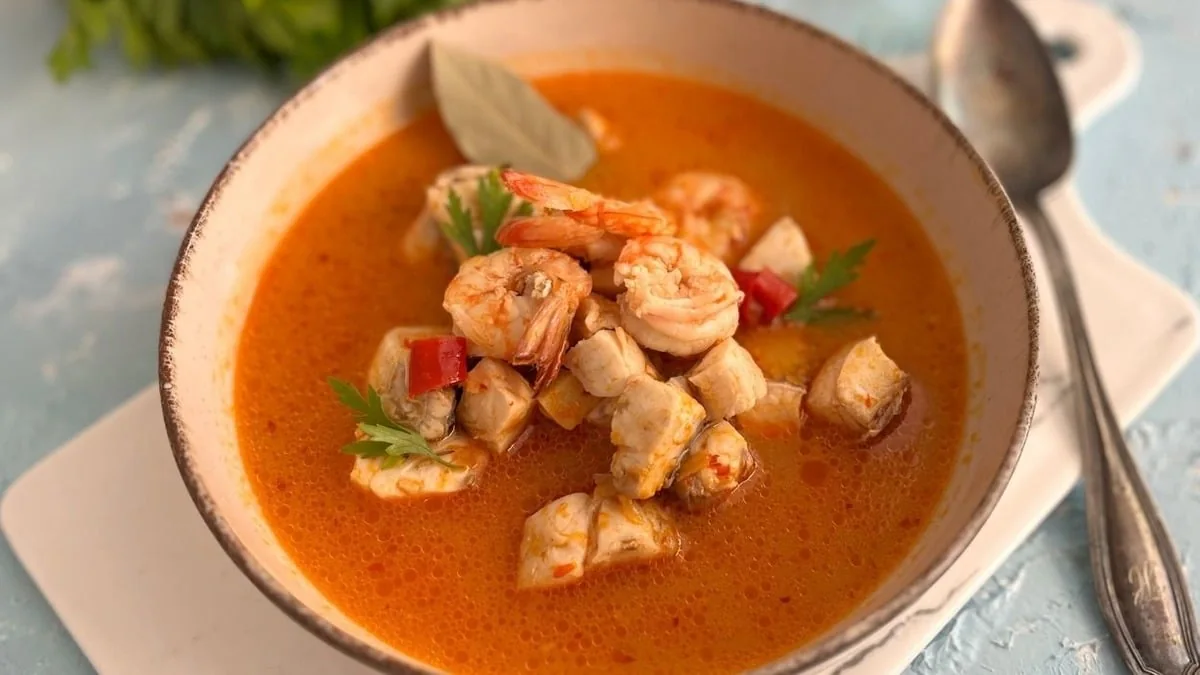
In Sporty's estimates, tom yum goong is about 230 kcal with 24 g of protein, while Thai green chicken curry is about 560 kcal and pad thai with chicken about 580 kcal. Coconut milk, frying oil, sugar and large noodle or rice portions explain most of the difference. Clear soups, salads and stir-fries keep Thai meals lighter.
Key takeaways
- Tom yum goong is about 230 kcal with 24 g of protein, one of the lightest protein-rich restaurant dishes in the Sporty catalog.
- Green chicken curry is about 560 kcal, with about 40% of its energy from fat, mostly from coconut milk.
- Pad thai with chicken is about 580 kcal with 66 g of carbohydrate; sugar, oil and peanuts add up.
- Fish sauce, soy sauce and curry pastes are salty; the WHO advises adults to keep salt below 5 g a day.
- A clear soup plus a stir-fry or curry, with one portion of rice, is a balanced order.
Can Thai food fit into a weight-loss plan?
Yes. Thai cooking is built on fresh herbs, chillies, lime, vegetables and lean proteins such as chicken, prawns, fish and tofu, which are a good base for lighter meals. The calories mostly come from three places: coconut milk in curries, oil and sugar in fried noodles and sauces, and generous portions of rice or noodles. Knowing which dishes lean on these makes it easy to order something you enjoy and still stay on track.
The numbers below are Sporty's per-serving estimates. Restaurant portions and recipes vary a lot, so treat them as a realistic starting point rather than exact values.
How do popular Thai dishes compare?
Here are four Thai favourites and a shrimp noodle dish for comparison, side by side:
| Dish | kcal | Protein | Carbs | Fat |
|---|---|---|---|---|
| Tom Yum Goong | 230 | 24 g | 14 g | 9 g |
| Thai Green Chicken Curry | 560 | 36 g | 46 g | 26 g |
| Pad Thai with Chicken | 580 | 32 g | 66 g | 20 g |
| Spring Rolls | 320 | 9 g | 38 g | 15 g |
| Shrimp Noodles | 500 | 28 g | 64 g | 14 g |
The same dishes sorted by calories, with protein per 100 kcal as a simple hint of how filling each may be:
| Dish | Calories | Protein | Fat | Protein per 100 kcal |
|---|---|---|---|---|
| Tom yum goong (hot and sour prawn soup) | 230 kcal | 24 g | 9 g | 10.4 g |
| Spring rolls | 320 kcal | 9 g | 15 g | 2.8 g |
| Shrimp noodles | 500 kcal | 28 g | 14 g | 5.6 g |
| Thai green chicken curry | 560 kcal | 36 g | 26 g | 6.4 g |
| Pad thai with chicken | 580 kcal | 32 g | 20 g | 5.5 g |
Tom yum goong is the standout: 24 g of protein for 230 kcal, thanks to prawns in a clear, spicy broth. Spring rolls are the opposite: mostly wrapper and frying oil, with little protein, so they work better as a shared starter than as a meal.
Where do the calories in Thai food come from?
Coconut milk
Green, red, massaman and panang curries are made with coconut milk, which is rich in fat. In the green chicken curry, 26 g of fat × 9 kcal = 234 kcal, or about 40% of the dish. The NHS lists coconut cream and coconut oil among foods high in saturated fat, and advises men to keep saturated fat below 30 g a day and women below 20 g. You do not need to avoid curry, but a coconut-based dish is the place to keep the rest of the meal light.
Noodles, sugar and oil
Pad thai is stir-fried rice noodles with tamarind, sugar, fish sauce, egg, peanuts and oil. At about 580 kcal and 66 g of carbohydrate, it is one of the more energy-dense choices on the menu. Other wok-fried noodle dishes, such as pad see ew or drunken noodles, follow a similar pattern.
Rice and sides
Jasmine rice and sticky rice come with most curries and stir-fries, and fried rice adds oil on top. A typical restaurant serving of rice can be large, so sharing one portion or asking for a smaller one makes a noticeable difference.
Salt
Fish sauce, soy sauce, oyster sauce and curry pastes give Thai food its depth, but they are salty. The WHO names soy and fish sauce as major sources of sodium in some diets and advises adults to keep salt below 5 g a day. Drinking water with the meal and not adding extra sauce at the table helps.
How do lighter and heavier Thai orders compare?
| Order | Calories | Protein |
|---|---|---|
| Spring rolls + pad thai | 900 kcal | 41 g |
| Spring rolls + green curry | 880 kcal | 45 g |
| Tom yum + pad thai | 810 kcal | 56 g |
| Tom yum + green curry | 790 kcal | 60 g |
| Tom yum + shrimp noodles | 730 kcal | 52 g |
Swapping a fried starter for a clear soup saves about 90 kcal and adds about 15 g of protein. Combined with a curry, the soup-first order gives 60 g of protein for less energy than spring rolls with pad thai. If you are hungry, the broth also takes the edge off before the main course arrives.
Cooking Thai food at home gives you even more control. You can replace part of the coconut milk in a curry with stock, double the vegetables, and use less sugar and oil in pad thai with just a teaspoon of peanuts on top. Most of the flavour comes from curry paste, lime, fresh herbs and chilli, so these changes cut calories without losing much taste.
What are smart picks on a Thai menu?
- Soups. Tom yum with prawns or chicken, or a clear vegetable soup. Tom kha is made with coconut milk, so it is richer.
- Salads. Som tam (green papaya salad), larb (minced meat salad with herbs and lime) and yum woon sen (glass noodle salad) are fresh and usually light, though dressings can be sweet.
- Grills and stir-fries. Grilled chicken (gai yang), steamed fish with lime and chilli, or a stir-fry with basil, cashews or ginger. Ask for less oil if you can.
- Curries. Jungle curry is made without coconut milk and is lighter than green or massaman curry. If you choose a coconut curry, eat the meat and vegetables and leave some of the sauce.
- Rice. Steamed rice instead of fried rice, and one portion per person or less.
- Drinks and desserts. Thai iced tea and mango sticky rice are sweetened and made with condensed or coconut milk. Share or plan for them.
For more ordering ideas across cuisines, see our Asian takeaway guide.
How do you log a shared Thai meal?
Sharing several dishes makes portions hard to guess. Put your share on a plate before you start eating, and take a photo: Sporty can estimate the plate from a picture, and you can adjust the portion afterwards. Logging roughly is far more useful than not logging at all.
Does one Thai takeaway ruin your progress?
No. Weight change follows your intake over weeks, not one dinner. A richer meal uses up part of your weekly deficit, and the next day you simply return to your usual plan. There is no need to eat very little to compensate; going below about 1,200 kcal a day for women or 1,500 kcal for men should only happen under medical supervision.
This article is general information, not medical advice. If you have high blood pressure, kidney disease or diabetes, are pregnant, under 18 or have a history of disordered eating, talk to a doctor or registered dietitian about what suits you.
Frequently asked questions
What is the lowest-calorie Thai dish?
Clear soups such as tom yum are among the lightest. In Sporty's estimates, tom yum goong is about 230 kcal with 24 g of protein. Fresh salads like som tam are also light.
Is Thai green curry healthy?
It is rich in vegetables and protein, but coconut milk makes it high in fat. In Sporty's estimates it is about 560 kcal, with roughly 40% of its energy from fat.
How many calories are in pad thai?
Pad thai with chicken is about 580 kcal with 32 g of protein and 66 g of carbohydrate in Sporty's estimates. Restaurant portions can be larger.
Is Thai food high in salt?
It can be, because fish sauce, soy sauce and curry pastes are salty. The WHO advises adults to keep salt below 5 g a day.
Was this article helpful?
No ratings yet — be the first.
Tap a star to rate it — your rating helps us improve and helps other readers.
Sources
This article is general information, not medical advice. If you have a health condition, are pregnant or under 18, talk to a doctor or registered dietitian before changing your diet.