

Swapping a granola and yogurt bowl for plain yogurt with fruit saves about 190 kcal and even adds a little protein. Across 10 breakfast swaps that keep the same base, such as sucuk eggs to a spinach omelette or waffles to protein pancakes, savings run from 50 to 190 kcal each, based on Sporty's per-serving estimates.
Key takeaways
- Granola with yogurt to yogurt and fruit is the biggest swap: about 190 kcal saved.
- Most savings come from butter, cheese, sausage, frying oil, granola or nuts, because fat has 9 kcal per gram.
- One tablespoon less oil in the pan saves roughly 120 kcal.
- Some swaps mainly add protein: waffles to protein pancakes almost triples it, from 11 g to 30 g.
- Two or three swaps a week add up; the original breakfasts still have a place.
How did we choose these breakfast swaps?
A useful swap keeps the part of breakfast you enjoy, such as eggs and vegetables, something sweet with fruit, or a crunchy bowl, and changes the part that carries most of the calories. At breakfast that part is usually butter, cheese, processed meat, frying oil, granola or nuts. Fat has 9 kcal per gram, against 4 kcal for protein and carbohydrate, so a small change in fat moves the total more than anything else.
Every swap below pairs two breakfasts from our meal catalog that share a base: the same eggs, the same batter, the same yogurt or the same berries. The calories saved are simple subtraction between Sporty's per-serving estimates. Real values depend on the recipe, the brand and your portion, so read them as a realistic guide rather than exact figures. None of these breakfasts is "good" or "bad". The originals are worth enjoying; the swaps are options for ordinary weekdays.
Which 10 breakfast swaps save the most calories?
1. Granola with yogurt → yogurt and fruit: about 190 kcal saved
This is the most surprising one. A bowl of homemade granola with yogurt, walnuts, almonds and honey is about 420 kcal in our catalog. Keep the yogurt and fruit and drop the granola and nuts, and the bowl is about 230 kcal. Protein even goes up slightly, from 14 g to 16 g, because a 200 g serving of yogurt replaces the 150 g one. If you love the crunch, a tablespoon of granola on top keeps the texture for far fewer calories than a full 50 g serving.
| Dish | kcal | Protein | Carbs | Fat |
|---|---|---|---|---|
| Homemade Granola with Yogurt | 420 | 14 g | 52 g | 18 g |
| Yogurt and fruit | 230 | 16 g | 32 g | 5 g |
2. Eggs with sucuk → spinach omelette: about 150 kcal saved
Eggs with Turkish sausage are about 450 kcal, with 38 g of fat from 50 g of sucuk and butter. A three-egg spinach omelette is about 300 kcal and still gives 21 g of protein. The same logic works for bacon, chorizo or other sausages: the eggs are rarely where the calories are.
3. Menemen with white cheese → vegetable omelette: about 140 kcal saved
Menemen with 50 g of white cheese and butter is about 460 kcal. A vegetable omelette with peppers, tomato, mushrooms and onion is about 320 kcal. You keep the eggs, tomatoes and peppers; protein falls from 28 g to 22 g, mostly because the cheese is gone.
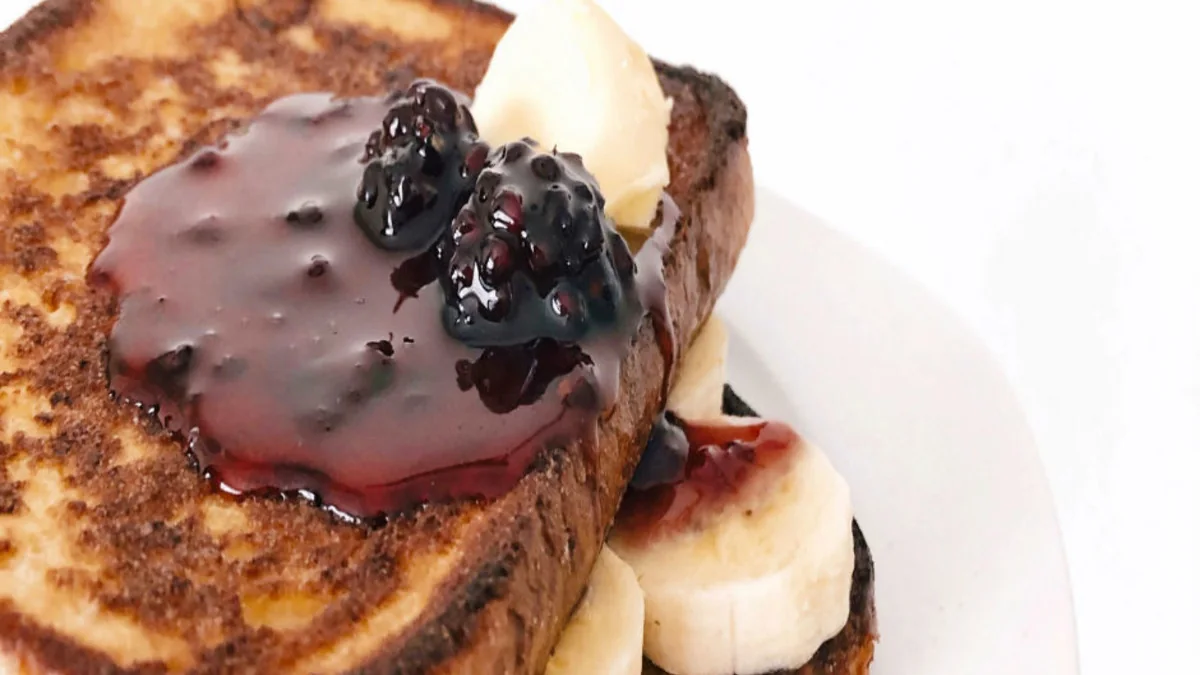
4. French toast → cottage cheese and fruit bowl: about 140 kcal saved
French toast fried in butter and served with berries is about 420 kcal with 16 g of protein. A bowl of 150 g cottage cheese, strawberries, three walnuts and cinnamon is about 280 kcal with 26 g of protein. Both give you the berry-and-cinnamon flavour; the bowl simply skips the bread and frying fat.
5. One tablespoon less oil in the pan: about 120 kcal saved
A tablespoon of oil is roughly 13.5 g, and 13.5 × 9 is about 120 kcal. Eggs, vegetables and pancakes cook well in a non-stick pan with a teaspoon of oil, or with a spray. This swap works on almost every cooked breakfast in this list.
6. Pancakes → crêpes with yogurt and fruit: about 90 kcal saved
Pancakes and crêpes start from the same batter of flour, egg and milk. Thick pancakes with butter and honey are about 450 kcal; thin crêpes filled with fruit and yogurt are about 360 kcal. The thinner batter uses less flour, and yogurt replaces the butter on top.
7. Crispy cheese rolls → zucchini fritters: about 80 kcal saved
Both bring white cheese and fresh herbs to the table. Crispy cheese rolls made with yufka pastry and fried in sunflower oil are about 380 kcal. Zucchini fritters, with 200 g of grated zucchini, one egg and a little flour, are about 300 kcal. Pan-frying the fritters in less oil, or baking them, can lower the total further.
8. Açaí bowl → protein shake: about 80 kcal saved
Both are blended, banana-based breakfasts. An açaí bowl with granola, almonds and coconut is about 380 kcal with 7 g of protein. A protein shake made with low-fat milk, whey, half a banana and cocoa is about 300 kcal with 30 g of protein. If you prefer whole foods to protein powder, a smoothie bowl with Greek yogurt is a middle ground.
9. Chia pudding → yogurt and fruit: about 70 kcal saved
Chia pudding with milk, berries and honey is about 300 kcal with 9 g of protein. A bowl of yogurt with strawberries, pomegranate and a teaspoon of honey is about 230 kcal with 16 g of protein. Chia seeds are rich in fibre, so if you keep the pudding, a smaller spoonful of seeds still gives you some of that benefit.
10. Waffles → protein pancakes: about 50 kcal saved
Waffles with melted butter, fruit and honey are about 430 kcal with 11 g of protein. Protein pancakes made with ground oats, eggs, Greek yogurt and a little protein powder are about 380 kcal with 30 g of protein. The calorie gap is small, but protein almost triples, which can make the meal more filling.
How much do all 10 swaps add up to?
| Swap | Before | After | Saved | Protein |
|---|---|---|---|---|
| Granola with yogurt → yogurt and fruit | 420 kcal | 230 kcal | 190 kcal | 14 → 16 g |
| Eggs with sucuk → spinach omelette | 450 kcal | 300 kcal | 150 kcal | 24 → 21 g |
| Menemen with cheese → vegetable omelette | 460 kcal | 320 kcal | 140 kcal | 28 → 22 g |
| French toast → cottage cheese fruit bowl | 420 kcal | 280 kcal | 140 kcal | 16 → 26 g |
| One tablespoon less oil | — | — | about 120 kcal | — |
| Pancakes → crêpes | 450 kcal | 360 kcal | 90 kcal | 13 → 12 g |
| Cheese rolls → zucchini fritters | 380 kcal | 300 kcal | 80 kcal | 13 → 12 g |
| Açaí bowl → protein shake | 380 kcal | 300 kcal | 80 kcal | 7 → 30 g |
| Chia pudding → yogurt and fruit | 300 kcal | 230 kcal | 70 kcal | 9 → 16 g |
| Waffles → protein pancakes | 430 kcal | 380 kcal | 50 kcal | 11 → 30 g |
You would only ever make one of these swaps on a given morning. Across a week, though, two or three of them on the breakfasts you eat most often can save several hundred calories without changing what your mornings feel like. For more ideas built around eggs, yogurt and oats, see our high-protein breakfast ideas, or see what 300 calories of breakfast looks like on real plates.
What should you watch out for?
- Do not drop protein too far. Swaps 2 and 3 lower protein a little. Adding a pot of yogurt or a slice of white cheese keeps breakfast filling.
- Watch the extras. Juice, sweetened coffee and an extra slice of bread can win back the calories a swap saved. The WHO advises keeping free sugars below 10% of daily energy.
- Do not go too low. Swaps are meant to trim, not to push your day to very few calories. Eating below about 1,200 kcal a day for women or 1,500 kcal for men should only happen under medical supervision.
- Enjoy the originals. Weekend pancakes or a shared plate of sucuk are part of a normal, balanced life. Your overall pattern matters more than any single breakfast.
If you are unsure where your own breakfast calories come from, Sporty can estimate a plate from a photo and show the split between protein, carbohydrate and fat.
Who should get personal advice?
This is general information, not medical advice. If you are pregnant, under 18, living with diabetes or kidney disease, or have a history of eating disorders, talk to a doctor or registered dietitian before changing how you eat.
Frequently asked questions
Which breakfast swap saves the most calories?
In Sporty's catalog, swapping a homemade granola and yogurt bowl (about 420 kcal) for yogurt with fruit (about 230 kcal) saves about 190 kcal. Protein stays similar, at 14 g against 16 g.
Are eggs a good choice for a lighter breakfast?
Eggs themselves are a solid protein source. Most of the extra calories in egg breakfasts come from sausage, cheese and butter, so a spinach or vegetable omelette is usually the lighter option.
Is granola high in calories?
Granola is energy-dense because it usually contains oats, nuts, oil and sweeteners. A full serving adds up quickly, so using a tablespoon as a topping keeps the crunch for fewer calories.
Should I skip breakfast to save calories?
Swapping is usually more helpful than skipping. The NHS notes that a breakfast high in fibre and low in fat, sugar and salt can be part of a balanced diet, and your total intake across the day is what drives weight change.
Was this article helpful?
No ratings yet — be the first.
Tap a star to rate it — your rating helps us improve and helps other readers.
Sources
This article is general information, not medical advice. If you have a health condition, are pregnant or under 18, talk to a doctor or registered dietitian before changing your diet.