

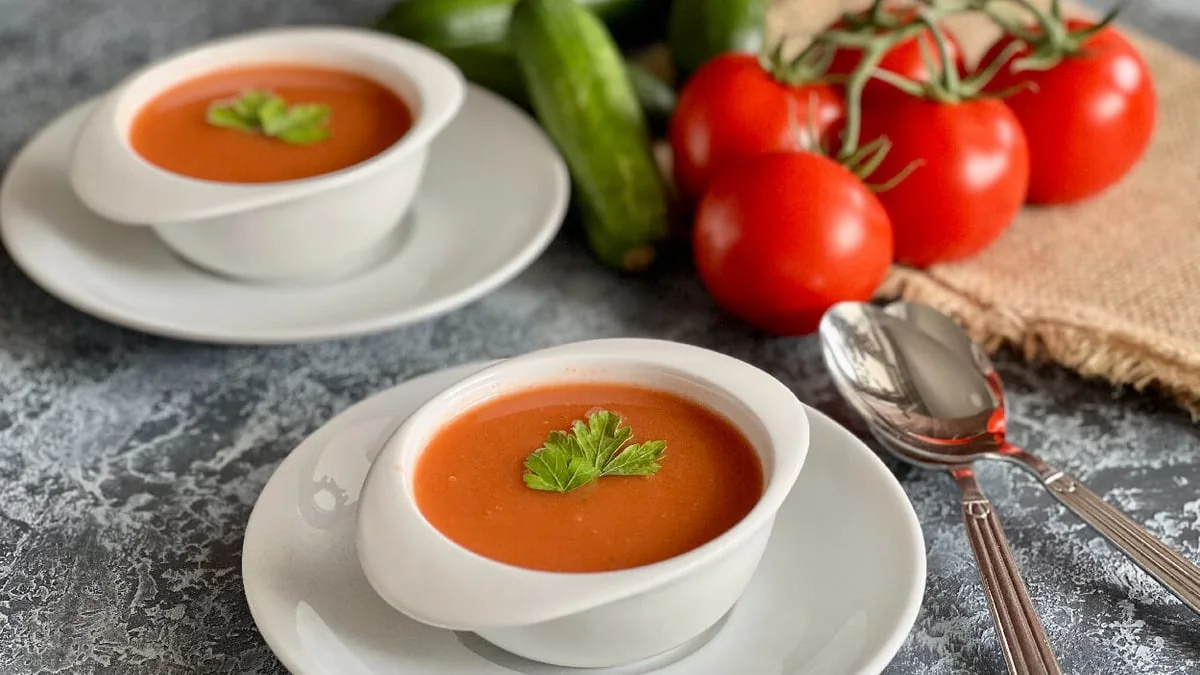
Soup can help with weight loss because it gives a large, warm portion for few calories. Most light soups, from gazpacho to red lentil soup, are 170–260 kcal per serving. In a lab study, starting lunch with vegetable soup cut total meal intake by about 20 %. Add protein on the side to make it a full meal.
Key takeaways
- Nine of ten soups in Sporty's catalog are 170–260 kcal per serving; ramen is the exception at 560 kcal.
- In one lab study, a vegetable soup starter cut total meal intake by about 20 % (around 134 kcal).
- Tom yum and chicken soup give the most protein per calorie; lentil soups add fibre.
- Pair a light soup with a lean protein main for a filling meal under 650 kcal.
- Butter, cream, noodles and stock cubes add calories or salt; adjust those first.
Can soup really help with weight loss?
Soup has no special fat-burning property, but it has two things going for it: it is mostly water, and it takes time to eat. That combination gives you a big, warm bowl for relatively few calories, which can make it easier to stay in a calorie deficit without feeling deprived.
There is some evidence for this. In a laboratory study at Penn State, Flood and Rolls (2007) gave 60 normal-weight adults a bowl of low-calorie vegetable soup before lunch on some days and no soup on others. On soup days, people ate less of the main meal, and their total intake for the meal, soup included, was about 20 % lower, roughly 134 kcal less. It did not matter whether the soup was chunky, puréed or served as broth and vegetables separately.
That is one study of single meals in a lab, so it does not prove soup will change your weight over months. It does support a simple, practical idea: starting a meal with a light soup can take the edge off your appetite.
How many calories are in soups from around the world?
Here are ten soups from our meal catalog, ordered by calories. Values are Sporty's per-serving estimates; real values depend on recipe and portion, especially the amount of oil, butter, cream or noodles.
| Soup | Origin | kcal | Protein | Carbs | Fat |
|---|---|---|---|---|---|
| Gazpacho | Spain | 170 | 3 g | 16 g | 11 g |
| Tomato soup | International | 200 | 5 g | 24 g | 10 g |
| Broccoli soup | International | 210 | 8 g | 20 g | 11 g |
| Yayla soup (yogurt and rice) | Turkey | 220 | 9 g | 28 g | 8 g |
| Tom yum goong | Thailand | 230 | 24 g | 14 g | 9 g |
| Red lentil soup | Turkey | 250 | 13 g | 38 g | 6 g |
| Ezogelin soup | Turkey | 260 | 11 g | 42 g | 6 g |
| Minestrone | Italy | 260 | 10 g | 42 g | 6 g |
| Chicken soup | Turkey | 260 | 22 g | 24 g | 8 g |
| Ramen | Japan | 560 | 30 g | 66 g | 18 g |
Nine of the ten sit between 170 and 260 kcal. Ramen is the clear exception: with 100 g of noodles, pork chashu and an egg, it is a full meal rather than a starter. For a closer look at Turkish favourites, see our guide to light Turkish soups and their calories.
Which soups keep you full the longest?
Volume helps, but protein matters too. Reviews of feeding studies, such as Leidy and colleagues (2015), describe a modest but consistent satiety effect from higher-protein meals. Comparing protein per 100 kcal shows which bowls give you the most:
- Tom yum goong: about 10.4 g protein per 100 kcal, thanks to 150 g of shrimp in a clear, spicy broth.
- Chicken soup: about 8.5 g per 100 kcal, with 100 g of chicken breast and a little vermicelli.
- Red lentil and ezogelin soups: about 4–5 g per 100 kcal, plus fibre from lentils and bulgur.
- Gazpacho and tomato soup: under 3 g per 100 kcal. Light and refreshing, but best paired with a protein source.
Lentil-based soups have a quieter advantage: their fibre and starch make them satisfying even though their protein is moderate. A bowl of red lentil soup with a slice of bread is a classic Turkish lunch for good reason.
How do you turn soup into a complete meal?
Most light soups are around 200–260 kcal, which is a starter for many people. To make a filling lunch or dinner, add protein and vegetables on the side. A few combinations from the same catalog:
| Meal | kcal | Protein |
|---|---|---|
| Red lentil soup + shepherd's salad | 410 | 16 g |
| Tom yum goong + shepherd's salad | 390 | 27 g |
| Chicken soup + cacık | 380 | 29 g |
| Gazpacho + chicken shish | 550 | 49 g |
| Red lentil soup + chicken shish | 630 | 59 g |
The pattern is simple: light soup first, then a lean protein main. If you need a bigger meal, add bread or bulgur rather than extra butter or cream, so the extra calories come with more fullness. Logging the soup and the main separately in Sporty helps you see that a two-course meal can still fit under 600 kcal.
What makes a soup higher in calories?
The base vegetables, lentils and broth are rarely the problem. The calories climb with:
- Fat added at the end. Butter-and-paprika drizzles, olive oil swirls and cream. Fat has 9 kcal per gram, more than twice as much as protein or carbohydrate, so a spoonful changes the total quickly.
- Noodles, rice and pasta. Useful for energy, but they turn soup into a main course, as ramen shows.
- Toppings. Croutons, grated cheese and fried onions add up.
- Portion size. A large restaurant bowl can be close to two home servings.
To keep soups light, sauté the vegetables in one measured spoon of oil, thicken with puréed vegetables or lentils instead of cream, and add a squeeze of lemon or a pinch of chilli for flavour.
How do you fit soup into a busy week?
Soup is one of the easiest dishes to cook once and eat several times. A large pot of red lentil soup, minestrone or chicken soup keeps in the fridge for a few days and freezes well in single portions. Take a portion to work in an insulated flask and pair it with something protein-rich, such as a boiled egg, a pot of yogurt or leftover chicken. On evenings when you get home hungry, a bowl you only need to reheat can stop you from reaching for whatever is fastest. Cool soup quickly, refrigerate it within a couple of hours and reheat it until it is steaming hot all the way through.
What about salt in soup?
Soups made with stock cubes, ready-made broth or instant noodle packets can be high in salt. The WHO recommends adults keep salt below 5 g a day, which is easy to exceed with a few salty dishes. Making soup with homemade stock or low-salt cubes, and seasoning with herbs, lemon and spices, helps a lot. Our guide to salt and sodium daily limits explains how to read labels. If you have high blood pressure or kidney disease, ask your doctor or a registered dietitian how much salt is right for you.
Are soup diets a good idea?
Eating only soup for days or weeks is not necessary and can leave you short of protein and energy. Very low calorie plans should only be followed under medical supervision; in general, women should not go below about 1,200 kcal a day and men below about 1,500 kcal without a doctor's guidance. Soup works best as one tool in a balanced diet, not as a diet in itself.
Frequently asked questions
Is soup good for weight loss?
It can help, because soup gives a large, filling portion for relatively few calories. It works best as part of a balanced diet with enough protein, not as a soup-only diet.
Which soup is lowest in calories?
In Sporty's catalog, gazpacho is the lightest at about 170 kcal per serving, followed by tomato soup (200 kcal) and broccoli soup (210 kcal). Real values depend on recipe and portion.
Is lentil soup good for a diet?
Yes, for most people. Red lentil soup is about 250 kcal per serving with 13 g of protein and fibre from the lentils, which makes it satisfying.
Should I eat soup before a meal?
Starting with a light, low-calorie soup may help you eat less of the main course. In one lab study, people's total meal intake was about 20 % lower on soup days.
Was this article helpful?
No ratings yet — be the first.
Tap a star to rate it — your rating helps us improve and helps other readers.
Sources
This article is general information, not medical advice. If you have a health condition, are pregnant or under 18, talk to a doctor or registered dietitian before changing your diet.