

Saturated and trans fats are the fats health bodies advise limiting. The WHO recommends getting less than 10% of daily energy from saturated fat and less than 1% from trans fat. On a 2,000 kcal diet that is under about 22 g of saturated fat and under 2.2 g of trans fat a day.
Key takeaways
- WHO: saturated fat under 10% of energy, trans fat under 1% (about 22 g and 2.2 g on 2,000 kcal).
- The UK advises no more than 30 g saturated fat a day for men and 20 g for women.
- Industrial trans fat from partially hydrogenated oils has no known health benefit.
- A Cochrane review found cutting saturated fat lowered combined cardiovascular events by about 17%.
- Replace saturated fat with unsaturated fats such as olive oil, nuts and oily fish, not with sugar.
What are saturated and trans fats?
All dietary fats are mixtures of fatty acids, and they all provide the same energy: 9 kcal per gram. What differs is their chemical structure, which affects how they behave in food and in the body.
- Saturated fats have no double bonds in their carbon chains, which is why fats rich in them, such as butter or lard, tend to be solid at room temperature.
- Unsaturated fats (monounsaturated and polyunsaturated) have one or more double bonds and are usually liquid, like olive oil or sunflower oil.
- Trans fats are unsaturated fats with a particular bond shape. Most come from industrial processing: partially hydrogenating vegetable oils turns them solid. Small amounts also occur naturally in meat and dairy from ruminant animals such as cows, sheep and goats.
No food contains only one type. Olive oil contains some saturated fat, and butter contains some unsaturated fat. Labels simply show how much of the total is saturated.
How much saturated and trans fat is too much?
The WHO healthy diet fact sheet advises that no more than 10% of total energy should come from saturated fat and no more than 1% from trans fat of any type. Converted into grams:
| Daily energy intake | Saturated fat (under 10%) | Trans fat (under 1%) |
|---|---|---|
| 1,600 kcal | under about 18 g | under about 1.8 g |
| 2,000 kcal | under about 22 g | under about 2.2 g |
| 2,500 kcal | under about 28 g | under about 2.8 g |
The calculation is simple: 10% of 2,000 kcal is 200 kcal, and 200 ÷ 9 is about 22 g. The UK uses fixed daily maximums instead: the NHS says men should have no more than 30 g of saturated fat a day and women no more than 20 g. The WHO also suggests keeping total fat at or below 30% of energy. For the full picture of how much fat to eat overall, see healthy fats and how much fat to eat.
Why limit saturated fat?
Saturated fat raises LDL cholesterol in the blood, and high LDL is a major risk factor for heart disease. Our article on cholesterol and diet explains how this works.
The best-quality evidence comes from randomised trials. A 2020 Cochrane review pooled 15 trials with about 56,700 participants and found that reducing saturated fat for at least two years lowered the risk of combined cardiovascular events (such as heart attacks and strokes) by 17%. It found little or no effect on deaths from any cause or from cardiovascular disease over the trial periods. Larger reductions in saturated fat were linked to larger benefits.
What replaces saturated fat matters. The review found benefit when it was replaced with polyunsaturated fat or carbohydrate; evidence for monounsaturated fat was unclear. In everyday terms, swapping butter for a vegetable oil is a better trade than swapping it for sugary snacks.
Why is trans fat treated more strictly?
According to the WHO, industrially produced trans fat raises the risk of heart attacks and death, has no known health benefit and is linked to more than 278,000 deaths a year worldwide. That is why the WHO pushes countries either to cap industrial trans fat at 2 g per 100 g of total fat in all foods or to ban partially hydrogenated oils outright. The WHO says almost half of the world's population is now covered by such best-practice policies.
Where those rules are in place, industrial trans fat has largely disappeared from shop-bought foods. The NHS notes that most UK supermarkets have removed partially hydrogenated vegetable oil from their own-brand products, and that most people in the UK eat much less trans fat than saturated fat. Where rules are weaker, it can still turn up in margarines, vegetable shortening, vanaspati ghee, fried foods and baked goods such as biscuits, crackers and pies, including street and restaurant food.
Where do saturated and trans fats come from?
| Type | Common sources |
|---|---|
| Saturated fat | Fatty meat, sausages and pies, butter, ghee, lard, cream, hard cheese, ice cream, biscuits, cakes, pastries, chocolate, palm oil and coconut oil |
| Industrial trans fat | Partially hydrogenated oils in some margarines, shortening, vanaspati ghee, fried foods and baked goods |
| Natural trans fat | Small amounts in meat and dairy from cows, sheep and goats |
| Unsaturated fat (the swap) | Olive and rapeseed oil, sunflower oil, avocados, nuts, seeds, oily fish such as salmon, mackerel and sardines |
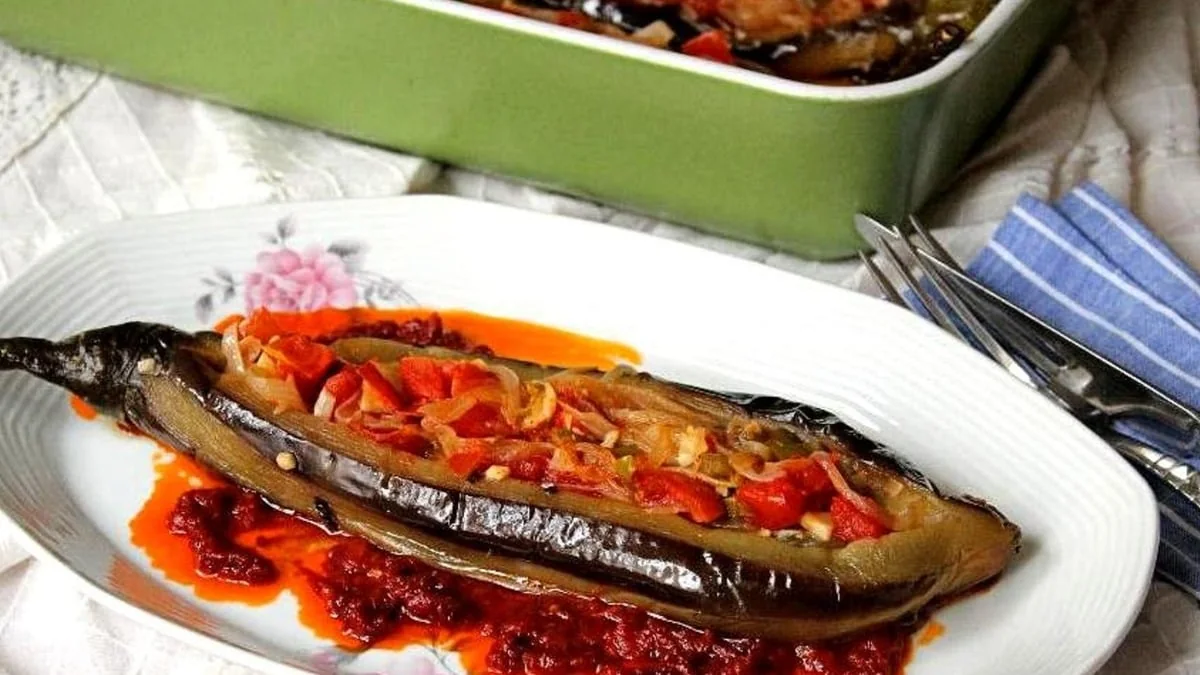
Many dishes around the world are naturally built on unsaturated fat: vegetables cooked in olive oil, like Turkish imam bayıldı, Mediterranean salads with olive oil, or oily fish such as grilled salmon. Remember that these are still calorie-dense: imam bayıldı is about 320 kcal and 23 g fat per serving, and grilled salmon about 460 kcal and 30 g fat, in Sporty's per-serving estimates (real values depend on recipe and portion).
How do you read saturated fat on a label?
UK and EU-style labels list fat and, below it, "saturates". The NHS uses these thresholds per 100 g:
- High in saturated fat: more than 5 g per 100 g
- Low in saturated fat: 1.5 g or less per 100 g
For trans fat, check the ingredients list for "partially hydrogenated" oils, since many labels outside the US do not list trans fat as a separate line. Comparing two similar products per 100 g is often the quickest way to spot the lower-saturated-fat option.
What are easy swaps?
- Cook with olive, rapeseed or sunflower oil instead of butter, ghee or lard. See cooking oils compared.
- Choose leaner cuts of meat and trim visible fat; have processed meats such as sausages less often.
- Eat fish, including oily fish, at least twice a week, as the NHS suggests; see omega-3 fats.
- Use strong-flavoured cheese, so a smaller amount goes further.
- Snack on nuts, seeds or fruit more often than biscuits and pastries.
- Be wary of "lower fat" claims: the NHS notes these products are not necessarily lower in calories.
Sporty shows total fat for each meal alongside calories, protein and carbohydrate; use the label or the swaps above to judge what kind of fat it is. If you have high cholesterol, heart disease or diabetes, ask your doctor or a registered dietitian for personal targets.
Frequently asked questions
How much saturated fat should I eat per day?
The WHO advises less than 10% of daily energy, which is under about 22 g on a 2,000 kcal diet. The UK sets maximums of 30 g a day for men and 20 g for women.
Are trans fats worse than saturated fats?
Industrial trans fat is treated more strictly: the WHO says it has no known health benefit and recommends keeping all trans fat under 1% of energy, about 2.2 g a day on 2,000 kcal.
What should I replace saturated fat with?
Unsaturated fats such as olive, rapeseed or sunflower oil, nuts, seeds and oily fish. Replacing saturated fat with sugary refined foods is not the aim.
Is coconut oil healthy?
Coconut oil is high in saturated fat, and the WHO and NHS both list it among saturated fat sources to limit. Use it occasionally rather than as your everyday cooking fat.
Was this article helpful?
No ratings yet — be the first.
Tap a star to rate it — your rating helps us improve and helps other readers.
Sources
This article is general information, not medical advice. If you have a health condition, are pregnant or under 18, talk to a doctor or registered dietitian before changing your diet.