

Your liver makes all the cholesterol your body needs. What you eat matters mainly through saturated and trans fat: the WHO advises keeping saturated fat below 10% of daily calories, about 22 g on 2,000 kcal, and trans fat below 1%. Oily fish, liquid oils, whole grains, nuts, fruit and vegetables support healthy levels.
Key takeaways
- High cholesterol usually has no symptoms; only a blood test shows your levels.
- Saturated fat under 10% of calories is about 22 g a day on 2,000 kcal; trans fat stays under 1%.
- Fatty and processed meat, butter, ghee, cream, cheese, cakes and coconut or palm oil are the main saturated fat sources.
- Eat more oily fish, olive or rapeseed oil, whole grains, nuts, seeds, fruit and vegetables.
- Activity, not smoking and keeping alcohol low also help; diet does not replace prescribed treatment.
What is cholesterol, and why does it matter?
Cholesterol is a waxy, fat-like substance your body needs to build cells, make hormones and digest fat. Your liver makes all the cholesterol you need, so none of it has to come from food. The problem starts when there is too much of it circulating in the blood. Over time, the excess can build up in the walls of your arteries, narrowing them and raising the risk of heart disease and stroke.
Cholesterol travels in the blood inside particles called lipoproteins. The two you will hear about most are:
- LDL (low-density lipoprotein), often called "bad" cholesterol. High LDL levels can lead to plaque in the arteries.
- HDL (high-density lipoprotein), often called "good" cholesterol. Higher HDL levels are linked with a lower risk.
A standard cholesterol test usually also reports triglycerides, another type of fat in the blood that your body uses for energy. High triglycerides together with high LDL or low HDL add to the risk.
How do you know if your cholesterol is high?
High cholesterol does not usually cause symptoms. You can feel completely well and still have raised levels, which is why the only way to find out is a blood test. The CDC notes that a total cholesterol above about 200 mg/dL (roughly 5.2 mmol/L) may be considered high, but the numbers that matter for you depend on your age, sex, family history and other risk factors. Your doctor will interpret the result in that context and tell you how often to be tested.
Diet is only one part of the picture. According to the NHS, the chance of high cholesterol is also raised by lack of exercise, being overweight, smoking and drinking alcohol, and it is more common after 50 and in some ethnic groups. It can also run in families: an inherited condition called familial hypercholesterolaemia causes high levels even in people who eat well and stay active.
Which foods raise blood cholesterol the most?
For blood cholesterol, the type of fat you eat matters more than most people expect. The main dietary target in international guidance is saturated fat, with trans fat close behind:
- Saturated fat is found mainly in fatty and processed meat, butter, ghee, lard, cream, cheese, cakes and biscuits, and in coconut and palm oil. The WHO advises getting no more than 10 % of your daily energy from it.
- Trans fat appears in some fried and baked products, especially those made with partially hydrogenated oils. The WHO limit is no more than 1 % of energy.
Here is what those percentages mean in grams. Fat has 9 kcal per gram, so 10 % of 2,000 kcal is 200 kcal, or about 22 g of saturated fat.
| Daily calories | Saturated fat (under 10 %) | Trans fat (under 1 %) |
|---|---|---|
| 1,500 kcal | under 17 g | under 1.7 g |
| 1,800 kcal | under 20 g | under 2 g |
| 2,000 kcal | under 22 g | under 2.2 g |
| 2,500 kcal | under 28 g | under 2.8 g |
Food labels in many countries list saturated fat per 100 g and per portion, which makes these numbers easy to check on packaged products. Our guide to how much fat to eat covers total fat and the different fat types in more detail.
What about cholesterol in food, such as eggs?
Dietary cholesterol is found only in animal foods such as egg yolks, meat, seafood and dairy. The CDC advises keeping it low as part of a heart-healthy eating pattern. In practice, many foods that are rich in cholesterol, such as fatty meat, processed meat, butter and cream, are also rich in saturated fat, so cutting back on those tackles both at once.
Eggs are a special case because they bring cholesterol but relatively little saturated fat, along with good-quality protein. How many fit into your week depends on the rest of your diet and on your doctor's advice if your levels are already high. Our article on egg nutrition and how many to eat looks at the evidence.
Which foods help keep cholesterol in a healthy range?
The NHS advice for lowering cholesterol is less about single "superfoods" and more about the overall pattern. Foods to eat more of include:
- Oily fish such as salmon and mackerel.
- Liquid oils such as olive oil and rapeseed oil, and spreads made from them, in place of butter, lard or ghee.
- Whole grains such as brown rice, wholegrain bread and wholewheat pasta.
- Nuts and seeds, in measured handfuls.
- Fruit and vegetables. The WHO recommends at least 400 g a day for adults.
Legumes, oats and other high-fibre foods fit naturally into this pattern, and our guide to how much fibre you need shows easy ways to add more.
What does a cholesterol-friendly day of meals look like?
You do not need special products. Many everyday dishes from around the world already follow the pattern. The figures below are our per-serving estimates from our meal catalog; real values depend on the recipe and portion, and the catalog does not split fat into saturated and unsaturated, so the last column describes the main fat sources from the ingredients.
| Meal | kcal | Protein | Fat | Main fat sources |
|---|---|---|---|---|
| Oats, yogurt and fruit | 390 | 22 g | 9 g | Walnuts, yogurt |
| Chickpea stew | 360 | 16 g | 10 g | Olive oil |
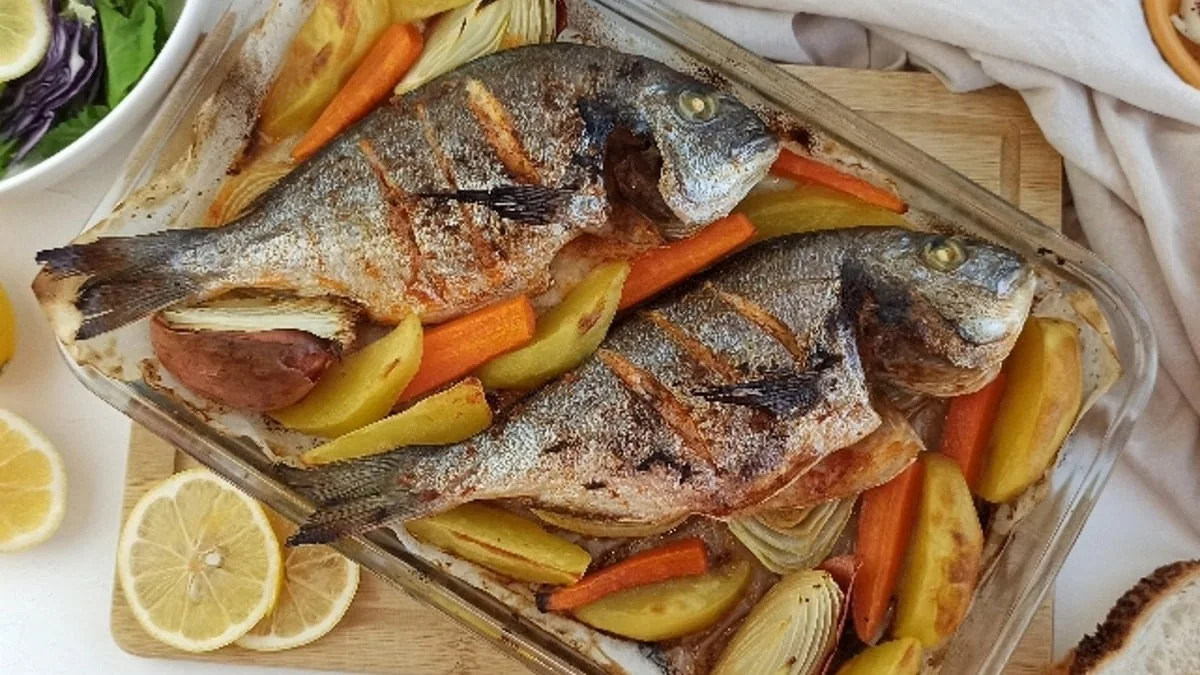
| Baked sea bream | 400 | 42 g | 20 g | Fish, 1 tbsp olive oil |
| Grilled fish and vegetables | 450 | 48 g | 18 g | Sea bass or salmon |
| Grilled salmon with arugula | 460 | 40 g | 30 g | Salmon, olive oil |
| Steak with mushroom sauce | 560 | 46 g | 38 g | Beef, cream, butter |
A day built from oats with yogurt for breakfast, a chickpea stew at lunch and baked sea bream for dinner comes to 1,150 kcal and 80 g of protein before snacks, with most of its fat coming from olive oil, nuts and fish. The steak with mushroom sauce is a reminder of where saturated fat tends to sit: cream, butter and fatty cuts. It can still be part of your week; the point is noticing how often meals like it appear.
Does losing weight help your cholesterol?
Being overweight is one of the factors the NHS lists as raising the chance of high cholesterol, so reaching and keeping a healthier weight can help, alongside the changes above. Weight loss itself comes from a steady calorie deficit, and slow, sustainable progress is more realistic than a crash diet. Never drop below about 1,200 kcal a day for women or 1,500 kcal for men without medical supervision. If you log meals in Sporty, you can see your calories and fat for the day next to protein and carbs.
What else lowers cholesterol besides diet?
- Move more. The NHS suggests at least 150 minutes of moderate activity, such as brisk walking, cycling or swimming, or 75 minutes of vigorous activity a week.
- Stop smoking. Smoking can raise cholesterol, and free support is available through health services in many countries.
- Keep alcohol low. The NHS advises not regularly drinking more than 14 units a week and having several drink-free days.
When should you talk to a doctor?
This article is general information, not medical advice. Ask your doctor about a cholesterol test if you have not had one, especially if you have a family history of early heart disease or high cholesterol, have diabetes, or are overweight. If your levels are already high, your doctor may recommend medication alongside diet and lifestyle changes; food changes do not replace treatment that has been prescribed for you. A registered dietitian can help you adapt your meals, and anyone who is pregnant, under 18 or has kidney disease should get personal advice before changing their diet.
Frequently asked questions
Does eating eggs raise cholesterol?
Eggs contain dietary cholesterol but relatively little saturated fat. How many fit depends on your overall diet and, if your levels are high, on your doctor's advice.
How much saturated fat should I eat per day?
The WHO advises no more than 10% of daily calories. That is about 22 g on 2,000 kcal, 20 g on 1,800 kcal and 17 g on 1,500 kcal.
Can you have high cholesterol without symptoms?
Yes. High cholesterol does not usually cause symptoms, so a blood test is the only way to know your levels.
Can diet alone fix high cholesterol?
Diet, activity, weight and not smoking all help, but some people, including those with inherited high cholesterol, also need medication. Follow your doctor's advice and do not stop prescribed treatment.
Was this article helpful?
No ratings yet — be the first.
Tap a star to rate it — your rating helps us improve and helps other readers.
Sources
This article is general information, not medical advice. If you have a health condition, are pregnant or under 18, talk to a doctor or registered dietitian before changing your diet.