
Cooking oils are nearly identical in calories: about 120 kcal per tablespoon and 40 kcal per teaspoon, because they are almost pure fat. What differs is the type of fat. Olive, canola, sunflower and soybean oils are mostly unsaturated, while coconut oil and butter are high in saturated fat. How much you pour matters most.
Key takeaways
- Every common cooking oil has roughly 120 kcal per tablespoon and 40 kcal per teaspoon.
- Saturated fat varies widely: about 1 g per tablespoon in canola oil versus 11 g in coconut oil.
- The WHO suggests swapping butter, lard and ghee for oils rich in unsaturated fat in everyday cooking.
- In vegetable dishes, one tablespoon of oil can supply about half of the calories.
- Measuring oil with a spoon is the simplest way to keep cooking calories predictable.
Do some cooking oils have fewer calories than others?
Not in any way that matters. Liquid cooking oils are almost pure fat, and fat provides about 9 kcal per gram. USDA FoodData Central lists olive, canola, sunflower, soybean, sesame and avocado oil at 884 kcal per 100 g, corn oil at 900 kcal and coconut oil at 892 kcal. A tablespoon of any of them weighs about 13.5–14 g and comes to roughly 120 kcal; a teaspoon (4.5 g) is about 40 kcal.
So the choice between bottles is about the type of fat, the flavour and the way you cook, not about calories. For your energy balance, the amount you pour matters far more than the oil you pick.
How do common oils and fats compare?
The table below uses USDA FoodData Central values for one tablespoon. Butter is included for comparison: it contains water and milk solids as well as fat, so a spoon has fewer calories, but a much larger share of its fat is saturated.
| Fat (1 tablespoon) | Weight | kcal | Saturated | Monounsaturated | Polyunsaturated |
|---|---|---|---|---|---|
| Olive oil | 13.5 g | 119 | 1.9 g | 9.9 g | 1.4 g |
| Canola (rapeseed) oil | 14 g | 124 | 1.0 g | 8.9 g | 3.9 g |
| Avocado oil | 14 g | 124 | 1.6 g | 9.9 g | 1.9 g |
| Sunflower oil (high-linoleic) | 13.6 g | 120 | 1.4 g | 2.7 g | 8.9 g |
| Soybean oil | 13.6 g | 120 | 2.1 g | 3.1 g | 7.8 g |
| Corn oil | 13.6 g | 122 | 1.8 g | 3.8 g | 7.4 g |
| Sesame oil | 13.6 g | 120 | 1.9 g | 5.4 g | 5.7 g |
| Coconut oil | 13.6 g | 121 | 11.2 g | 0.9 g | 0.2 g |
| Butter (salted) | 14.2 g | 102 | 7.3 g | 3.0 g | 0.4 g |
The small differences in calories come from how much a spoon of each oil weighs, not from any real advantage. The column that changes a lot is saturated fat: from about 1 g per tablespoon in canola oil to more than 11 g in coconut oil. Olive and avocado oil are mostly monounsaturated fat, while sunflower, soybean and corn oil are mostly polyunsaturated.
Which fats does health guidance favour?
The World Health Organization (WHO) advises adults to keep total fat at 30 % of energy or less, saturated fat below 10 % and trans fat below 1 %. It lists sunflower, soybean, canola and olive oils, along with fish, avocado and nuts, as sources of unsaturated fat, and butter, palm and coconut oil, cream, cheese, ghee and lard as sources of saturated fat. One of its practical suggestions is to replace butter, lard and ghee with oils rich in polyunsaturated fat.
The NHS puts the same idea in grams: no more than 30 g of saturated fat a day for men and 20 g for women. On a 2,000 kcal day, the WHO's 10 % works out to 200 kcal, or about 22 g. One tablespoon of coconut oil (11.2 g) is more than half of a 20 g limit; the same spoon of canola oil is about 1 g.
None of this makes butter or coconut oil forbidden. It simply means they work best as flavour in specific dishes, with liquid plant oils doing most of the everyday cooking. Our guide to healthy fats and how much fat to eat shows how total fat fits into a day.
How much does oil add to a real meal?
Because vegetables, fish and grains are fairly low in fat, the oil is often the largest single source of calories in a home-cooked dish. These are Sporty's per-serving estimates for dishes made with a measured amount of oil; real values depend on the recipe and portion.
| Dish | kcal per serving | Oil in the recipe | Share of calories from that oil |
|---|---|---|---|
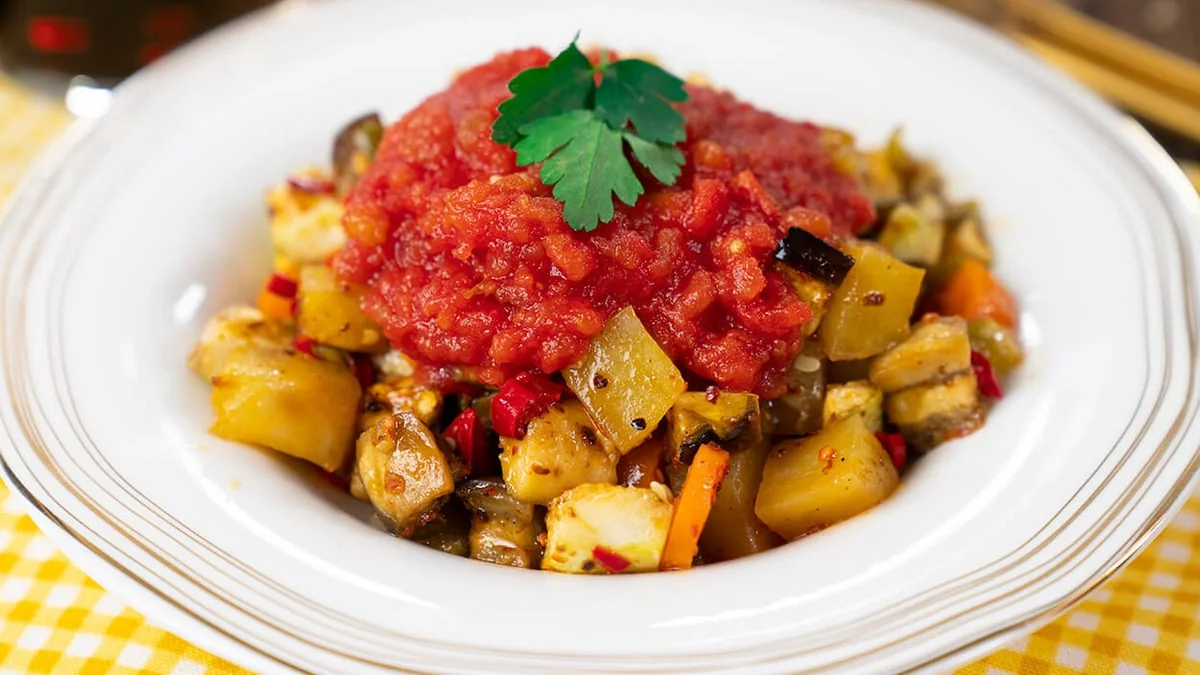
| Ratatouille | 220 | 1 tbsp olive oil | about 54 % |
| Roasted vegetables | 240 | 1 tbsp olive oil | about 50 % |
| Spring rolls | 320 | 1 tbsp vegetable oil | about 38 % |
| Baked sea bream | 400 | 1 tbsp olive oil | about 30 % |
| Tofu and broccoli rice | 460 | 1 tbsp sesame oil | about 26 % |
| Grilled salmon with arugula | 460 | 1 tbsp olive oil | about 26 % |
A worked example: the roasted vegetables are about 240 kcal with one measured tablespoon of olive oil. Pour three tablespoons instead and the same tray comes to roughly 480 kcal (240 + 2 × 119). Nothing on the plate looks different, which is why oil is so easy to underestimate. Mediterranean dishes in particular rely on olive oil, and our article on Mediterranean diet meals and their calories shows how that adds up across a day.
Which oil should you use for which job?
- Everyday sautéing and roasting: olive, canola (rapeseed) or sunflower oil. All are mostly unsaturated and work for most home cooking.
- Salads and drizzling: olive oil, or a nut oil such as walnut oil (about 120 kcal per tablespoon in USDA data, mostly polyunsaturated). Their flavour is strong enough that a teaspoon often does the job of a tablespoon.
- Stir-fries: a neutral oil such as canola, soybean or corn oil for cooking, with a little sesame oil added at the end mainly for flavour.
- Baking: many muffin and cake recipes work with a neutral liquid oil in place of melted butter, which lowers saturated fat while calories stay about the same.
- Butter, ghee and coconut oil: fine for flavour in particular dishes, in smaller amounts.
Whichever oil you use, smoke rising from the pan means it is too hot; turn the heat down and start again. The WHO also suggests steaming or boiling instead of frying when you want to cut fat, since deep-fried food soaks up oil you never see.
How can you use less oil without losing flavour?
- Measure with a spoon instead of pouring from the bottle. A free pour can easily be two or three tablespoons.
- Toss, then roast: mix vegetables with one tablespoon of oil in a bowl so it coats everything evenly, rather than drizzling it over the tray.
- Use a good non-stick pan, and add a splash of water or stock when onions start to catch instead of more oil.
- Lean on acid and aromatics: lemon, vinegar, garlic, herbs and spices carry flavour for almost no calories.
- Stretch dressings: one tablespoon of olive oil whisked with lemon juice and a spoon of yogurt dresses a large salad. A Greek salad gets most of its calories from the oil, feta and olives.
For quick visual measures when you are not at home, see our guide to portion sizes without a scale.
How do you log cooking oil accurately?
Oil disappears into food, so it is the ingredient most people forget to record. Count it separately: if you cooked a pan of vegetables for two with 2 tablespoons of oil, add 1 tablespoon, about 120 kcal, to each plate. When you eat out, assume dishes are cooked with more oil than you would use at home. On bottles, check the serving size on the label, since some list values per 15 ml rather than per 100 ml; our guide on how to read a nutrition label explains how. In Sporty, you can describe a meal by text or voice, for example "pasta with vegetables cooked in one tablespoon of olive oil", so the estimate includes the oil.
When should you get personal advice?
This article is general information, not medical advice. If you have high cholesterol, heart disease or another condition where your doctor has asked you to change the fat in your diet, talk to your doctor or a registered dietitian about which fats and how much suit you.
Frequently asked questions
Which cooking oil has the fewest calories?
None in a meaningful way. Liquid oils all provide about 120 kcal per tablespoon; butter has a little less per spoon only because it contains water, and it is higher in saturated fat.
Is olive oil fattening?
No single food causes weight gain; your total intake over time does. Olive oil is mostly unsaturated fat, but at about 120 kcal per tablespoon it is worth measuring rather than pouring freely.
Is coconut oil a healthy choice for cooking?
Coconut oil is about 82 % saturated fat, and both the WHO and the NHS list it among sources of saturated fat. It can add flavour to some dishes, but liquid plant oils are the better everyday default.
How much oil should I use per day?
There is no single number. Oil counts toward your total fat, which the WHO suggests keeping at 30 % of energy or less, so measuring it with a spoon is the easiest way to stay in range.
Sources
This article is general information, not medical advice. If you have a health condition, are pregnant or under 18, talk to a doctor or registered dietitian before changing your diet.