

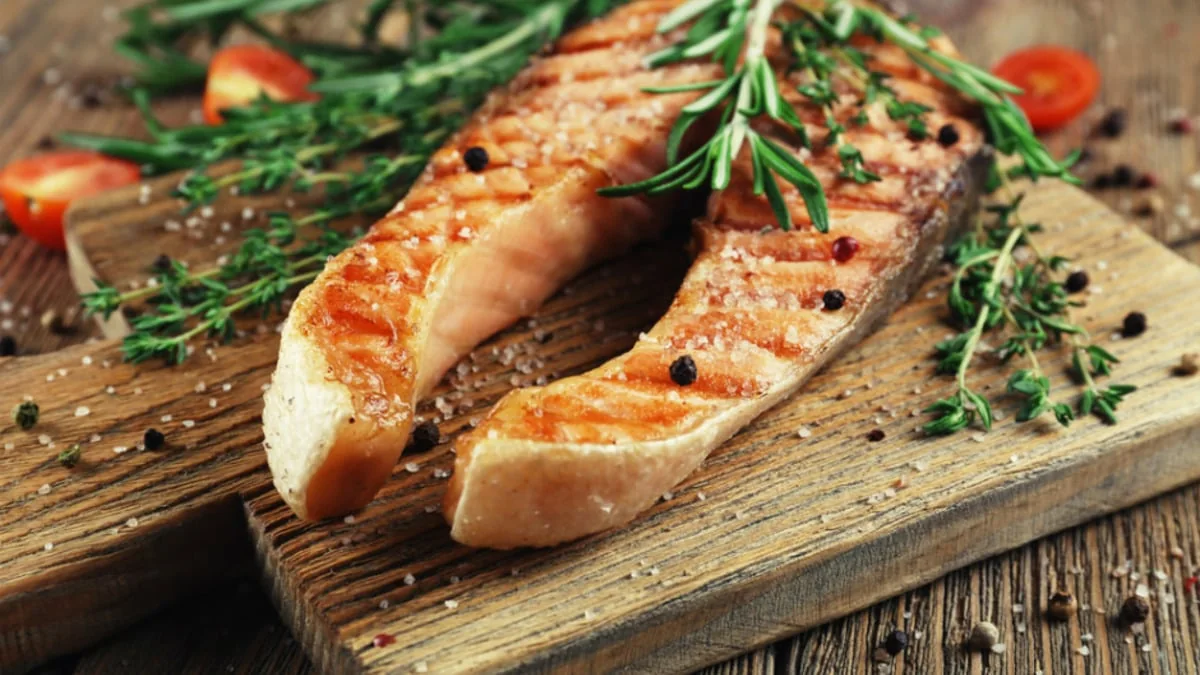
Adult women need about 1.1 g and men about 1.6 g of ALA, the plant omega-3, a day, from foods like walnuts, flaxseed and chia. For EPA and DHA, the long-chain forms, guidance such as the NHS recommends at least two portions of fish a week, one of them oily, such as salmon or sardines.
Key takeaways
- The three main omega-3s are ALA (plants) and EPA and DHA (mainly oily fish).
- The US Adequate Intake for ALA is 1.6 g a day for men and 1.1 g for women.
- The NHS advises at least two 140 g portions of fish a week, one of them oily.
- A 2020 Cochrane review found omega-3 supplements had little or no effect on overall mortality but lowered triglycerides by about 15%.
- Some groups, including pregnant women, should limit oily fish and avoid shark, swordfish and marlin.
What are omega-3 fats?
Omega-3s are a family of polyunsaturated fats. Your body cannot make the parent omega-3, so it has to come from food. Three types matter most for everyday eating:
| Type | Full name | Main food sources |
|---|---|---|
| ALA | Alpha-linolenic acid | Walnuts, flaxseed, chia seeds, and oils such as canola (rapeseed) and soybean |
| EPA | Eicosapentaenoic acid | Oily fish and other seafood |
| DHA | Docosahexaenoic acid | Oily fish and other seafood |
ALA is the plant omega-3 and the one that is strictly essential. EPA and DHA are called long-chain omega-3s. The body can turn some ALA into EPA and DHA, but only a small share, which is why oily fish is usually named as the most direct source of the long-chain forms.
Like every fat, omega-3s provide about 9 kcal per gram. They are part of your fat intake, not something extra on top of it. For the bigger picture on fat, see how much fat you should eat.
How much omega-3 do you need?
The US National Academies set an Adequate Intake for ALA, the amount that appears to cover the needs of healthy people:
| Group | ALA per day |
|---|---|
| Adult men | 1.6 g |
| Adult women | 1.1 g |
| Pregnancy | 1.4 g |
| Breastfeeding | 1.3 g |
The same report gives a range for ALA of 0.6–1.2% of daily calories. On a 2,000 kcal day that is 12–24 kcal, or roughly 1.3–2.7 g. In other words, the amounts involved are small: a few grams a day, not a major slice of your calories.
There is no official Adequate Intake for EPA and DHA in that report. Instead, most food-based guidance is written in portions of fish. The NHS, for example, advises at least two portions of fish a week, one of them oily, with a portion being about 140 g.
Which foods are the best sources?
Oily fish (EPA and DHA)
The NHS lists salmon, sardines, pilchards, mackerel, herring, sprats and trout as oily fish, and calls oily fish the richest source of long-chain omega-3. Some white fish and shellfish contain omega-3 too, in smaller amounts. In the UK guidance, fresh and canned tuna do not count as oily fish. In Türkiye, small fatty fish such as hamsi (Black Sea anchovies) and sardalya (sardines) are seasonal, affordable options.
Plant foods (ALA)
- Walnuts: the nut most associated with ALA, and the base of gavurdağı salad.
- Ground flaxseed: easy to stir into yogurt or oats. Whole seeds can pass through undigested.
- Chia seeds: used in chia pudding or sprinkled on breakfast bowls.
- Canola and soybean oils: contain some ALA. Olive oil, the everyday oil in Turkish kitchens, contains very little. Our cooking oils comparison shows how they differ.
If you do not eat fish, these plant foods are the main way to cover ALA. Our guide to plant protein covers other nutrients worth planning for on a meat-free diet.
What do omega-3 meals look like in calories?
Here are fish and walnut-based dishes from our meal catalog. The numbers are Sporty's per-serving estimates; real values depend on recipe and portion.
| Dish | Main omega-3 source | kcal | Protein | Fat |
|---|---|---|---|---|
| Grilled salmon (180 g fillet, arugula) | Salmon | 460 | 40 g | 30 g |
| Baked salmon and sweet potato | Salmon | 540 | 44 g | 20 g |
| Pan-fried anchovies (hamsi tava, 200 g) | Anchovies | 420 | 30 g | 26 g |
| Baked sea bream (250 g) | White fish, smaller amounts | 400 | 42 g | 20 g |
| Walnut tomato salad (gavurdağı) | Walnuts | 260 | 5 g | 21 g |
| Chia pudding | Chia seeds | 300 | 9 g | 16 g |
Notice that salmon is higher in fat than a lean fish like sea bream, and that fat is exactly where the omega-3 is. A salmon dinner is not "too fatty" for a diet: at 460 kcal with 40 g of protein, it fits comfortably into most daily targets.
Worked example: a week that covers the basics
Say you eat about 1,800 kcal a day and want to follow the two-portions-of-fish pattern while getting ALA every day:
- Tuesday dinner: grilled salmon, about 460 kcal. This is your oily fish portion.
- Friday dinner: baked sea bream, about 400 kcal. This is your second fish portion.
- Most breakfasts: a spoon of ground flaxseed or chia stirred into yogurt or oats.
- A few lunches: gavurdağı salad or a small handful of walnuts with fruit as a snack.
None of this needs a special diet. It is mostly a question of putting fish on the weekly menu and keeping a few seeds and walnuts within reach. Remember that nuts and seeds are calorie-dense, so measure them if you are tracking calories.
Do omega-3 supplements help?
The largest summary of the evidence is a 2020 Cochrane review of 86 randomised trials with 162,796 participants, most of whom took fish-oil capsules. It found that more long-chain omega-3 made little or no difference to deaths from any cause, cardiovascular events or stroke. It may slightly reduce coronary heart disease events and deaths (low-certainty evidence), and it lowered blood triglycerides by about 15%. More ALA may slightly reduce cardiovascular events and probably slightly reduces irregular heartbeat. The review found little or no effect on body fat.
So omega-3 supplements are not a weight-loss tool, and for most healthy people eating fish regularly is the simplest approach. A doctor may recommend a supplement in specific cases. If you take medication, especially blood thinners, or are pregnant, ask your doctor or pharmacist before starting one. The NHS also advises against fish liver oils such as cod liver oil during pregnancy, because they are high in vitamin A.
Are there limits on how much fish to eat?
Yes, for some groups. Oily fish can contain pollutants that build up in the body, so the NHS advises girls, women who may become pregnant, and pregnant or breastfeeding women to eat no more than two portions of oily fish a week. Shark, swordfish and marlin contain more mercury: children under 16 and anyone pregnant or trying to conceive should avoid them, and other adults should have no more than one portion a week. For everyone else, the main message is the opposite one: the NHS notes that most people in the UK do not eat even the recommended two portions.
How does this fit into weight loss?
Omega-3 foods fit well into a calorie deficit because fish brings a lot of protein for its calories. Grilled salmon gives 40 g of protein for 460 kcal; baked sea bream 42 g for 400 kcal. Logging a fish dinner in Sporty from a photo takes a few seconds, and you can check whether your fat and protein for the day line up with your targets. For other nutrients to keep an eye on while eating less, read vitamins and minerals in a calorie deficit.
Frequently asked questions
What is the best source of omega-3?
Oily fish such as salmon, sardines and mackerel are the richest source of the long-chain omega-3s EPA and DHA. Walnuts, flaxseed and chia seeds provide the plant omega-3, ALA.
Can I get enough omega-3 without eating fish?
You can cover your ALA needs from walnuts, ground flaxseed, chia and some oils. The body converts only a small share of ALA into EPA and DHA, so if you eat no fish, ask a doctor or dietitian whether a supplement makes sense for you.
Do omega-3 supplements help with weight loss?
No. A 2020 Cochrane review of 86 trials found little or no effect of omega-3 on body fat. Weight loss depends on your overall calorie intake.
Is canned tuna a good source of omega-3?
It contains some, but UK NHS guidance does not count fresh or canned tuna as oily fish. Salmon, sardines, mackerel, herring and trout are better choices for your weekly oily-fish portion.
Sources
This article is general information, not medical advice. If you have a health condition, are pregnant or under 18, talk to a doctor or registered dietitian before changing your diet.