
Your vitamin and mineral needs do not drop when you eat fewer calories, so each meal has to carry more of them. Pay attention to iron, calcium, vitamin D, vitamin B12 and folate, build meals around vegetables, beans, fish, eggs and dairy or fortified alternatives, and avoid very low intakes without medical supervision.
Key takeaways
- Micronutrient needs are set by age and sex, not by calories, so they stay the same in a deficit.
- Iron, calcium, vitamin D, vitamin B12 and folate are the easiest to fall short on when portions shrink.
- Vegetables, beans, oily fish, eggs and dairy or fortified alternatives bring the most nutrients for their calories.
- Supplements are a backup for specific needs such as vitamin D in winter, folic acid before pregnancy and B12 for vegans.
- Very low calorie intakes make it hard to meet needs; stay above 1,200 kcal (women) or 1,500 kcal (men) unless supervised.
Why does a calorie deficit make vitamins and minerals harder to get?
When you eat less to lose weight, your energy intake goes down, but your need for vitamins and minerals does not. Reference amounts for nutrients like iron, calcium and vitamin D are set by age and sex, not by how many calories you eat. Someone who moves from about 2,200 to 1,700 kcal a day is eating roughly 23% less food, yet still needs the same amount of each micronutrient as before.
That is why the quality of each meal matters more in a calorie deficit. Foods that bring a lot of vitamins and minerals for their calories, such as vegetables, fruit, beans and lentils, fish, eggs, dairy and wholegrains, do most of the work. The World Health Organization links eating a wide variety of nutritious foods within and across food groups to meeting vitamin and mineral needs.
Gaps are common even outside of dieting. WHO reports that more than two-thirds of non-pregnant women of reproductive age worldwide lack at least one key micronutrient, most often iron, zinc, vitamin A or folate. Cutting calories without a plan can make an existing gap wider.
Which vitamins and minerals need the most attention?
No single nutrient matters more than the others, but a handful are easier to fall short on when portions shrink or whole food groups are dropped. The amounts below are the NHS (UK) daily figures for adults. Other countries set slightly different reference values, so treat them as a guide and follow your local recommendations if they differ.
| Nutrient | Daily amount for adults | Where to find it | Who should pay extra attention |
|---|---|---|---|
| Iron | 8.7 mg for men and women 50+; 14.8 mg for women 19–49 | Red meat, beans such as chickpeas and kidney beans, nuts, dried fruit, fortified breakfast cereals | Women who have periods; people who eat little or no meat |
| Calcium | 700 mg | Milk and cheese, curly kale, okra, calcium-fortified soy drinks, sardines eaten with their bones | People who avoid dairy |
| Vitamin D | 10 mcg | Sunlight on the skin, oily fish such as salmon and sardines, egg yolks, red meat, fortified foods | Everyone in autumn and winter in places with little sunlight |
| Vitamin B12 | 1.5 mcg | Meat, fish, dairy, eggs, some fortified breakfast cereals | Vegans |
| Folate | 200 mcg | Broccoli, Brussels sprouts, leafy greens, peas, chickpeas, kidney beans | Anyone who could become pregnant |
A few details are worth knowing. Spinach contains calcium, but the NHS notes the body cannot absorb all of it, so it is not counted as a good calcium source. Vitamin B12 is not naturally found in fruit, vegetables or grains, so people on a vegan diet need fortified foods or a supplement. And because vitamin D comes mainly from sunlight, diet alone often does not cover it in darker months.
What do nutrient-dense meals look like on fewer calories?
The good news is that nutrient-dense meals are not exotic or expensive. These international dishes show how much a single plate can bring for its calories. Figures are Sporty's per-serving estimates; real values depend on recipe and portion. The last column is based on each dish's main ingredients and the NHS food sources above.
| Dish | kcal | Protein | Helps with |
|---|---|---|---|
| Yogurt and fruit | 230 | 16 g | Calcium and B12 from yogurt |
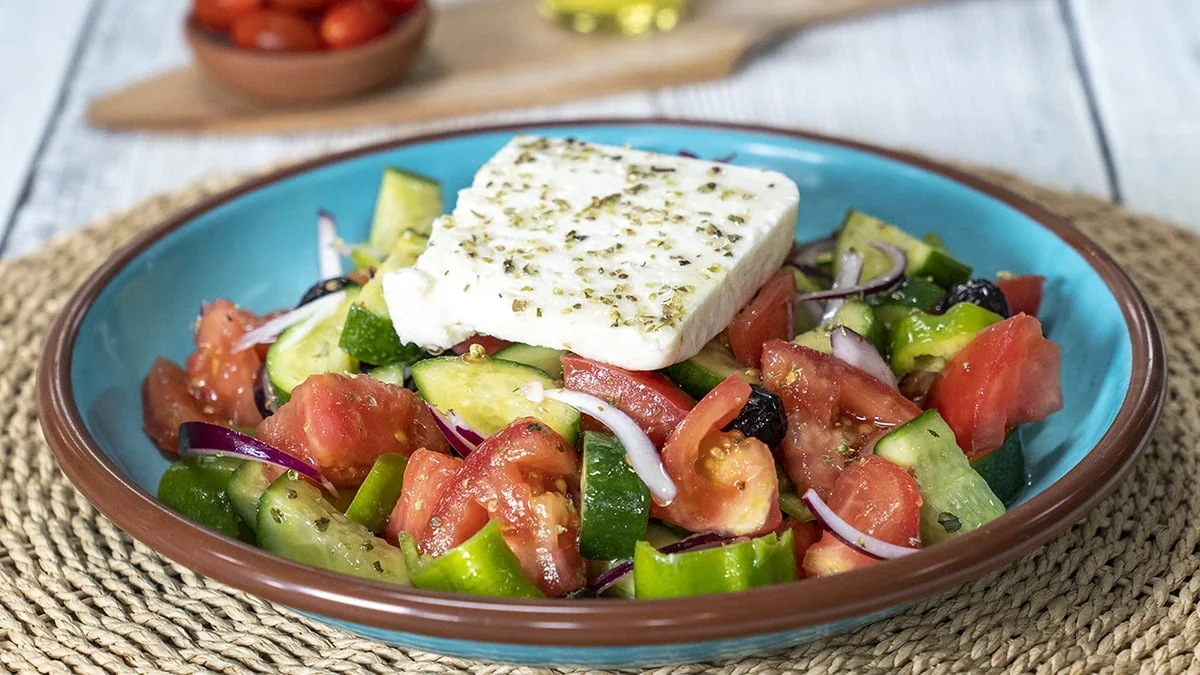
| Greek salad | 290 | 9 g | Calcium from feta, plus vegetables |
| Spinach omelette | 300 | 21 g | Vitamin D and B12 from eggs, folate from spinach |
| Vegan protein salad | 420 | 20 g | Iron and folate from chickpeas and leafy greens |
| Mediterranean chickpea salad | 430 | 19 g | Iron and folate from chickpeas |
| Grilled salmon | 460 | 40 g | Vitamin D and B12 from oily fish |
| Grilled sirloin steak and asparagus | 580 | 54 g | Iron and B12 from red meat |
Combining them across a day covers a lot of ground: yogurt and fruit at breakfast, a chickpea salad at lunch and salmon at dinner add up to about 1,120 kcal and include sources of all five nutrients in the table above. A Greek salad on the side adds calcium and vegetables for 290 kcal. The NHS also advises limiting red and processed meat, so steak works best as one option among several rather than a daily habit.
Should you take a multivitamin while dieting?
For most people, a varied diet is the first step, and supplements are a backup for specific needs rather than a replacement for food. A tablet will not give you the fibre, protein and fullness of a plate of vegetables and beans. That said, there are a few situations where health services do recommend a supplement:
- Vitamin D: the NHS advises everyone in the UK to consider 10 mcg a day in autumn and winter. If you live somewhere with little winter sun, ask what your local guidance says.
- Folic acid: anyone pregnant, trying for a baby or who could get pregnant is advised to take 400 mcg a day until 12 weeks of pregnancy.
- Vitamin B12: people on a vegan diet need a reliable source, either fortified foods or a supplement.
More is not better. The NHS gives these upper guides for supplements, above which side effects become more likely:
| Supplement | Unlikely to cause harm at |
|---|---|
| Vitamin D | No more than 100 mcg (4,000 IU) a day |
| Iron | 17 mg or less a day; over 20 mg can cause stomach upset |
| Calcium | 1,500 mg or less a day |
| Folic acid | 1 mg or less a day |
| Vitamin B12 | 2 mg or less a day |
Keep iron supplements away from children, because very high doses can be dangerous. If you are pregnant, under 18, take regular medication or have kidney disease or another medical condition, talk to a doctor, pharmacist or registered dietitian before starting supplements. If you feel unusually tired or unwell while dieting, see a doctor rather than guessing; a blood test can show whether something like iron is low.
How low is too low for calories and nutrients?
The smaller the calorie budget, the harder it is to fit in everything your body needs. That is one reason not to go below about 1,200 kcal a day for women or 1,500 kcal for men without medical supervision. A moderate deficit with a gradual loss of about 0.5–1 kg (1–2 lb) per week leaves enough room for vegetables, protein foods and dairy or fortified alternatives. Our guide on how fast you can safely lose weight explains why a slower pace is easier to sustain.
Diets that remove whole food groups need extra planning. If you cut out dairy, look for calcium-fortified alternatives. If you eat little or no meat, lean on beans, lentils and fortified foods, and see our guide to plant protein without meat.
A simple daily checklist
- Include vegetables or fruit at most meals; WHO suggests at least 400 g a day.
- Eat beans, lentils or chickpeas a few times a week for iron, folate and fibre.
- Have a dairy food or calcium-fortified alternative most days.
- Choose oily fish such as salmon or sardines regularly if you eat fish.
- Check vitamin D, folic acid and B12 advice for your situation.
Logging meals in Sporty shows calories left for the day, which makes it easier to keep a moderate deficit with room for these foods instead of squeezing them out.
Frequently asked questions
Do you need more vitamins when you are in a calorie deficit?
Not more, but the same amount from less food. That is why meals built on vegetables, beans, fish, eggs and dairy or fortified alternatives matter more when you cut calories.
Should I take a multivitamin while losing weight?
Many people get what they need from a varied diet. Specific supplements are often advised for vitamin D in autumn and winter, folic acid if you could become pregnant and B12 on a vegan diet; ask a doctor or pharmacist about your situation.
Can dieting cause iron deficiency?
Eating less can make it harder to reach your iron needs, especially for women who have periods and people who eat little meat. If you feel unusually tired, see a doctor, who can check your iron levels with a blood test.
Which foods are best for vitamins on a low-calorie diet?
Vegetables and fruit, beans and lentils, oily fish such as salmon, eggs, and dairy or calcium-fortified alternatives bring a lot of vitamins and minerals for their calories. Variety across these groups matters more than any single food.
Sources
This article is general information, not medical advice. If you have a health condition, are pregnant or under 18, talk to a doctor or registered dietitian before changing your diet.