

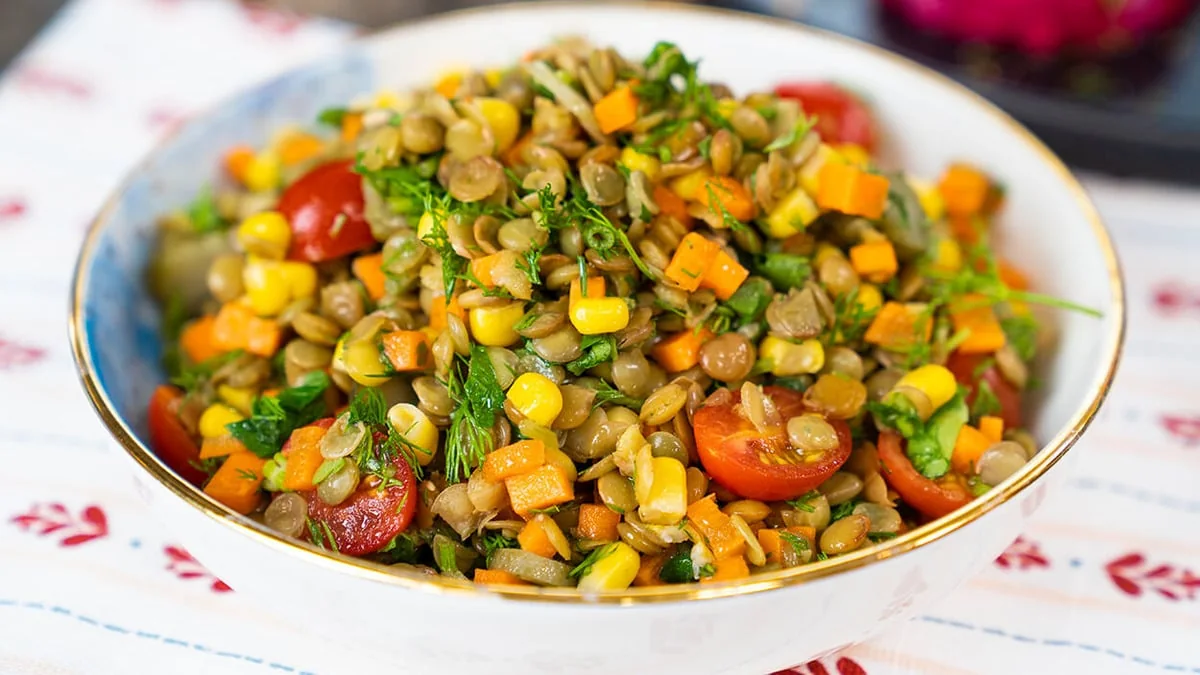
Meals built on lentils, beans, chickpeas, whole grains and vegetables keep you full because they are bulky and slow to eat. The NHS advises adults to aim for 30 g of fibre a day, while most average about 20 g. A lentil salad, about 320 kcal in Sporty's estimates, is one easy filling option.
Key takeaways
- The NHS recommends 30 g of fibre a day for adults; the WHO says at least 25 g.
- Pulses appear in most filling, moderate-calorie meals: lentil salad is about 320 kcal, chili con carne about 480 kcal.
- A whole grain or skin-on potato, pulses or vegetables, and fruit at each meal reaches about 30 g.
- Fibre does not burn fat; it makes a calorie deficit easier to live with.
- Increase fibre gradually and talk to a doctor if you have a digestive condition.
Why do high-fibre meals keep you full?
Fibre is the part of plant foods that your body does not fully digest. Meals built on beans, lentils, chickpeas, whole grains and vegetables tend to be bulky, take longer to chew and eat, and often have fewer calories per bite than meals built on refined starch and added fat. That combination is why a big bowl of lentil salad can feel more satisfying than a smaller plate with the same calories.
Most people eat less fibre than recommended. The NHS advises adults to aim for 30 g a day and notes that most people currently average about 20 g. The WHO recommends at least 25 g of naturally occurring fibre a day for everyone over 10. Closing that gap is easiest when fibre comes in with whole meals rather than one "fibre food" at breakfast.
What does a high-fibre day look like?
The NHS gives a simple example day. These figures are approximate and change with brand and portion:
| Meal | Example | Fibre (approx.) |
|---|---|---|
| Breakfast | 2 slices of wholemeal toast with peanut butter and a medium orange | 8.3 g |
| Lunch | Wholemeal spaghetti with a lentil and tomato sauce | 11 g |
| Dinner | Grilled chicken breast, skin-on baked potato, carrots and green beans | 11.2 g |
| Total | about 30.5 g |
Notice the pattern: a whole grain or potato with its skin, pulses or vegetables at every meal, and fruit. No supplements, no special products.
Which meals are high in fibre and still moderate in calories?
Our meal catalog does not list fibre per dish, so the table below shows Sporty's per-serving estimates for calories and protein, with the main fibre sources in each meal. Real values depend on the recipe and your portion.
| Meal | Calories | Protein | Main fibre sources |
|---|---|---|---|
| Red lentil soup | 250 kcal | 13 g | 70 g red lentils, carrot, onion |
| Minestrone | 260 kcal | 10 g | Cannellini beans, zucchini, carrot, celery |
| Hummus and raw vegetables | 260 kcal | 11 g | Chickpeas, carrot, cucumber, celery |
| Lentil salad | 320 kcal | 16 g | 150 g cooked green lentils, tomato, cucumber |
| White bean salad (piyaz) | 330 kcal | 14 g | 150 g white beans, onion, parsley |
| Chickpea stew | 360 kcal | 16 g | 200 g cooked chickpeas |
| Oats, yogurt and fruit | 390 kcal | 22 g | 50 g rolled oats, banana, blueberries, walnuts |
| Protein-packed vegan salad | 420 kcal | 20 g | Chickpeas, quinoa, leafy greens, pumpkin seeds |
| Mediterranean chickpea salad | 430 kcal | 19 g | Chickpeas, tomato, cucumber, onion |
| Chili con carne | 480 kcal | 34 g | 100 g kidney beans, tomato, pepper |
| Lentil soup and bulgur salad | 510 kcal | 24 g | Red lentils, bulgur, herbs |
Pulses appear in almost every row. A lentil salad gives you a large, filling bowl for about 320 kcal, while chili con carne pairs beans with lean beef for 34 g of protein in under 500 kcal. If you want to compare the pulses themselves, see our guide to lentils, chickpeas and beans.
| Dish | kcal | Protein | Carbs | Fat |
|---|---|---|---|---|
| Lentil Salad | 320 | 16 g | 42 g | 9 g |
| Mediterranean chickpea salad | 430 | 19 g | 58 g | 14 g |
| Chili con Carne | 480 | 34 g | 38 g | 20 g |
| Minestrone | 260 | 10 g | 42 g | 6 g |
How can you add fibre to meals you already eat?
Breakfast
Choose porridge or plain wholewheat cereal over sweetened refined cereals, use wholemeal bread for toast, and add fruit. Oats with yogurt and fruit gives you oats, fruit and nuts in one bowl, with 22 g of protein.
Lunch
Add a handful of beans or chickpeas to salads and wraps, or start with a lentil or bean soup. A Mediterranean chickpea salad keeps well in a lunch box and is about 430 kcal.
Dinner
Swap white rice or pasta for bulgur, brown rice or wholewheat pasta some of the time, keep potato skins on, and fill half the plate with vegetables. Stews and curries take a tin of lentils or chickpeas without changing their character.
Snacks
Fresh fruit, vegetable sticks with hummus, oatcakes or rye crackers, and a small handful of unsalted nuts or seeds all add fibre. Hummus with raw vegetables is about 260 kcal in our catalog.
What does a full day of fibre-rich meals add up to?
Here is one way to put the catalog meals together into a day where pulses, whole grains, vegetables or fruit appear at every meal:
| Meal | Dish | Calories | Protein |
|---|---|---|---|
| Breakfast | Oats, yogurt and fruit | 390 kcal | 22 g |
| Lunch | Lentil salad | 320 kcal | 16 g |
| Snack | Hummus and raw vegetables | 260 kcal | 11 g |
| Dinner | Chili con carne | 480 kcal | 34 g |
| Total | 1,450 kcal | 83 g |
That is a lot of food for 1,450 kcal, which is the point of a fibre-rich pattern. Many adults need more energy than this, so you could add a piece of fruit, a slice of wholemeal bread or a larger dinner portion to match your own target. If your plan is lower, keep it at or above about 1,200 kcal a day for women and 1,500 kcal for men unless a doctor supervises it.
Does fibre help with weight loss?
Fibre does not burn fat, and no single food causes weight loss. What high-fibre meals can do is make a calorie deficit easier to live with: they add volume and chewing time, and pulses also bring protein. Weight change still depends on your total intake over time. If you often feel hungry on a lower calorie target, our guide on feeling fuller on fewer calories covers protein, volume and meal timing together. For the basics of how much you need and where to get it, see fibre: how much you need.
Are there any downsides to eating more fibre?
- Go step by step. Some people notice wind or bloating when they add a lot of pulses or bran at once. Increasing over a few weeks and drinking enough fluid usually feels more comfortable.
- Labels help. In the UK, foods with 6 g or more of fibre per 100 g are considered high-fibre, according to the NHS.
- Watch the extras. A bean salad can carry a lot of oil, and granola is fibre-rich but energy-dense. A tablespoon of oil adds about 120 kcal.
Sporty can log a lentil soup or a bean salad from a photo, so you can see how these meals fit your calorie and protein targets.
Who should get personal advice?
This is general information, not medical advice. If you have irritable bowel syndrome, inflammatory bowel disease, kidney disease or another digestive condition, or if you are pregnant or under 18, talk to a doctor or registered dietitian about how much fibre suits you.
Frequently asked questions
How much fibre should I eat a day?
The NHS advises adults to aim for 30 g a day, and the WHO recommends at least 25 g of naturally occurring fibre for everyone over 10. Most adults eat less.
What is the most filling high-fibre meal?
Pulse-based meals such as lentil salad, bean soup or chili con carne are among the most filling because they combine fibre, bulk and protein. Lentil salad is about 320 kcal in Sporty's estimates.
Can eating more fibre cause bloating?
Some people notice wind or bloating when they add a lot of fibre at once. Increasing gradually usually helps; if symptoms persist, talk to a doctor.
Do I need a fibre supplement?
Most people can reach their target with whole grains, pulses, vegetables and fruit. Ask a doctor or dietitian before using a supplement, especially if you take medication.
Was this article helpful?
No ratings yet — be the first.
Tap a star to rate it — your rating helps us improve and helps other readers.
Sources
This article is general information, not medical advice. If you have a health condition, are pregnant or under 18, talk to a doctor or registered dietitian before changing your diet.