

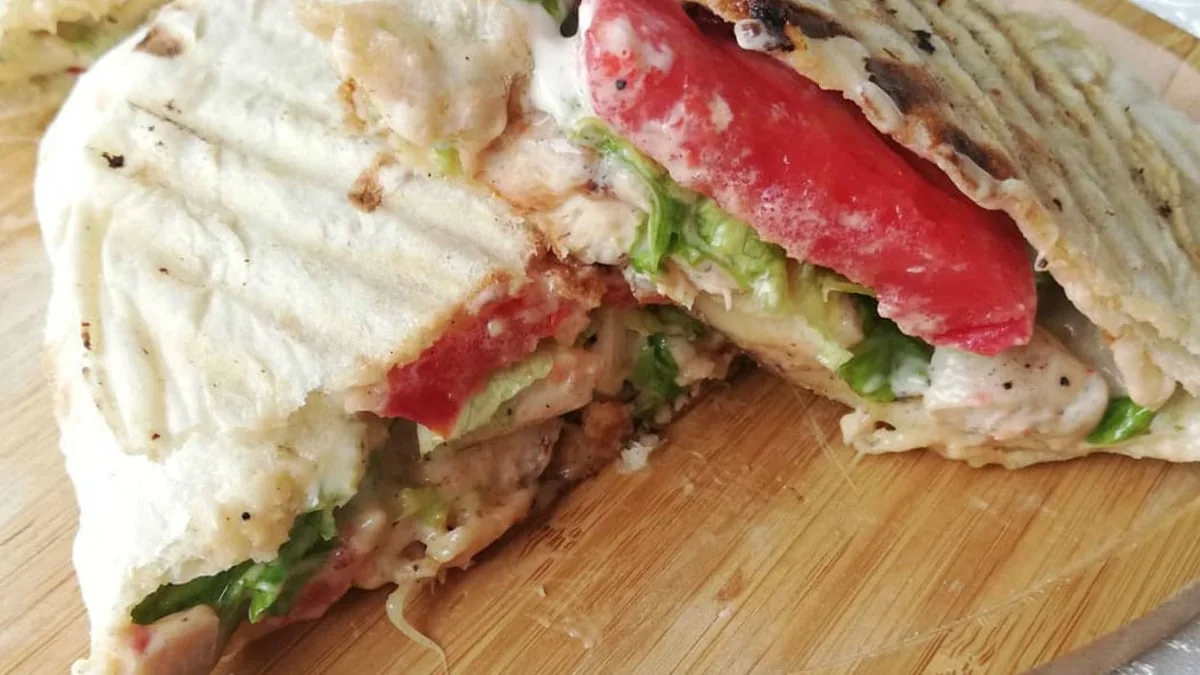
A healthier sandwich or wrap starts with a lean protein such as chicken, tuna, eggs or beans, adds plenty of salad, uses a light sauce like yogurt instead of a lot of mayonnaise, and goes easy on cheese and processed meat. Wholegrain bread or tortillas add fibre. Most of the calorie difference comes from sauces, cheese and portion size.
Key takeaways
- In our catalog, sandwiches and wraps range from about 450 kcal for a protein wrap to 650 kcal for a burrito.
- Sauces and cheese drive most of the difference: every 10 g of fat adds about 90 kcal.
- A yogurt-based sauce instead of mayonnaise is one of the easiest swaps.
- Processed meats such as ham are a major salt source; the WHO classifies them as carcinogenic.
- Wholegrain bread and extra vegetables add fibre and volume for few extra calories.
Are sandwiches and wraps a good choice when losing weight?
They can be an excellent choice. A sandwich or wrap is easy to portion, easy to carry and easy to log, and it can hold everything a balanced meal needs: protein, vegetables and a carbohydrate. What changes the numbers is the filling. Two lunches that look similar from the outside can differ by 200 kcal once you count the sauce, the cheese and the size of the bread.
Wraps are not automatically lighter than sandwiches either. A large tortilla can carry as much energy as two slices of bread, and wraps are often filled more generously because everything is hidden inside. The rest of this guide shows where the calories actually come from.
How do popular sandwiches and wraps compare?
Here are four options from our meal catalog. The numbers are our per-serving estimates; real values depend on the recipe, the bread and the amount of filling.
| Dish | kcal | Protein | Carbs | Fat |
|---|---|---|---|---|
| Club Sandwich | 560 | 34 g | 44 g | 26 g |
| Chicken Wrap | 480 | 34 g | 46 g | 16 g |
| Protein Wrap | 450 | 36 g | 40 g | 14 g |
| Burrito | 650 | 34 g | 74 g | 22 g |
| Lunch | What is in it | kcal | Protein | Fat |
|---|---|---|---|---|
| Protein wrap | Wholewheat tortilla, 120 g egg whites, 80 g turkey breast, cottage cheese, spinach | 450 | 36 g | 14 g |
| Chicken wrap | Large wheat tortilla, 130 g grilled chicken, salad, yogurt sauce | 480 | 34 g | 16 g |
| Club sandwich | 3 slices toast bread (90 g), 100 g chicken, turkey ham, mayonnaise | 560 | 34 g | 26 g |
| Burrito | Large tortilla, 110 g beef, 60 g rice, black beans, cheese | 650 | 34 g | 22 g |
All four carry a similar 34–36 g of protein, yet the calories range from 450 to 650. The club sandwich has 80 kcal more than the chicken wrap, and almost all of that gap is fat: 26 g against 16 g. At 9 kcal per gram, those extra 10 g of fat are about 90 kcal, much of it from the mayonnaise. The burrito is the heaviest because it stacks rice, beans and cheese inside an extra-large tortilla: 74 g of carbohydrates in one serving.
Which fillings give the most protein for the calories?
Lean protein keeps a sandwich filling without adding much fat. Good options include:
- Grilled chicken or turkey breast: the base of the chicken wrap and the protein wrap.
- Tuna or other canned fish, mixed with yogurt or a little olive oil instead of a lot of mayonnaise.
- Eggs or egg whites: the protein wrap gets a large share of its protein from 120 g of egg whites.
- Beans, hummus or falafel for a plant-based option; they bring fibre as well as protein.
- Cottage cheese or a moderate amount of cheese: useful, but full-fat cheese adds fat quickly.
Processed meats such as ham, salami and bacon are a different case. The WHO classifies processed meat as carcinogenic to humans, and the WHO healthy diet fact sheet names processed meats among the major sources of salt. The WHO recommends less than 5 g of salt a day for adults. A slice of ham in a sandwich now and then is not a problem, but freshly cooked chicken, eggs, fish or beans make better everyday fillings.
Where do the hidden calories hide?
- Sauces and spreads. Mayonnaise, butter, creamy dressings and pesto are mostly fat. A thin layer is fine; a thick one can add more energy than the meat. Yogurt sauce, mustard, salsa, hummus or a squeeze of lemon add flavour for far less.
- Cheese. One slice of cheese is easy to count; a handful of grated cheese melted into a wrap is not. The quesadilla in our catalog, with 60 g of shredded cheese, gets 27 g of fat and 520 kcal.
- Bread size. Three slices instead of two, a large tortilla instead of a regular one, or a thick baguette all add up. An open sandwich with one slice is an easy way to cut back.
- Extras inside the wrap. Rice, fries or crispy coated chicken inside a wrap turn a light lunch into a heavy one.
- Sides. Crisps and a sugary drink next to the sandwich can match the sandwich itself in calories.
How do you build a lighter sandwich or wrap?
- Choose the bread: wholegrain bread or a wholewheat tortilla adds fibre. The NHS recommends 30 g of fibre a day for adults, and wholemeal bread is one of its suggested sources. For more on fitting bread into a plan, see our guide to bread and weight loss.
- Add a palm-sized portion of lean protein, aiming for roughly 25–35 g of protein per lunch.
- Fill it with vegetables: lettuce, tomato, cucumber, peppers, grated carrot, spinach or pickles. They add crunch and volume for very few calories.
- Pick one rich element: cheese, avocado or a creamy sauce, rather than all three.
- Use a light sauce: yogurt with garlic and herbs, mustard, salsa or hummus.
Applying these steps to the club sandwich, for example by using two slices of wholegrain bread, a yogurt-based sauce and chicken instead of ham, keeps the protein and moves it much closer to the chicken wrap in calories.
Which combinations are worth trying?
- Open egg and avocado toast: one slice of sourdough, half a mashed avocado and two poached eggs come to about 410 kcal with 22 g of protein in our estimates. One slice of bread, plenty of flavour.
- Turkey and egg-white wrap: the protein wrap above, with spinach and tomato, is the leanest of the four at 450 kcal and 36 g of protein.
- Chicken, salad and yogurt sauce: the classic chicken wrap, easy to make at home with leftover grilled chicken.
- Hummus and vegetable wrap: a wholewheat tortilla with hummus, grated carrot, cucumber and lettuce, a meat-free option rich in fibre. Add some chickpeas or a boiled egg for more protein.
What about takeaway wraps and sandwiches?
Takeaway versions vary a lot. The chicken fajitas in our catalog, with two smaller tortillas, peppers and salsa, come to about 460 kcal with 38 g of protein, while a chicken döner wrap is about 560 kcal with 38 g. Asking for extra salad, less sauce and no fries inside usually saves the most. For a broader look at lunch choices at work, see our guide to the office lunch.
Sandwiches are also among the easiest meals to log. Take a photo in Sporty, or describe the bread, filling and sauce by text, and you will see how the lunch fits into your calories left for the day. If you are pregnant, avoid deli meats and other foods your doctor or midwife advises against, and if you have a medical condition, ask a doctor or registered dietitian about the right portions for you.
Frequently asked questions
Is a wrap healthier than a sandwich?
Not automatically. A large tortilla can have as many calories as two slices of bread; what matters most is the filling, the sauce and the size.
How many calories are in a typical chicken wrap?
Our per-serving estimate for a chicken wrap with grilled chicken, salad and yogurt sauce is about 480 kcal with 34 g of protein. Creamy sauces, cheese or fried chicken push it higher.
What is the healthiest sandwich filling?
Lean protein such as grilled chicken, tuna, eggs or beans, plus plenty of vegetables and a light sauce. Processed meats are best kept occasional because of their salt and the WHO's cancer classification.
Can I eat sandwiches every day and still lose weight?
Yes, if they fit your daily calorie target. Vary the fillings, use wholegrain bread and keep sauces and cheese measured.
Was this article helpful?
No ratings yet — be the first.
Tap a star to rate it — your rating helps us improve and helps other readers.
Sources
This article is general information, not medical advice. If you have a health condition, are pregnant or under 18, talk to a doctor or registered dietitian before changing your diet.