

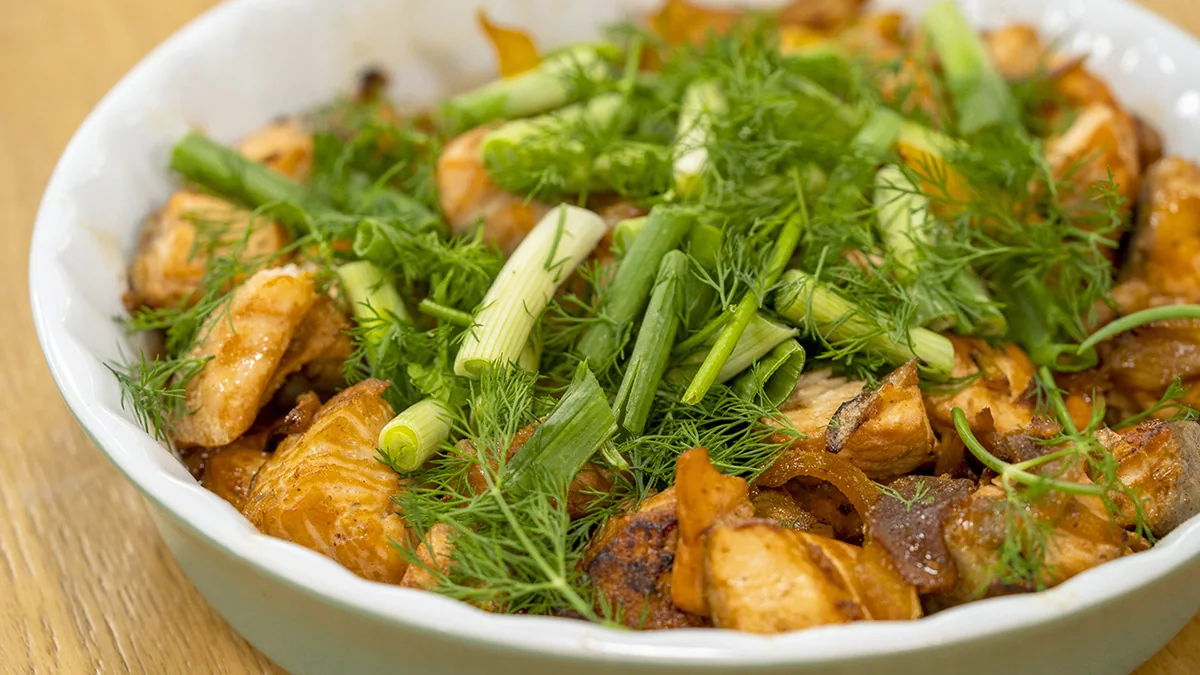
Most health guidance suggests eating fish at least twice a week. The NHS recommends at least 2 portions of about 140 g, one oily, such as salmon, sardines or mackerel, and US guidelines suggest about 8 ounces (227 g) of seafood a week. Fish provides high-quality protein, and oily fish is the richest source of long-chain omega-3 fats.
Key takeaways
- Aim for at least two portions of fish a week, one of them oily; a portion is about 140 g.
- White fish such as cod has about 105 kcal and 23 g of protein per 100 g; oily fish has more fat and more calories.
- Oily fish is the richest source of long-chain omega-3 fats; fresh and canned tuna do not count as oily in NHS advice.
- Pregnant women and girls should have no more than 2 portions of oily fish a week and avoid shark, swordfish and marlin.
- How fish is cooked matters: steamed, baked or grilled fish keeps calories lower than fried.
How often should you eat fish?
Health agencies in different countries give very similar advice. The NHS recommends at least 2 portions of fish a week, including 1 of oily fish, with a portion of about 140 g. The Dietary Guidelines for Americans suggest that adults eating around 2,000 kcal a day have about 8 ounces (227 g) of seafood per week. Both work out to roughly two fish meals a week.
Fish counts as part of the protein group in a balanced diet, alongside meat, eggs, beans and nuts. Swapping some red or processed meat meals for fish is one easy way to add variety, and many fish dishes are naturally light because white fish and shellfish are low in fat.
What nutrients does fish provide?
All fish and shellfish are good sources of protein. Beyond that, the main difference is fat:
- Oily fish such as salmon, mackerel, sardines, herring, pilchards, sprats and trout is, according to the NHS, the richest source of long-chain omega-3 fats. Their fat is mostly unsaturated, which our guide to healthy fats explains in more detail.
- White fish such as cod, haddock and pollock is very low in fat and high in protein for its calories.
- Shellfish such as prawns, mussels, scallops and squid is low in fat and provides selenium, zinc, iodine and copper.
One detail surprises many people: fresh and canned tuna do not count as oily fish in NHS advice. Tuna is still an excellent lean protein, but salmon, sardines or mackerel are the choices for the weekly oily portion.
How do calories and protein compare between fish?
The table uses approximate USDA FoodData Central values per 100 g of cooked or drained fish, with skinless chicken breast for comparison.
| Per 100 g, cooked | kcal | Protein | Fat |
|---|---|---|---|
| Cod | about 105 | 23 g | 1 g |
| Tuna, light, canned in water (drained) | about 116 | 26 g | 1 g |
| Tilapia | about 128 | 26 g | 3 g |
| Chicken breast, skinless (for comparison) | about 165 | 31 g | 4 g |
| Salmon, Atlantic, farmed | about 206 | 22 g | 12 g |
| Sardines, canned in oil (drained) | about 208 | 25 g | 11 g |
| Mackerel, Atlantic | about 262 | 24 g | 18 g |
A 140 g portion of cod comes to about 147 kcal with 32 g of protein, while the same portion of farmed salmon is about 288 kcal with 31 g of protein. The extra calories in salmon come from its fat, which is exactly the fat that makes it an oily fish. Both fit easily into a calorie target; they simply play different roles. If you are aiming for a daily protein target, one fish portion covers a large part of it.
What do real fish meals look like?
Here are fish and seafood dishes from our meal catalog. These are our per-serving estimates, and real values depend on recipe and portion.
| Dish | kcal | Protein | Carbs | Fat |
|---|---|---|---|---|
| Ceviche | 220 | 26 g | 12 g | 7 g |
| Baked sea bream | 400 | 42 g | 12 g | 20 g |
| Sushi rolls | 420 | 18 g | 70 g | 7 g |
| Pan-fried anchovies | 420 | 30 g | 16 g | 26 g |
| Grilled fish and vegetables | 450 | 48 g | 24 g | 18 g |
| Grilled salmon | 460 | 40 g | 6 g | 30 g |
| Tuna salad and yogurt | 480 | 52 g | 28 g | 18 g |
| Teriyaki salmon with rice | 520 | 38 g | 36 g | 24 g |
| Baked salmon and sweet potato | 540 | 44 g | 42 g | 20 g |
Most of these meals provide 30 g of protein or more for under 550 kcal. The grilled fish and vegetables plate gives 48 g of protein for 450 kcal, and the tuna salad with yogurt reaches 52 g. Baked salmon with sweet potato is an easy way to cover the weekly oily portion in one complete meal. Sushi is the carbohydrate-heavy option, since most of its energy comes from the rice.
Does the cooking method matter?
Yes, often more than the type of fish. The NHS notes that steamed, baked or grilled fish is healthier than fried fish. Frying adds oil, and batter or breadcrumbs soak up even more: one tablespoon of oil is about 120 kcal according to USDA FoodData Central. The pan-fried anchovies in the table use one tablespoon of oil and a light dusting of corn flour, which is why their fat is higher than grilled white fish.
- Bake fish in foil or parchment with lemon, garlic and herbs.
- Grill or pan-sear with a measured teaspoon of oil.
- Poach or steam fish in a broth for very lean results.
- Keep sweet glazes such as teriyaki to a spoonful or two.
Who should limit certain fish?
Some groups need more specific advice. According to the NHS:
- Girls, women planning a pregnancy, and pregnant or breastfeeding women should have no more than 2 portions of oily fish a week.
- Pregnant women and women trying for a baby should avoid shark, swordfish and marlin, and children under 16 should avoid them too. Other adults should have no more than 1 portion a week.
- Pregnant women or those trying for a baby should have no more than 4 medium cans or 2 fresh tuna steaks (about 140 g each) a week.
- Pregnant women, older people, young children and people with weakened immune systems should avoid raw or lightly cooked shellfish.
If you are pregnant, breastfeeding, feeding young children or have a medical condition, ask your doctor, midwife or a registered dietitian which fish and how much suit you, including raw fish dishes such as sushi, poke and ceviche. People with a fish or shellfish allergy should avoid them completely; cooking does not reduce the risk of a reaction.
How can you fit two fish meals into a week?
- Keep canned sardines, salmon and tuna in the cupboard for quick salads and pasta.
- Buy frozen fish fillets and prawns; they thaw overnight in the fridge.
- Pick one fixed fish night, such as baked salmon with vegetables every Wednesday.
- Order fish when eating out, choosing grilled or baked over battered.
Logging fish is straightforward because it is usually one clear piece on the plate. A photo in Sporty records it along with the sides, and adding a note such as "fried" or "with teriyaki sauce" keeps the estimate close to what you actually ate.
Frequently asked questions
How many times a week should I eat fish?
The NHS recommends at least two portions a week, one of them oily fish, with a portion of about 140 g. US guidelines suggest about 8 ounces (227 g) of seafood a week for adults.
Which fish counts as oily fish?
Salmon, mackerel, sardines, herring, pilchards, sprats and trout are oily fish. In NHS advice, fresh and canned tuna do not count as oily fish.
Is fish good for weight loss?
Fish can fit well because it is high in protein, and white fish is very low in calories, about 105 kcal per 100 g for cod. Grilling, baking or steaming keeps it light, while frying adds oil.
Can I eat fish when pregnant?
Yes, but with limits: no more than 2 portions of oily fish a week, no shark, swordfish or marlin, and limits on tuna, according to the NHS. Ask your doctor or midwife about what suits you.
Was this article helpful?
No ratings yet — be the first.
Tap a star to rate it — your rating helps us improve and helps other readers.
Sources
This article is general information, not medical advice. If you have a health condition, are pregnant or under 18, talk to a doctor or registered dietitian before changing your diet.