

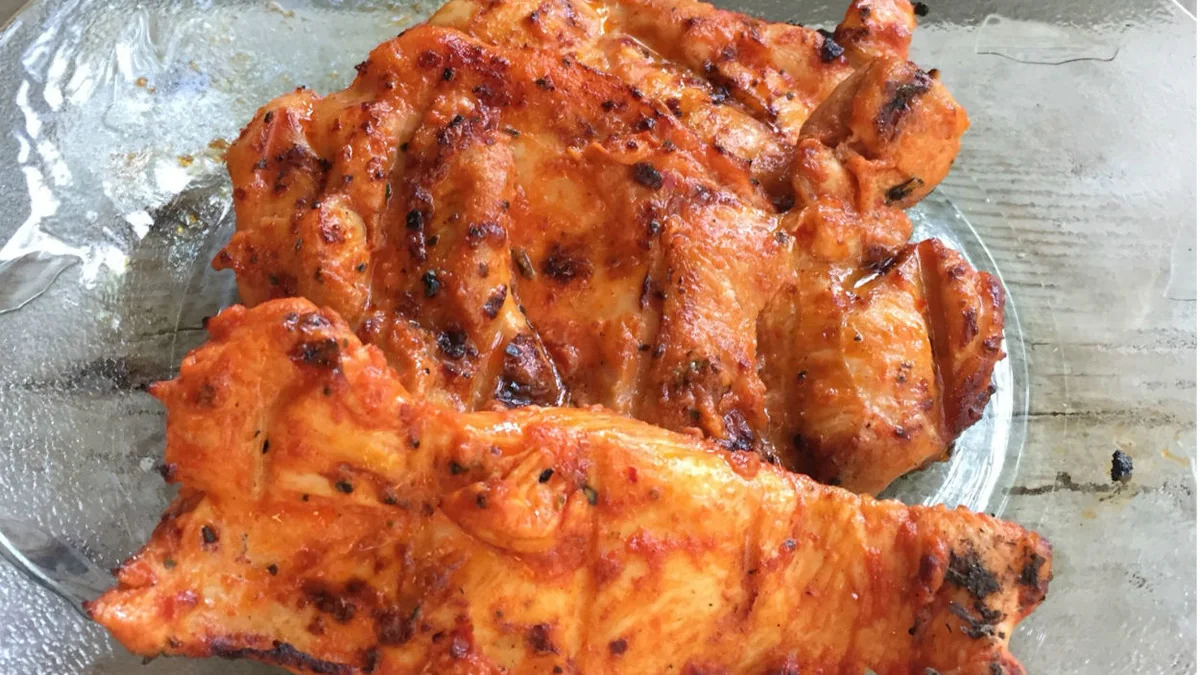
A balanced 1,800-calorie day can be four meals: oats with yogurt and fruit, grilled chicken with bulgur and cacık, hummus with vegetables, and baked salmon with sweet potato. By Sporty's per-serving estimates that is about 1,830 kcal and 135 g of protein. Whether 1,800 kcal suits you depends on your size and activity.
Key takeaways
- 1,800 kcal is a moderate deficit for many active women and less active men, but maintenance for some smaller people.
- The sample day gives about 1,830 kcal, 135 g protein, 196 g carbs and 57 g fat.
- Swap meals for dishes within 50–100 kcal to keep the total while adding variety.
- Measure cooking oil: one tablespoon adds roughly 120 kcal.
- Do not go below 1,200 kcal (women) or 1,500 kcal (men) without medical supervision.
Who is an 1,800-calorie day right for?
There is no single calorie number that suits everyone. 1,800 kcal a day is a moderate deficit for many women who are active and for many men who are fairly inactive, but it can be maintenance for a smaller, sedentary person. The way to know is to estimate your own maintenance first.
Most calculators use the Mifflin-St Jeor equation, then multiply by an activity factor (1.2 for sedentary up to 1.9 for very active). Two examples:
| Person | Resting estimate | Activity factor | Maintenance | Gap to 1,800 kcal |
|---|---|---|---|---|
| Woman, 30, 168 cm, 75 kg, moderately active | ≈ 1,490 kcal | 1.55 | ≈ 2,310 kcal | ≈ 510 kcal deficit |
| Man, 40, 178 cm, 85 kg, sedentary | ≈ 1,770 kcal | 1.2 | ≈ 2,120 kcal | ≈ 320 kcal deficit |
A deficit of around 500 kcal a day is often quoted because, using the rough rule that 7,700 kcal is about 1 kg of body fat, it adds up to around 0.5 kg a week. That rule is approximate and real progress varies. The CDC notes that people who lose about 0.5–1 kg (1–2 lb) a week are more likely to keep it off than people who lose faster. Use the calculator below to check your own numbers, and read how many calories you need to lose weight for the full method.
Mifflin-St Jeor equation × activity factor. Capped at the usual minimum (1,200 kcal women / 1,500 kcal men); going lower needs medical supervision. Estimates only.
Do not go below 1,200 kcal a day for women or 1,500 kcal a day for men without medical supervision. If you are pregnant or breastfeeding, under 18, have diabetes, kidney disease or a history of eating disorders, talk to a doctor or registered dietitian before setting a calorie target.
What does a sample 1,800-calorie day look like?
This day is built from four dishes in the Sporty catalog. The numbers are Sporty's per-serving estimates; real values depend on recipe and portion.
| Meal | Dish | kcal | Protein | Carbs | Fat |
|---|---|---|---|---|---|
| Breakfast | Oats, yogurt and fruit | 390 | 22 g | 58 g | 9 g |
| Lunch | Grilled chicken, bulgur and cacık | 640 | 58 g | 62 g | 18 g |
| Snack | Hummus and raw vegetables | 260 | 11 g | 34 g | 10 g |
| Dinner | Baked salmon and sweet potato | 540 | 44 g | 42 g | 20 g |
| Total | 1,830 | 135 g | 196 g | 57 g |
Using 4 kcal per gram for protein and carbohydrate and 9 kcal per gram for fat, that works out to roughly 29% of energy from protein, 43% from carbohydrate and 28% from fat. Protein and fat sit inside the usual adult ranges (10–35% and 20–35%), and carbohydrate is just under the 45–65% range, which is typical for a weight-loss day that prioritises protein. Unsweetened tea, coffee and water add little or nothing.
Why is the day built this way?
- Protein at every meal. 135 g is well above the 0.8 g/kg minimum for most adults and helps with fullness and keeping muscle while eating less. See how to set your macro targets if you want to fine-tune it.
- The biggest meal at lunch. A large, high-protein lunch tends to prevent the 4 pm snack spiral. If your evenings are hungrier, swap lunch and dinner.
- A planned snack. Hummus and vegetables gives crunch, fibre and some protein for 260 kcal, so the afternoon gap does not turn into biscuits.
- Whole grains and starchy vegetables. Oats, bulgur and sweet potato provide fibre and steady energy; the NHS suggests starchy foods make up just over a third of what you eat, choosing wholegrain where you can.
- Vegetables in three of four meals. They add volume for few calories and push you towards five portions a day.
What can you swap without breaking the total?
A sample day only helps if you can adapt it. Each swap below stays within about 50–100 kcal of the original, again using Sporty's per-serving estimates:
| Instead of | Swap in | kcal | Protein |
|---|---|---|---|
| Oats, yogurt and fruit (390) | Menemen and white cheese | 460 | 28 g |
| Oats, yogurt and fruit (390) | Protein pancakes | 380 | 30 g |
| Grilled chicken, bulgur and cacık (640) | Chicken döner wrap | 560 | 38 g |
| Grilled chicken, bulgur and cacık (640) | Poke bowl | 540 | 34 g |
| Hummus and raw vegetables (260) | Cottage cheese and walnut fruit bowl | 280 | 26 g |
| Baked salmon and sweet potato (540) | Chicken shish with shepherd's salad | 540 | 49 g |
| Baked salmon and sweet potato (540) | Tofu and vegetable sauté | 420 | 32 g |
The tofu option saves about 120 kcal, which leaves room for a slice of bread or a piece of fruit. A vegetarian day could combine oats, yogurt and fruit for breakfast, a lentil and bulgur lunch, hummus as a snack and the tofu sauté for dinner, although protein will land lower than in the original plan.
How do you make it work during a real week?
Most people do not eat the same day seven times, and you do not need to. Three habits make a sample plan practical:
- Cook twice, eat four times. Grill a tray of chicken and cook a pot of bulgur on Sunday and Wednesday; lunches then take five minutes. Our simple meal-prep plan shows the steps.
- Keep breakfast boring. Rotating two or three breakfasts removes a daily decision without making the week feel repetitive.
- Leave a buffer. If you plan 1,700 kcal of food, a splash of milk, a cooking-oil drizzle or a biscuit with tea still fits under 1,800.
Cooking oil is the most common hidden extra: a tablespoon adds roughly 120 kcal (about 13–14 g of fat at 9 kcal per gram), so measure it rather than pouring from the bottle. Sauces and dressings come next.
How do you know if 1,800 is the right number?
Track your intake and your weekly average weight for two to three weeks. If the average is falling by roughly 0.5–1 kg a week and you feel well, keep going. If nothing moves, check portions and drinks before cutting further; small adjustments of 100–200 kcal are usually enough. If you are losing faster than 1 kg a week, feel dizzy or very tired, or are constantly hungry, the target is probably too low and worth raising. Tools such as the NIDDK Body Weight Planner can also show how a calorie level is expected to play out over months.
Logging the day in Sporty, by photo or text, shows the running total against your target, which makes it easier to see whether the plan on paper matches what you actually eat.
Frequently asked questions
Is 1,800 calories a day enough to lose weight?
For many active women and less active men it creates a deficit of roughly 300–500 kcal a day. Smaller or very sedentary people may maintain weight on 1,800, so estimate your own maintenance first.
How much protein should an 1,800-calorie diet have?
Adult guidelines allow 10–35% of energy from protein, which is 45–158 g at 1,800 kcal. The sample day has about 135 g, which helps with fullness during weight loss.
Can I eat the same 1,800-calorie day every day?
You can, but rotating a few breakfasts and swapping meals of similar calories gives more variety and a wider range of nutrients.
Is 1,800 calories too low for men?
Not usually; it stays above the 1,500 kcal floor. Very active or larger men may lose weight faster than is comfortable on 1,800 kcal and might need more.
Was this article helpful?
No ratings yet — be the first.
Tap a star to rate it — your rating helps us improve and helps other readers.
Sources
This article is general information, not medical advice. If you have a health condition, are pregnant or under 18, talk to a doctor or registered dietitian before changing your diet.