
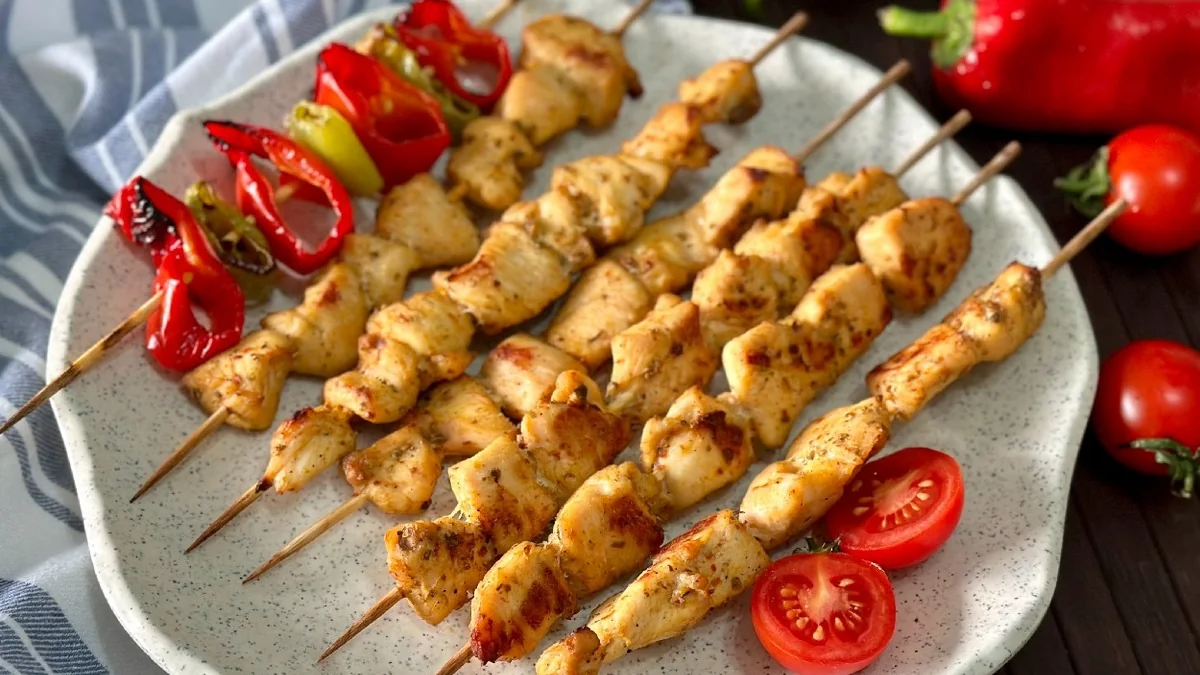
Chicken shish (tavuk şiş) tops Sporty's 51 Turkish dishes with 12.1 g of protein per 100 kcal: 46 g in 380 kcal. No dish among all 152 in the catalog, ceviche and protein shakes included, beats it. Poached chicken and chicken sauté follow. Surprise: per calorie, cacık matches an Adana kebab.
Key takeaways
- Protein density = grams of protein ÷ calories × 100; pure protein tops out at 25 g per 100 kcal.
- Chicken shish leads at 12.1 g per 100 kcal, followed by tavuk haşlama (11.8 g) and tavuk sote (10.5 g).
- Chicken soup is the only top-10 dish under 300 kcal, with 22 g of protein.
- Cacık (5.83 g) and Adana kebab (5.81 g) are practically tied per 100 kcal.
- A 2015 review links about 25–30 g of protein per meal with better appetite and weight management.
What does "protein per calorie" mean?
Most protein rankings tell you which dish has the most grams. That favours big plates: a large portion of almost anything will have more protein than a small one. A fairer question when you are watching calories is how much protein you get for every 100 kcal you eat. We call this protein density, and the formula is simple:
Protein density = grams of protein ÷ calories × 100
Take chicken shish (tavuk şiş): 46 g of protein in 380 kcal. 46 ÷ 380 × 100 = 12.1 g of protein per 100 kcal. Compare that with lahmacun: 20 g in 430 kcal, or 4.7 g per 100 kcal. Same meal slot, less than half the protein density.
There is also a hard ceiling. Protein has about 4 kcal per gram, so even pure protein can never go above 25 g per 100 kcal. Chicken shish reaches roughly half of that ceiling: about 48% of its calories come from protein.
We ran this calculation for all 51 Turkish dishes in our meal catalog. All numbers are Sporty's per-serving estimates; real values depend on the recipe, the cut of meat, the amount of oil and your portion.
Which 10 Turkish dishes have the most protein per calorie?
| Rank | Dish | Calories | Protein | Protein per 100 kcal |
|---|---|---|---|---|
| 1 | Chicken shish (tavuk şiş) | 380 kcal | 46 g | 12.1 g |
| 2 | Poached chicken with vegetables (tavuk haşlama) | 340 kcal | 40 g | 11.8 g |
| 3 | Chicken sauté (tavuk sote) | 380 kcal | 40 g | 10.5 g |
| 4 | Beef sauté (et sote) | 420 kcal | 40 g | 9.5 g |
| 5 | Grilled chicken, bulgur and cacık | 640 kcal | 58 g | 9.1 g |
| 6 | Braised lamb shank (kuzu incik) | 560 kcal | 50 g | 8.9 g |
| 7 | Chicken soup (tavuk çorbası) | 260 kcal | 22 g | 8.5 g |
| 8 | Slow-roasted lamb (kuzu tandır) | 520 kcal | 44 g | 8.5 g |
| 9 | Shrimp casserole (karides güveç) | 380 kcal | 30 g | 7.9 g |
| 10 | Grilled meatballs, roasted potatoes and piyaz | 590 kcal | 46 g | 7.8 g |
Chicken soup and kuzu tandır have exactly the same ratio (22/260 and 44/520), so the lighter dish takes 7th place. Just outside the top 10 are meat güveç (7.4 g), pan-fried anchovies, hamsi tava (7.1 g) and the chicken döner wrap (6.8 g).
What do the winners have in common?
- Lean meat, little starch. The top four are meat or chicken cooked with vegetables, with 8 to 14 g of carbohydrates. The chicken shish is served without bread in our catalog estimate; adding lavash would lower its density.
- Moist cooking keeps it light. Tavuk haşlama is chicken breast simmered with carrot, zucchini and celery plus one tablespoon of olive oil. Few added fats means more of the calories come from protein.
- A full plate can still rank high. The grilled chicken, bulgur and cacık plate has 640 kcal and 62 g of carbs, yet it ranks 5th because 180 g of chicken breast brings 58 g of protein, the highest total in the whole Turkish catalog.
- A soup made the list. Chicken soup is the only dish under 300 kcal in the top 10, which makes it a useful starter or light dinner.
Which results surprised us?
A bowl of cacık (7 g protein in 120 kcal) has 5.83 g of protein per 100 kcal. An Adana kebab (36 g in 620 kcal) has 5.81 g. Calorie for calorie, they are practically tied, because the Adana's minced lamb and lavash add a lot of energy alongside the protein. İskender (5.6 g) sits just behind both.
The bigger surprise came when we widened the lens. Across all 152 dishes in the catalog, from every cuisine, no dish beats chicken shish on protein per calorie. Peruvian ceviche comes closest at 11.8 g per 100 kcal, then a tuna salad (10.8 g), grilled fish with vegetables (10.7 g), Thai tom yum with shrimp (10.4 g) and even a whey protein shake (10.0 g). Popular international takeaways sit much lower: pad thai with chicken 5.5 g, sushi rolls 4.3 g and margherita pizza 4.1 g.
On the plant side, red lentil soup leads with 5.2 g per 100 kcal (13 g in 250 kcal), ahead of lentil salad (5.0 g) and nohut yemeği (4.4 g). Legumes are not as dense as chicken breast, but they bring fibre that meat does not.
At the other end, olive oil vegetable dishes such as imam bayıldı (1.6 g) and yaprak sarma (1.7 g) have the lowest protein density. That is not a flaw: they are vegetable dishes, and they pair well with a protein food.
Why does protein density matter in a calorie deficit?
When you eat less energy than you burn, protein helps protect lean mass and supports fullness. A 2015 review in the American Journal of Clinical Nutrition by Leidy and colleagues concluded that higher-protein diets of about 1.2 to 1.6 g per kg of body weight per day, with roughly 25 to 30 g of protein per meal, can improve appetite and weight management. The same review is honest about limits: protein's effect on fullness is described as modest, and it did not reduce how much people ate at the next meal in acute studies. In longer trials, sticking to the plan mattered most.
For exercising people, the International Society of Sports Nutrition's 2017 position stand recommends 1.4 to 2.0 g per kg per day, with doses of about 20 to 40 g spread across the day. Your own target is covered in how much protein you need per day.
How many calories does it take to reach 30 g of protein?
This is where density becomes practical. Using catalog numbers, here is roughly how many calories each dish costs to deliver 30 g of protein:
- Chicken shish: about 250 kcal (30 ÷ 12.1 × 100).
- Chicken soup: about 355 kcal, or a bit less than one and a half bowls.
- Adana kebab: about 515 kcal.
- Lahmacun: about 645 kcal, or one and a half lahmacun.
- Mantı: about 645 kcal (26 g in a 560 kcal serving).
None of these dishes is better or worse; they just do different jobs. If your day is protein-light, a dense dish such as şiş or haşlama closes the gap cheaply in calories. If protein is already covered, mantı or lahmacun fit fine. Sporty does this maths for you when you log a meal by photo.
How do you raise protein density at home?
- Add yogurt. A side of cacık or plain yogurt adds protein for few calories.
- Measure cooking fat. Fat has 9 kcal per gram, so one extra tablespoon of oil or butter lowers density more than any other change.
- Pick breast or lean cuts for grills and sautés, and save fattier cuts for when you want them.
- Keep bread as a choice, not a default. Lavash and pide add carbs and salt without much protein.
Want lighter kebab options next? See which kebab is lightest.
A health note: this is general information, not medical advice. If you have kidney disease, are pregnant, are under 18 or have a history of disordered eating, talk to a doctor or registered dietitian before raising your protein intake or changing your diet.
Frequently asked questions
Which Turkish dish has the most protein per calorie?
In Sporty's catalog it is chicken shish, with 46 g of protein in about 380 kcal, or 12.1 g per 100 kcal. Real values depend on the recipe and portion.
How do I calculate protein per calorie?
Divide the grams of protein by the calories and multiply by 100. For example, 22 g ÷ 260 kcal × 100 = 8.5 g of protein per 100 kcal for chicken soup.
Which plant-based Turkish dish has the most protein per calorie?
Red lentil soup, with 13 g of protein in 250 kcal (5.2 g per 100 kcal), followed by lentil salad and chickpea stew.
How much protein should one meal have?
A 2015 review in the American Journal of Clinical Nutrition suggested about 25–30 g per meal within 1.2–1.6 g per kg per day. Needs vary, so check with a dietitian if you have a medical condition.
Is a high-protein diet safe for everyone?
Not necessarily. People with kidney disease, pregnant people and anyone under 18 should talk to a doctor or registered dietitian before raising protein intake.
Sources
This article is general information, not medical advice. If you have a health condition, are pregnant or under 18, talk to a doctor or registered dietitian before changing your diet.