
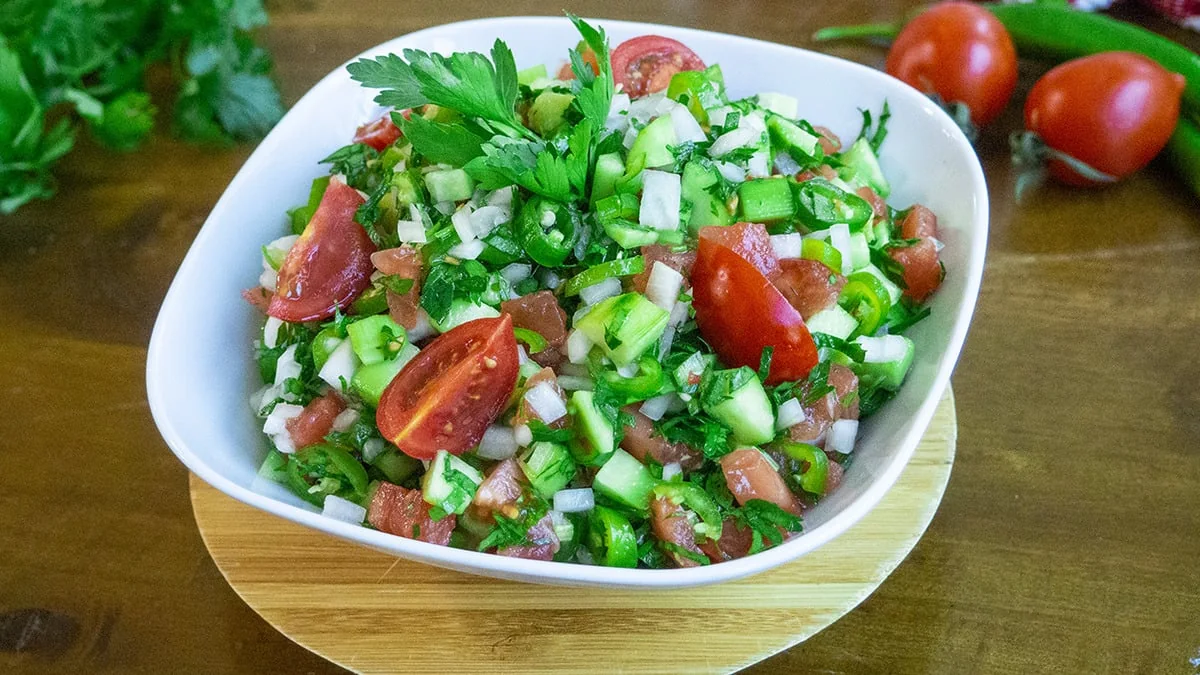
In Sporty's catalog of 51 Turkish dishes, the lightest is cacık at about 120 kcal per serving, followed by çoban salata at 160 kcal. All 15 places stay at or under 300 kcal, 11 of the 16 dishes are vegan, and chicken soup brings the most protein: 22 g for 260 kcal.
Key takeaways
- Cacık (120 kcal) and çoban salata (160 kcal) are the two lightest Turkish dishes in the catalog.
- Every dish in the top 15 is 300 kcal or less per serving; two dishes share 15th place.
- Chicken soup gives the most protein on the list: 22 g for 260 kcal.
- Olive oil is the main calorie swing factor in salads and zeytinyağlı dishes.
- Pair light dishes with a protein source, such as yogurt or chicken, for a filling meal.
How did we rank these dishes?
We sorted all 51 Turkish dishes in our meal catalog by calories per serving, from lowest to highest. Where two dishes have the same calories, the one with more protein ranks higher, then the one with less fat. All numbers are Sporty's per-serving estimates (kcal, protein, carbohydrates and fat); real values depend on the recipe, the amount of oil and the portion on your plate.
One thing to keep in mind: a low number does not make a dish "better", and a higher number does not make one "worse". Some dishes on this list are sides or meze, not full meals. The list is useful for one practical question: what can you add to your day when you want a lot of flavour for relatively few calories?
The 15 lowest-calorie Turkish dishes
- Cacık — 120 kcal. Yogurt, cucumber, garlic and mint. With 7 g of protein, it is the lightest dish in the whole Turkish catalog.
- Shepherd's salad (çoban salata) — 160 kcal. Tomato, cucumber, pepper, onion and parsley. Most of its 11 g of fat comes from the olive oil, so the dressing decides the number.
- Green beans in olive oil (zeytinyağlı taze fasulye) — 210 kcal. A 250 g serving of beans slow-cooked with tomato and onion. Enjoyed warm or cold.
- Yogurt rice soup (yayla çorbası) — 220 kcal. Yogurt, a little rice, egg yolk and a mint butter finish, with 9 g of protein.
- Artichokes in olive oil (zeytinyağlı enginar) — 230 kcal. Artichoke hearts braised with carrot, onion, lemon and dill, served cold.
- Red lentil soup (mercimek çorbası) — 250 kcal. 13 g of protein from 70 g of lentils, which makes it one of the most filling bowls on the list. More on the red lentil soup calorie page.
- Chicken soup (tavuk çorbası) — 260 kcal. The protein champion of this list: 22 g of protein from 100 g of chicken breast, plus vermicelli and vegetables.
- Ezogelin soup — 260 kcal. Red lentils and bulgur with dried mint; 11 g of protein and the lowest fat (6 g) of the five dishes tied at 260 kcal.
- Borlotti beans in olive oil (barbunya pilaki) — 260 kcal. A cold bean meze with carrot, garlic and tomato, also with 11 g of protein.
- Turkish vegetable stew (türlü) — 260 kcal. Eggplant, zucchini, green beans and okra stewed in tomato and olive oil.
- Walnut tomato salad (gavurdağı salatası) — 260 kcal. Tomato, walnuts and pomegranate molasses. The walnuts bring 21 g of fat, the highest on this list, which is why a "salad" sits at rank 11.
- Bulgur pilaf (bulgur pilavı) — 290 kcal. 80 g of bulgur with onion, pepper and tomato paste; 50 g of carbohydrates and the most carbs of the top 12.
- Stuffed mussels (midye dolma) — 300 kcal. Eight mussels filled with spiced rice; 14 g of protein.
- Zucchini fritters (mücver) — 300 kcal. Grated zucchini with egg, flour, white cheese and dill; 12 g of protein.
- Turkish potato salad (patates salatası) and stuffed vine leaves (zeytinyağlı yaprak sarma) — 300 kcal each. These two have identical estimates in our catalog (5 g protein, 42 g carbs, 13 g fat), so they share 15th place.
Some of these are main dishes and some are meze or sides, so think of the ranking as a resource for planning your table, not as a diet list. Just outside the list are kısır and lentil köfte at 340 kcal each.
What surprised us in the numbers?
- Five dishes tie at exactly 260 kcal: chicken soup, ezogelin, barbunya, türlü and gavurdağı salad. Yet their protein ranges from 5 g to 22 g.
- 11 of the 16 dishes are vegan, and 14 are vegetarian. Turkey's olive oil dishes (zeytinyağlılar), soups and salads do most of the work here.
- Olive oil is the swing factor. Fat has 9 kcal per gram, so in dishes like çoban salata, enginar and türlü the oil is a large share of the calories. Two cooks can make the same dish 100 kcal apart.
- Every dish on the list is under half of an İskender. In our catalog an İskender is about 720 kcal; the highest dish here is 300 kcal.
How do you turn these dishes into a full meal?
Many of the lowest-calorie dishes are light on protein, so on their own they may not keep you full for long. Protein helps with fullness and protects muscle when you are eating in a calorie deficit. Pairing a low-calorie dish with a protein source or a second dish is a simple way to build a satisfying plate. These combinations use catalog numbers only:
| Combination | Calories | Protein |
|---|---|---|
| Red lentil soup + shepherd's salad | 410 kcal | 16 g |
| Chicken soup + cacık | 380 kcal | 29 g |
| Green beans in olive oil + cacık | 330 kcal | 12 g |
| Ezogelin soup + borlotti beans | 520 kcal | 22 g |
| Türlü + bulgur pilaf + cacık | 670 kcal | 21 g |
A home-style plate of an olive oil vegetable dish with bulgur and yogurt is close to what Türkiye's national nutrition guide (TÜBER) describes as a balanced meal: vegetables, a whole-grain source and a dairy food on the same table. For higher-protein options in the same calorie range, see what to eat with 500 calories left, and for your daily protein target, how much protein you need per day.
How do you keep these dishes light at home?
- Measure the olive oil. A tablespoon of oil is roughly 120 kcal. Olive oil dishes taste just as good with a measured amount, and you can add a drizzle at the table.
- Watch the bread basket. Soups and meze are often eaten with plenty of bread, which can add more calories than the dish itself.
- Add protein instead of more oil. A bowl of yogurt, an egg or grilled chicken turns a light side into a meal.
- Serve on a plate, not from the pot. Putting olive oil dishes and soups into a bowl or onto a plate, rather than eating from the serving dish, makes it easier to see how much one portion is and to enjoy it.
- Go easy on butter toppings. Mint or chili butter drizzled on soups is delicious; a teaspoon gives the flavour without doubling the fat.
Where can you see all 51 Turkish dishes?
This list covers only the lightest end. Our guide to Turkish food calories shows the full catalog, from cacık at 120 kcal to İskender at 720 kcal, with protein, carbs and fat for each dish. If you would rather not look up numbers at all, Sporty can estimate a plate from a photo and log it for you.
A note on health: this list is general information, not medical advice. If you have kidney disease, are pregnant, are under 18 or have a history of disordered eating, talk to a doctor or registered dietitian about what and how much to eat.
Frequently asked questions
What is the lowest-calorie Turkish dish?
In Sporty's catalog it is cacık, at about 120 kcal per serving, followed by shepherd's salad at about 160 kcal. Real values depend on recipe and portion.
Which low-calorie Turkish dish has the most protein?
Chicken soup, with about 22 g of protein for 260 kcal per serving. Red lentil soup follows with 13 g for 250 kcal.
Are Turkish olive oil dishes low in calories?
Many are, with green beans, artichokes and türlü between 210 and 260 kcal per serving in our catalog. The amount of oil changes the number most, because fat has 9 kcal per gram.
Can I lose weight eating only these dishes?
Weight loss depends on your total intake over time, not on single dishes. Many of these are low in protein, so combine them with protein foods, and talk to a dietitian for a personal plan.
Sources
This article is general information, not medical advice. If you have a health condition, are pregnant or under 18, talk to a doctor or registered dietitian before changing your diet.