

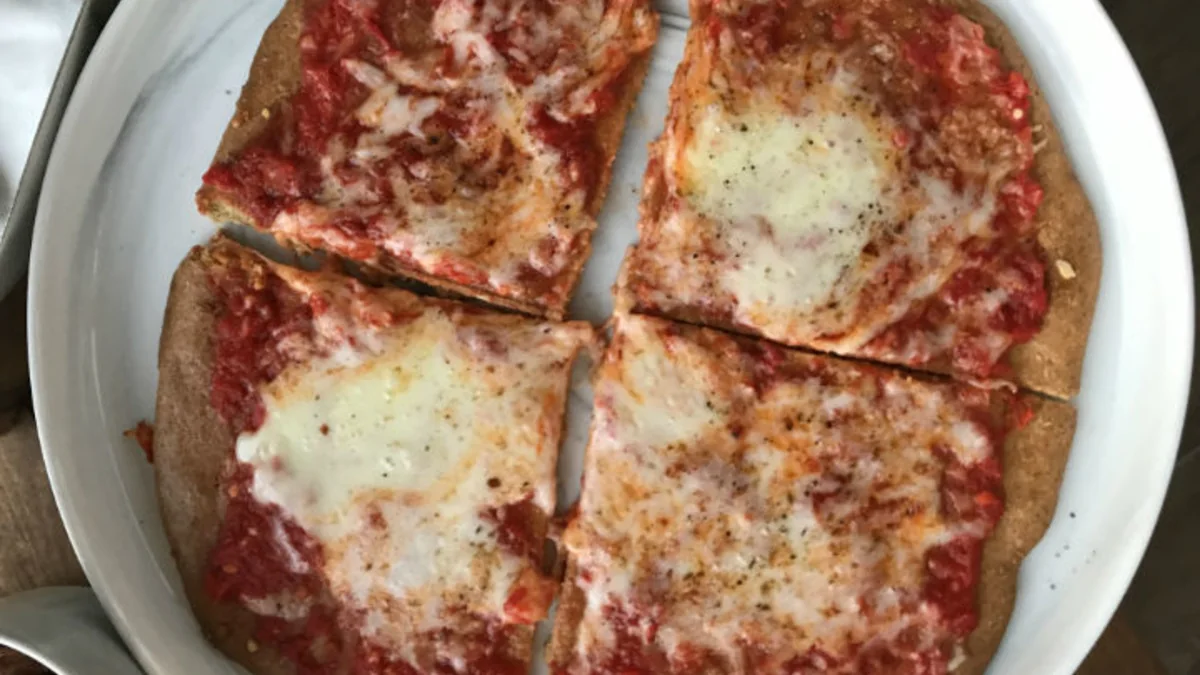
Yes, you can eat pizza and lose weight as long as your weekly calorie average stays in a deficit. A margherita serving is about 560 kcal in Sporty's catalog, roughly a third of an 1,800 kcal day. Plate a set portion, add a salad, choose vegetable toppings and plan the other meals around it.
Key takeaways
- Pizza fits a calorie deficit when you plan the rest of the day around it.
- A margherita serving (150 g dough, 80 g mozzarella) is about 560 kcal and 23 g protein in Sporty's catalog.
- Cheese is the biggest single source: 80 g of whole-milk mozzarella is about 240 kcal.
- Plating your slices, starting with salad or soup and choosing vegetable toppings all help.
- Pizza is salty, so keep the other meals that day lighter on salt.
Can you eat pizza and still lose weight?
Yes. Weight loss depends on your average energy balance over weeks, not on whether a single food is "allowed". A pizza meal fits inside a calorie deficit as long as the rest of the day and the week leave room for it. The CDC describes lasting weight loss as a matter of eating patterns you can keep, and for many people a plan that bans pizza forever is not one of them.
What makes pizza tricky is not the food itself but how easy it is to eat a lot of it. It is energy-dense, quick to eat, often shared straight from the box and served in slices of very different sizes. So the useful questions are practical: how many calories are in the pizza you actually eat, how much of it fits your target, and what goes next to it.
How many calories are in a pizza?
In our meal catalog, one serving of margherita pizza, made with 150 g of dough, 80 g of mozzarella, tomato sauce, basil and olive oil, is about 560 kcal, with 23 g of protein, 72 g of carbohydrates and 20 g of fat. These are Sporty's per-serving estimates; real values depend on the recipe, the size and how much cheese and oil go on.
The cheese is the biggest single item. USDA FoodData Central lists whole-milk mozzarella at about 299 kcal per 100 g, so the 80 g on this pizza brings roughly 240 kcal, close to half the total. Every extra tablespoon of olive oil drizzled on top adds about 119 kcal.
Takeaway pizzas vary widely. USDA data for several large-chain pepperoni pizzas show about 273 kcal per 100 g for a classic hand-tossed crust and about 328 kcal per 100 g for a crunchy thin crust. Thin crust is not automatically lighter gram for gram: with less bread, cheese and toppings make up more of each bite. The number of grams, or slices, you eat matters far more than the crust style.
How does pizza compare with other takeaway favourites?
Here is margherita next to other popular dishes from the same catalog (per-serving estimates):
| Dish | kcal | Protein | Protein per 100 kcal |
|---|---|---|---|
| Lahmacun | 430 | 20 g | 4.7 g |
| Margherita pizza | 560 | 23 g | 4.1 g |
| Chicken döner wrap | 560 | 38 g | 6.8 g |
| Lasagna | 620 | 32 g | 5.2 g |
| Mac and cheese | 620 | 24 g | 3.9 g |
| Hamburger | 640 | 34 g | 5.3 g |
Pizza sits in the middle on calories but is on the low side for protein, which matters because protein helps you stay full on fewer calories. For the full head-to-head, see döner vs burger vs pizza.
How do you fit pizza into a day of eating?
Treat pizza as one meal and plan the others around it. Here is an example day for someone with a target of about 1,800 kcal, using the same catalog estimates:
| Meal | Dish | kcal | Protein |
|---|---|---|---|
| Breakfast | Cottage cheese and walnut fruit bowl | 280 | 26 g |
| Lunch | Chicken shish kebab | 380 | 46 g |
| Snack | Yogurt and fruit | 230 | 16 g |
| Dinner | Margherita pizza + shepherd's salad | 560 + 160 | 23 + 3 g |
| Total | 1,610 | 114 g |
That leaves about 190 kcal for tea, a piece of fruit or a drink, and protein stays high because the other meals do the heavy lifting. The salad adds volume and crunch for few calories, so the plate feels like a full dinner rather than a lonely slice.
What are the easiest ways to make pizza lighter?
- Decide the portion before you start. Put your slices on a plate and close the box. Eating from a shared box makes it very hard to know how much you had.
- Start with a salad or a broth-based soup. In a 2007 Penn State laboratory study with 60 adults, starting lunch with a low-energy vegetable soup cut total lunch intake, soup included, by about 20 %, or 134 kcal. It was a short study of single meals, but the idea is easy to try.
- Choose vegetable toppings. USDA lists white mushrooms at about 22 kcal and green peppers at about 20 kcal per 100 g. Pepperoni is about 504 kcal per 100 g, so 30 g of slices adds around 150 kcal.
- Skip the extra cheese and oil. An extra 30 g of whole-milk mozzarella adds about 90 kcal; a tablespoon of chilli or garlic oil about 119 kcal. Creamy dips add more.
- Watch the drink. A sugary soft drink or beer next to the pizza can add a few hundred kilocalories without making you any fuller. Our guide to liquid calories has the numbers.
- Make it at home. You control the dough size and the cheese. Part-skim mozzarella has about 254 kcal per 100 g against 299 for whole milk, with slightly more protein, and toppings such as grilled chicken, egg or tuna raise the protein.
What about salt?
Pizza combines several salty ingredients: bread dough, cheese and, often, cured meats. USDA lists pepperoni at about 1,580 mg of sodium per 100 g and whole-milk mozzarella at about 486 mg. The WHO recommends less than 5 g of salt a day for adults (about 2,000 mg of sodium). On a pizza day, it helps to keep the other meals simpler on salt: fewer pickles, cured meats and salty snacks, and more fresh vegetables, fruit and yogurt. If you have high blood pressure or kidney disease, ask your doctor or a registered dietitian how much salt is right for you.
How do you log pizza accurately?
Pizza is one of the hardest meals to estimate because sizes differ so much. Count slices and note the pizza's size or weight. For frozen pizza, the label gives values per 100 g and for the whole pack, so check which column you are reading; our guide to reading a nutrition label explains how. With Sporty you can photograph the slices on your plate and adjust the portion, which is quicker than looking up each topping.
What if one pizza night turns into three?
One generous meal does not undo a week of progress. The scale may jump the next morning, but much of that is water and salt, not fat. Go back to your usual meals; there is no need to skip food to compensate. If pizza nights keep stacking up at the weekend, look at the weekly pattern rather than the single meal, as we explain in keeping your weekly average. Planning pizza in advance, on a set day with a set portion, usually works better than trying to resist it and then eating more than you meant to.
Frequently asked questions
How many slices of pizza can I eat on a diet?
It depends on the slice size and your target. A useful rule is to plate one planned serving, roughly 500–600 kcal for a medium homemade pizza portion, add a salad, and log it.
Is thin-crust pizza lower in calories?
Not always per gram. In USDA data a chain thin-crust pepperoni pizza has more calories per 100 g than the classic crust, because cheese and toppings make up more of each bite. Total grams eaten matter most.
What is the lightest pizza topping?
Vegetables such as mushrooms, peppers, onions and tomatoes add very few calories. Processed meats like pepperoni and extra cheese add the most.
Should I skip meals before a pizza night?
There is no need. Lighter, protein-rich meals earlier in the day work better than skipping, which often leads to eating more pizza later.
Was this article helpful?
No ratings yet — be the first.
Tap a star to rate it — your rating helps us improve and helps other readers.
Sources
This article is general information, not medical advice. If you have a health condition, are pregnant or under 18, talk to a doctor or registered dietitian before changing your diet.