

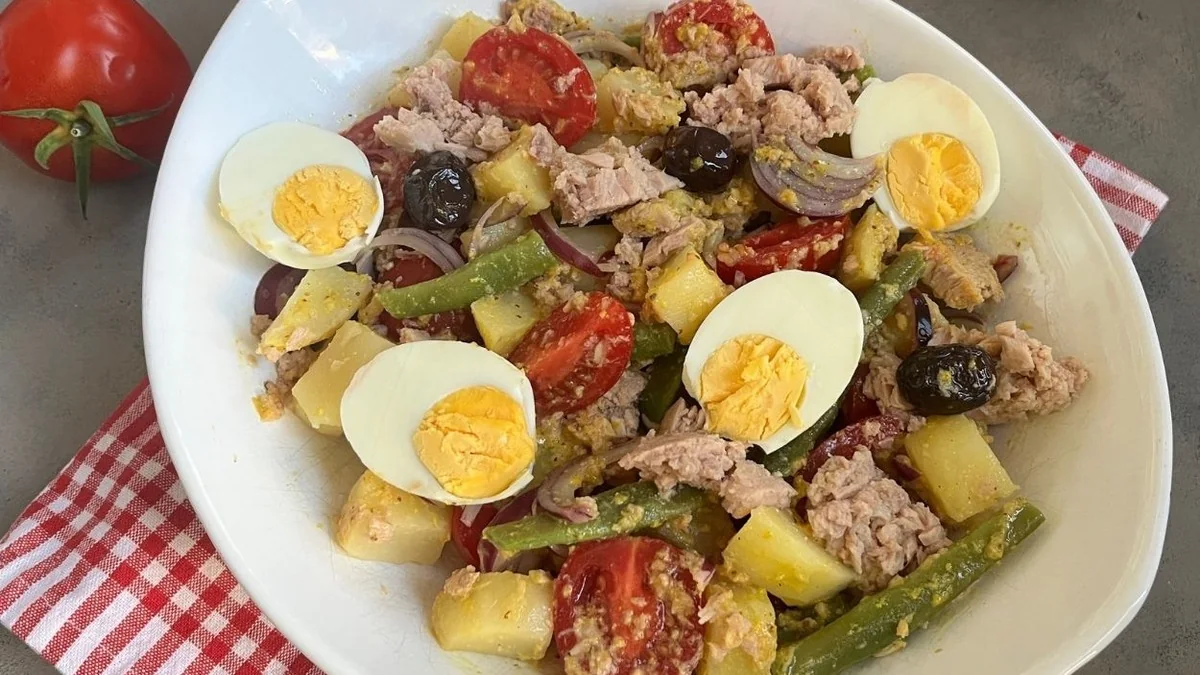
A weight-loss grocery list starts with planned meals and fills four sections: protein (eggs, chicken, fish, yogurt, legumes), plenty of vegetables and fruit (at least 400 g a day per the WHO), fibre-rich carbohydrates such as bulgur and oats, and a measured amount of fat. Nothing is banned; filling, lower-calorie meals simply become easiest.
Key takeaways
- Plan four or five dinners and a few breakfasts and lunches before you write the list.
- Fill the protein section first: eggs, chicken, tuna, yogurt, lor and legumes.
- Aim for about 3 kg of fruit and vegetables a week per person; frozen and canned count.
- Choose fibre-rich carbs like bulgur, oats and whole-grain bread, and plan how much oil you use.
- Buy energy-dense snacks in smaller packs rather than banning them.
Why does a grocery list help with weight loss?
Most eating decisions are made long before you sit down at the table. They are made in the shop. Whatever is in your fridge and cupboards on a tired Wednesday evening is what you will most likely eat. A good grocery list does not ban anything; it simply makes the meals that fit your calorie target the easiest ones to cook.
A list also saves money and reduces food waste, because you buy for meals you have actually planned instead of for a vague idea of eating better.
How do you build a weight-loss grocery list?
- Plan the meals first. Pick four or five dinners, two or three breakfasts and a couple of lunch options for the week. Leftovers count as meals.
- Check what you already have. Write down only what is missing.
- Build each meal around protein and vegetables. Then add a sensible portion of carbohydrate and a little fat for flavour.
- Group the list by section of the shop. It is faster, and you spend less time wandering past aisles you did not plan to visit.
If you like cooking once for several days, our simple weekly meal prep plan turns this list into ready meals.
Which protein foods should go on the list?
Protein helps you feel full and protects muscle while you eat less, so it is the first section to fill. The values below are approximate figures from USDA FoodData Central, rounded; brands and cooking methods vary.
| Food | Amount | ≈ kcal | ≈ Protein (g) |
|---|---|---|---|
| Chicken breast, cooked, skinless | 100 g | 165 | 31 |
| Tuna canned in water, drained | 100 g | 116 | 26 |
| Plain non-fat Greek-style yogurt | 100 g | 59 | 10 |
| Egg | 1 large (≈ 50 g) | 72 | 6 |
| Lentils, boiled | 100 g | 116 | 9 |
| Chickpeas, boiled | 100 g | 164 | 9 |
Other good options: lor or cottage cheese, white fish, salmon, lean minced beef, tofu and dried beans. Legumes are also among the cheapest protein sources; see budget-friendly high-protein foods for more.
How many vegetables and fruit should you buy?
The WHO recommends eating at least 400 g of fruit and vegetables a day, about five portions. For one person that is roughly 3 kg a week. Vegetables add volume and fibre for very few calories, which makes a calorie target feel more generous.
- Fresh, for the first half of the week: tomatoes, cucumbers, peppers, lettuce, spinach, courgettes, aubergines, lemons.
- Longer-lasting: carrots, cabbage, onions, beetroot, apples, oranges.
- Frozen and canned: frozen peas, green beans, broccoli and mixed vegetables, plus canned tomatoes. They are just as useful and stop the week from falling apart when the fresh produce runs out.
What carbohydrates fit a calorie deficit?
You do not need to cut carbohydrates to lose weight, but it helps to choose ones with more fibre and to watch the portion. Good staples:
- Bulgur, oats, brown rice and whole-grain pasta
- Whole-grain or rye bread
- Potatoes and sweet potatoes
- Dried or canned lentils, chickpeas and beans (which double as protein)
Dietary guidelines recommend that at least half of your grains are whole grains. A bag of bulgur and a bag of red lentils alone cover several classic, filling meals such as red lentil soup or grilled chicken with bulgur and cacık.
What about fats, sauces and flavour?
Fat is essential, but at 9 kcal per gram it adds up quickly. One tablespoon of olive oil (about 13.5 g) is roughly 120 kcal. Buy oil, nuts, cheese and butter as usual, but plan how much you will use. Flavour without many calories comes from:
- Lemon, vinegar and pomegranate molasses (used sparingly)
- Garlic, onion, fresh herbs such as parsley, dill and mint
- Spices: pul biber, sumac, cumin, black pepper, paprika, thyme
- Plain yogurt as a base for sauces and cacık
What does a one-week list look like?
Here is an example for one person aiming at simple, home-cooked meals. Adjust the amounts to your appetite and calorie target.
| Section | Items |
|---|---|
| Protein | 12 eggs, 1 kg chicken breast, 2 cans of tuna, 1 kg plain yogurt, 250 g lor or cottage cheese, 1 salmon or white fish fillet |
| Legumes and grains | 500 g red lentils, 500 g bulgur, 500 g oats, 1 can of chickpeas, 1 loaf of whole-grain bread |
| Vegetables | 1 kg tomatoes, 4 cucumbers, 4 peppers, 2 aubergines, 2 courgettes, 1 bag of spinach, onions, garlic, 1 bag of frozen mixed vegetables |
| Fruit | 7 apples or oranges, 1 bag of frozen berries, bananas |
| Fats and extras | Olive oil, a small bag of walnuts, white cheese, lemons, herbs, spices |
With this list you can make eggs or oats with yogurt for breakfast, lentil soup and salad for lunch, and chicken or fish with bulgur and vegetables for dinner, with enough left over for snacks.
Which foods are worth buying less often?
No single food makes or breaks weight loss, and there is no need to label foods good or bad. Still, some items are easy to overeat because they are energy-dense and always within reach. The WHO advises keeping free sugars below 10% of energy and salt below 5 g a day. In practice it helps to buy smaller amounts of:
- Sugary drinks and fruit juices
- Biscuits, packaged pastries and sweets
- Crisps and salty snacks
- Ready-made sauces high in oil or sugar
If you enjoy them, buy a single portion rather than a family pack. Reading labels helps too; our guide on how to read a nutrition label shows what to look for.
What are some practical shopping tips?
- Do not shop hungry. Eat a snack first, or shop after a meal.
- Stick to the list, but allow one treat. Rigid rules are harder to keep than planned flexibility.
- Buy pre-cut or frozen if it means you will actually cook. Convenience is not cheating.
- Scan packaged foods as you unpack. In Sporty you can scan a barcode once and reuse the entry all week.
A grocery list is a small habit with a big effect: it decides what is easy to eat before hunger has a say. People with medical conditions or special diets should adapt it with a doctor or registered dietitian.
Frequently asked questions
What should I buy first when trying to lose weight?
Start with protein and vegetables, because they make meals filling for relatively few calories. Then add whole grains, fruit and a measured amount of fat.
Are frozen vegetables as good as fresh?
Yes, for most purposes. Frozen vegetables are usually frozen soon after harvest, are easy to portion and help you keep eating vegetables when fresh ones run out.
Do I need to buy special diet products?
No. Ordinary foods such as eggs, yogurt, legumes, vegetables, bulgur and chicken are enough. Diet-labelled products are not required and are often more expensive.
How can I lose weight on a budget?
Build meals around eggs, legumes, oats, bulgur, seasonal vegetables and frozen produce. These are among the cheapest sources of protein and fibre.
Was this article helpful?
No ratings yet — be the first.
Tap a star to rate it — your rating helps us improve and helps other readers.
Sources
This article is general information, not medical advice. If you have a health condition, are pregnant or under 18, talk to a doctor or registered dietitian before changing your diet.