

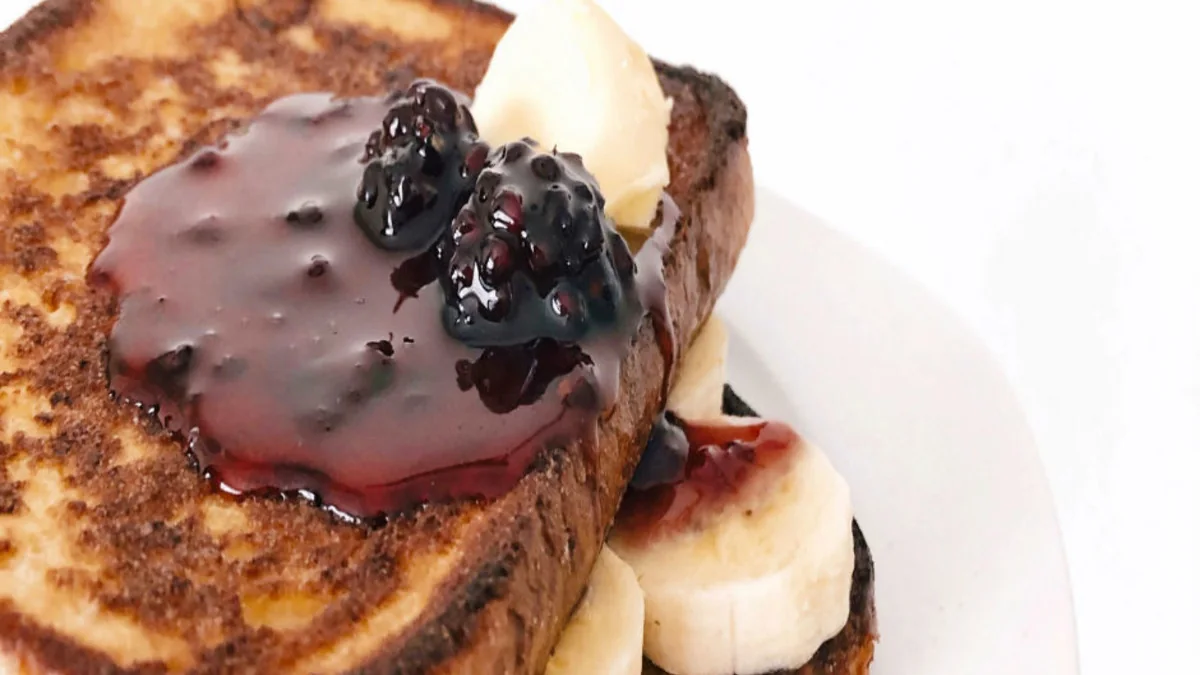
Most single brunch dishes are 320–560 kcal in our per-serving estimates, from a vegetable omelette at 320 kcal to a club sandwich at 560 kcal. The total climbs with shared plates, sweet extras and drinks: pancakes, eggs with sucuk and a granola bowl reach 1,320 kcal. Savoury, protein-first plates and shared sweet dishes keep it lighter.
Key takeaways
- Most single brunch dishes land between 320 and 560 kcal per serving.
- Pancakes, waffles and açaí bowls give under 3 g of protein per 100 kcal; egg dishes give two to four times more.
- Decide in advance whether brunch replaces breakfast, lunch or both.
- Swapping eggs with sucuk for a vegetable omelette saves about 130 kcal with similar protein.
- Drinks, syrup and butter add calories fastest; order them on purpose.
Why do brunch calories add up so quickly?
Brunch is one of the most enjoyable meals of the week, and also one of the easiest to underestimate. It usually happens late, after a long gap since dinner, so you sit down hungry. The menu mixes sweet and savoury, the table often fills with shared plates, and the drinks keep coming. None of that is a problem in itself. It simply means that a relaxed two-hour brunch can carry as much energy as two regular meals without feeling like it.
The good news is that brunch is also easy to adjust. A few choices about the main dish, the sides and the drinks make a bigger difference than skipping your favourite plate. All dish figures below are our per-serving estimates from our meal catalog; real values depend on the recipe, the portion and how much butter or syrup the kitchen uses.
How many calories are in popular brunch dishes?
Here are common brunch dishes from around the world, sorted from sweet to savoury. The last column shows protein per 100 kcal, a quick way to see which plates keep you full for longer at the same calories.
| Dish | kcal | Protein | Carbs | Fat | Protein per 100 kcal |
|---|---|---|---|---|---|
| Pancakes with honey and fruit | 450 | 13 g | 62 g | 16 g | 2.9 g |
| Waffles with fruit and honey | 430 | 11 g | 55 g | 18 g | 2.6 g |
| French toast with berries | 420 | 16 g | 52 g | 16 g | 3.8 g |
| Açaí bowl | 380 | 7 g | 64 g | 12 g | 1.8 g |
| Crêpes with fruit and yogurt | 360 | 12 g | 46 g | 14 g | 3.3 g |
| Protein pancakes | 380 | 30 g | 40 g | 10 g | 7.9 g |
| Avocado toast with poached eggs | 410 | 22 g | 32 g | 20 g | 5.4 g |
| Eggs with Turkish sausage (sucuk) | 450 | 24 g | 3 g | 38 g | 5.3 g |
| Vegetable frittata | 340 | 22 g | 10 g | 23 g | 6.5 g |
| Vegetable omelette | 320 | 22 g | 10 g | 21 g | 6.9 g |
| Club sandwich | 560 | 34 g | 44 g | 26 g | 6.1 g |
Two things stand out. First, most single brunch dishes sit between 320 and 560 kcal, so one plate is rarely the issue. Second, the sweet classics give much less protein for their calories. Pancakes, waffles and the açaí bowl offer under 3 g of protein per 100 kcal, while egg dishes and protein pancakes give two to four times as much. Protein tends to help with fullness, which matters when brunch has to carry you until dinner.
Is brunch one meal or two?
That depends on your day, and it changes how you should read the numbers. If brunch replaces both breakfast and lunch, a 700 to 900 kcal brunch can be a perfectly reasonable share of the day. If you also had breakfast at home and plan a normal lunch, the same table becomes an extra meal.
A simple way to plan: decide in advance whether brunch is your first meal, your first two meals, or a snack between them. That one decision usually matters more than any single menu choice.
How do the totals change with what you order?
Here are three realistic brunch orders built from the dishes above:
- The full spread: pancakes (450 kcal) plus eggs with sucuk (450 kcal) plus a granola bowl with yogurt (420 kcal) comes to 1,320 kcal and 51 g of protein.
- The savoury plate with a sweet bite: a vegetable frittata (340 kcal), yogurt and fruit (230 kcal) and half a portion of French toast shared with a friend (210 kcal) comes to 780 kcal and 46 g of protein.
- The protein-first brunch: a vegetable omelette (320 kcal) with avocado toast and poached eggs (410 kcal) comes to 730 kcal and 44 g of protein.
The lighter orders are not smaller by accident. They swap one sweet main for a savoury one, share the dish everyone wants to taste, and let eggs or yogurt do the filling.
Which swaps make brunch lighter without missing out?
You do not need to give up the dishes you came for. These swaps keep the same style of plate:
- French toast to protein pancakes: 40 kcal less and 14 g more protein.
- Pancakes to crêpes with fruit and yogurt: 90 kcal less and a similar sweet breakfast.
- Eggs with sucuk to a vegetable omelette: 130 kcal less and 17 g less fat, with almost the same protein.
- Açaí bowl to a cottage cheese and walnut fruit bowl: 100 kcal less (280 kcal) and 19 g more protein.
- Club sandwich to avocado toast with poached eggs: 150 kcal less.
Small extras matter too. Syrup, honey, butter, whipped cream and extra cheese are easy to add at the table and hard to see on the plate. Asking for syrup or sauce on the side lets you decide how much you use. For more ideas built around eggs, yogurt and cheese, see our list of high-protein breakfast ideas.
What about brunch drinks?
Drinks are where brunch calories hide best. Juices, sweetened coffees, milkshakes and cocktails can add as much energy as a side dish without making you feel any fuller. Alcohol provides about 7 kcal per gram, almost as much as fat, and sugary mixers add more on top. Our guide to liquid calories compares common drinks.
Sugar is worth a thought as well. The WHO advises keeping free sugars, which include sugars added to food and drinks as well as those naturally present in honey, syrups and fruit juices, below 10 % of daily energy. On 2,000 kcal that is about 50 g a day. Syrup on pancakes, a sweet coffee and a glass of juice can use up much of that in one sitting.
What are some practical tips for the brunch table?
- Do not arrive starving. If brunch is late, a glass of water or a small snack beforehand can make ordering calmer.
- Build around protein. Eggs, yogurt, cottage cheese, smoked fish or beans make a good anchor for the plate.
- Add volume. Tomatoes, cucumber, greens and fruit fill the plate for few calories.
- Share the sweet dish. Half a portion of French toast or waffles gives you the taste for half the calories.
- Pick your drinks on purpose. Choose the one you really want and have water or plain tea or coffee alongside.
If you want a sense of how big a lighter morning plate is, our article on what 300 calories of breakfast looks like shows real examples.
How do you log a brunch you shared?
Shared plates make logging tricky. Estimate your share, for example half the French toast or a third of the pastry basket, and log that portion rather than the whole dish. With Sporty you can photograph your plate or describe it by voice or text to get an estimate, then adjust the portion. Over a week, a rough but honest log is far more useful than a perfect one you give up on.
Does one big brunch undo your progress?
No. Weight change follows your intake over days and weeks, not one meal. If brunch runs high, the next meals can simply be a bit lighter, without skipping meals or compensating harshly. If you are trying to lose weight, keep your daily target at no less than about 1,200 kcal for women or 1,500 kcal for men unless a doctor supervises you. Talk to a doctor or registered dietitian if you are pregnant, under 18, have a medical condition or a history of disordered eating.
Frequently asked questions
How many calories are in a typical brunch?
One brunch dish is usually 320–560 kcal in our estimates, but a full spread with a sweet dish, an egg dish and a granola bowl can pass 1,300 kcal before drinks.
What is the lowest-calorie brunch option?
Egg dishes with vegetables, such as a vegetable omelette (320 kcal) or frittata (340 kcal), are among the lightest and give about 22 g of protein. A cottage cheese and fruit bowl is 280 kcal.
Can I eat pancakes or French toast while losing weight?
Yes. Weight loss depends on your intake over days and weeks. Sharing the portion, adding eggs or yogurt and keeping syrup on the side makes it easier to fit in.
Are brunch drinks high in calories?
They can be. Juices, sweetened coffees and cocktails add calories without much fullness, and alcohol provides about 7 kcal per gram.
Was this article helpful?
No ratings yet — be the first.
Tap a star to rate it — your rating helps us improve and helps other readers.
Sources
This article is general information, not medical advice. If you have a health condition, are pregnant or under 18, talk to a doctor or registered dietitian before changing your diet.