

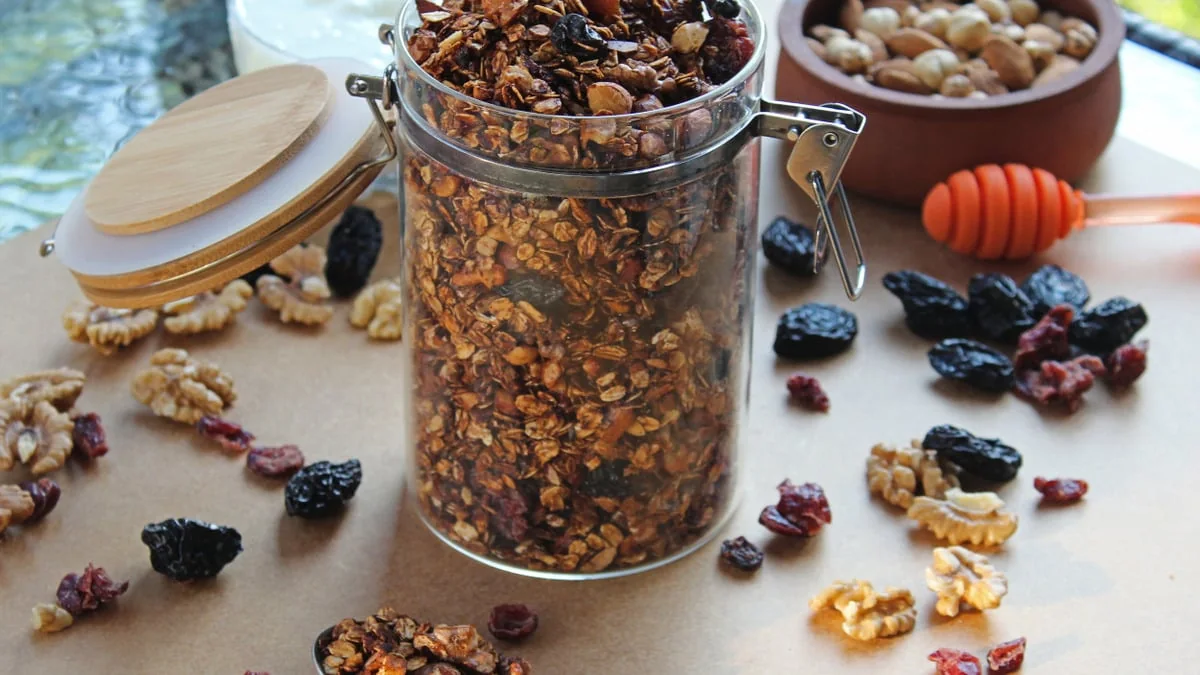
Plain oats, wholegrain wheat biscuits and no-added-sugar muesli are usually the best everyday cereals: low in sugar and higher in fibre. Frosted, chocolate and many granola cereals can be high in sugar per 100 g. Most cereals are low in protein, so pair them with milk, yogurt or eggs to make breakfast filling.
Key takeaways
- Compare cereals per 100 g: 5 g of sugar or less is low and more than 22.5 g is high on UK labels.
- Plain oats, shredded wholegrain wheat and unsweetened muesli are usually low in sugar and rich in fibre.
- Granola is often high in both sugar and fat because it is baked with syrup or honey and oil.
- Most cereals are low in protein; yogurt or milk turns a bowl into a more filling breakfast.
- Box serving sizes are often smaller than what people pour, so weigh your usual bowl once.
Are breakfast cereals healthy?
Some are an easy source of wholegrains and fibre; others are closer to a dessert. The word "cereal" covers everything from plain rolled oats to chocolate-coated puffs, and the differences in sugar and fibre are large. The good news is that the label tells you almost everything you need, once you know which numbers to look at.
Breakfast cereals also tend to be low in protein. On their own they digest quickly, which is one reason a bowl of cornflakes can leave you hungry by mid-morning. What you add to the bowl matters as much as the cereal itself.
How do the main cereal types compare?
Recipes vary a lot between brands, so this is a general guide to each type rather than exact values. Always check the specific box:
| Cereal type | Sugar | Fibre | Notes |
|---|---|---|---|
| Plain rolled oats / porridge | Low (no added sugar) | Good | Wholegrain; sweetness depends on what you add |
| Shredded wholegrain wheat / wheat biscuits | Usually low | Good | Often just wholegrain wheat; check for added sugar and salt |
| Muesli, no added sugar | Moderate (from dried fruit) | Good | Nuts add healthy fats and calories |
| Bran flakes | Moderate | High | High fibre, but many contain added sugar |
| Cornflakes, puffed rice | Low to moderate | Low | Refined grain; can be high in salt |
| Granola / clusters | Often high | Varies | Baked with syrup or honey and oil, so higher in fat |
| Frosted, honey or chocolate cereals | Often high | Low | Sugar may be one of the first ingredients |
How do you read a cereal box?
Use the "per 100 g" column to compare products, because each brand chooses its own serving size. The NHS gives these thresholds for solid foods:
| Per 100 g | Low | High |
|---|---|---|
| Sugars | 5 g or less | More than 22.5 g |
| Fat | 3 g or less | More than 17.5 g |
| Saturated fat | 1.5 g or less | More than 5 g |
| Salt | 0.3 g or less | More than 1.5 g |
Then check the ingredients list. Ingredients appear in descending order by weight, so a cereal with sugar, glucose syrup or honey near the start is mostly sweetened. Sugar also appears under names such as dextrose, glucose, fructose, maltose, malt extract, molasses and syrup.
A worked example
Imagine a cereal with 30 g of sugar per 100 g, which is high by the NHS thresholds. A 40 g bowl gives 12 g of sugar. The WHO recommends keeping free sugars below 10% of daily energy, about 50 g a day for an adult eating around 2,000 kcal. That one bowl uses roughly a quarter of the limit before you add fruit juice or sweetened yogurt. A cereal with 5 g per 100 g gives just 2 g in the same bowl. Our guide to sugar limits and hidden sources covers this in more depth.
Why does fibre matter in cereal?
The WHO recommends that adults get at least 25 g of naturally occurring dietary fibre a day, and many people fall short. Wholegrain cereals such as oats, wholegrain wheat and bran are an easy way to contribute, and fibre helps a meal feel more filling. Look for "wholegrain" or "whole oats" as the first ingredient. See how much fibre you need for other sources.
How do you make a cereal breakfast more filling?
Most cereals provide only a few grams of protein per bowl, so the topping does the heavy lifting. Here is how complete breakfast bowls compare in Sporty's per-serving estimates (real values depend on recipe and portion):
| Breakfast bowl | Calories | Protein | Carbs | Fat |
|---|---|---|---|---|
| Yogurt and fruit | 230 kcal | 16 g | 32 g | 5 g |
| Chia pudding | 300 kcal | 9 g | 30 g | 16 g |
| Smoothie bowl | 340 kcal | 9 g | 62 g | 7 g |
| Oats, yogurt and fruit | 390 kcal | 22 g | 58 g | 9 g |
| Homemade granola with yogurt | 420 kcal | 14 g | 52 g | 18 g |
Oats with yogurt and fruit gives the most protein here, 22 g for 390 kcal. Granola with yogurt has 30 kcal more but 8 g less protein and twice the fat, because granola is baked with oil and sweetener. A few easy upgrades:
- Use yogurt or milk generously. Plain yogurt adds protein without added sugar.
- Sweeten with fruit. Fresh berries or a sliced banana instead of sugar or syrup.
- Mix cereals. Half granola, half plain oats keeps the crunch with less sugar.
- Add a protein side. An egg or a slice of cheese alongside a smaller bowl.
For more ideas, see high-protein breakfast ideas.
Which simple swaps make the biggest difference?
| Instead of | Try | Why |
|---|---|---|
| Frosted or chocolate cereal | Shredded wholegrain wheat with sliced banana | Less added sugar, more fibre, natural sweetness |
| A large bowl of granola | Plain oats topped with a spoonful of granola | Keeps the crunch with less sugar and fat |
| Cornflakes with sugar sprinkled on top | Porridge made with milk and berries | Wholegrain, more filling, more protein from the milk |
| Fruit-flavoured yogurt on cereal | Plain yogurt plus fresh fruit | Removes most of the added sugar |
Does the milk matter?
Yes, for protein and calories. Cow's milk and soy drinks add noticeably more protein than most oat, rice or almond drinks, and sweetened plant drinks add sugar. Our comparison of dairy and plant milks lists the differences. If mornings are rushed, soaking oats overnight in milk or yogurt gives you the same wholegrain breakfast without cooking.
How big is a bowl of cereal really?
Serving sizes printed on boxes are often 30 to 45 g, while a freely poured bowl can be much more. Weigh your usual bowl once with a kitchen scale; after that, you will know whether your "one bowl" is one serving or two. If you log the box with Sporty's barcode scanner, adjust the grams to what you actually poured.
Is cereal a good choice for weight loss?
It can be. A measured bowl of a low-sugar, wholegrain cereal with yogurt or milk and fruit is a balanced, quick breakfast. The risks are large portions and sweetened cereals that leave you hungry soon after. If you have diabetes or another condition that affects how you handle carbohydrates, ask your doctor or a registered dietitian which breakfast options suit you.
Frequently asked questions
Which breakfast cereal has the least sugar?
Plain rolled oats and many shredded wholegrain wheat cereals have little or no added sugar. Check the label: 5 g of sugar or less per 100 g counts as low.
Is granola healthier than other cereals?
Not necessarily. Granola is usually baked with sweetener and oil, so it is often higher in both sugar and fat than plain oats or wholegrain wheat cereals.
How much sugar per 100 g is too much in cereal?
On UK labels, more than 22.5 g of sugars per 100 g counts as high and 5 g or less as low.
How can I add protein to a cereal breakfast?
Use plain yogurt or milk, add a handful of nuts or seeds, or have an egg alongside a smaller bowl.
Was this article helpful?
No ratings yet — be the first.
Tap a star to rate it — your rating helps us improve and helps other readers.
Sources
This article is general information, not medical advice. If you have a health condition, are pregnant or under 18, talk to a doctor or registered dietitian before changing your diet.