

Per 240 ml glass, cow's milk and soy drinks give about 8 g of protein each, while almond, rice and coconut drinks give 0–2 g. Almond and coconut drinks are the lowest in calories, rice drinks the highest in carbohydrates. Calcium is similar only when the plant drink is fortified, so the label decides more than the plant.
Key takeaways
- Soy is the only common plant drink that matches cow's milk for protein, at roughly 8–9 g per glass.
- Unsweetened almond and coconut drinks have the fewest calories, but almost no protein.
- Rice drinks are mostly carbohydrate and are not a protein swap for milk.
- Calcium in plant drinks depends on fortification: choose unsweetened, calcium-fortified versions.
- Babies under 1 should not drink cow's milk or plant drinks as a main drink; ask your health visitor or doctor.
How do dairy and plant milks compare per glass?
Supermarket shelves now hold soy, almond, oat, rice, coconut and many other drinks next to cow's milk. They look alike in a glass, but their nutrition is very different. A 2018 review by Vanga and Raghavan in the Journal of Food Science and Technology compared cow's milk with the four plant drinks most consumed worldwide, using label data from several commercial brands of each. These are the average values per 240 ml glass:
| Drink (240 ml) | kcal | Protein | Fat | Carbs | Calcium |
|---|---|---|---|---|---|
| Cow's milk | 158 | 8.1 g | 9.1 g | 11.5 g | 294 mg |
| Soy drink | 95 | 8.7 g | 4.4 g | 5.0 g | 206 mg |
| Almond drink | 36 | 1.7 g | 2.7 g | 1.3 g | 325 mg |
| Rice drink | 133 | 0.9 g | 2.3 g | 25.3 g | 246 mg |
| Coconut drink | 49 | 0 g | 4.4 g | 1.2 g | 245 mg |
Treat these as a rough guide. They are averages of 4 to 7 brands per drink from labels at the time, the review did not specify whether the cow's milk was whole or reduced-fat, and recipes have changed since. Skimmed and semi-skimmed milk have less fat and fewer calories than whole milk, and sweetened plant drinks have more sugar than unsweetened ones. Oat drinks were not part of this review, so check the label for those.
Which milk has the most protein?
Cow's milk and soy drinks are in a league of their own, with about 8–9 g of protein per glass. Almond drinks give under 2 g, rice drinks under 1 g, and coconut drinks essentially none. The review concluded that soy is the best plant alternative to cow's milk nutritionally, because it is the only one with comparable protein and a broadly similar nutrient profile.
Protein per 100 kcal shows the gap even more clearly:
- Soy drink: about 9.2 g of protein per 100 kcal (8.7 g in 95 kcal).
- Cow's milk: about 5.1 g per 100 kcal, more for skimmed milk because it has less fat.
- Almond drink: about 4.6 g per 100 kcal, but in a glass so light that it adds little in absolute terms.
- Rice drink: under 1 g per 100 kcal.
If milk is a real protein source in your day, for example in porridge, coffee or a post-workout shake, switching from cow's milk to an almond or rice drink can quietly remove 6–7 g of protein per glass. Two glasses a day is a difference of 13–15 g, which matters if you are aiming for a higher protein intake. Our guide to plant protein shows how to make that up from other foods.
Which milk has the fewest calories?
Unsweetened almond and coconut drinks are the lightest, at roughly 35–50 kcal per glass. Soy sits in the middle at about 95 kcal, and cow's milk at around 158 kcal in this data set. Rice drinks are surprisingly high at about 133 kcal, almost all of it carbohydrate.
Over a day, this can add up. Two glasses of cow's milk at 158 kcal each come to about 316 kcal; two glasses of almond drink about 73 kcal. That is a difference of roughly 240 kcal, but also of more than 12 g of protein. Fewer calories is not automatically better if the drink was doing useful work in your diet. For more on drinks that add up, see our guide to liquid calories.
What about fat and saturated fat?
Most of the fat in cow's milk is saturated. The NHS suggests lower-fat milks for adults and older children to help limit saturated fat, and the WHO recommends keeping saturated fat below 10 % of daily energy. Semi-skimmed or skimmed milk keeps the protein and calcium of whole milk with less fat.
Among plant drinks, the review noted that almond drinks contain no saturated fat, while coconut drinks get most of their calories from saturated fat even though their total is low. Soy and almond drinks mostly contain unsaturated fats.
Do plant milks have as much calcium?
Only when they are fortified. Plants do not naturally make a drink that is rich in calcium; manufacturers add it. Many fortified drinks reach levels similar to or above cow's milk, as the table shows, but unfortified, organic or homemade versions can contain very little. The review also points out that vitamins are missing from the labels of many plant drinks other than soy.
The NHS counts unsweetened, calcium-fortified soya, oat and coconut alternatives as part of the dairy group, and lists fortified unsweetened soya, pea and oat drinks as useful calcium sources for people who avoid dairy. For vitamin B12, it names unsweetened soya drinks fortified with B12, while noting that a supplement may still be needed on a vegan diet. Reading the label is the only way to know what is in your carton; our guide to reading a nutrition label shows where to look.
How do you choose the right milk for you?
- You want protein: cow's milk or a soy drink.
- You want the fewest calories: unsweetened almond or coconut drink, with protein from elsewhere.
- You avoid dairy: an unsweetened, calcium-fortified soy or pea drink comes closest to milk; check for B12 too.
- You are lactose intolerant but like dairy: lactose-free milk has added lactase and, according to the NHS, the same vitamins and minerals as standard milk.
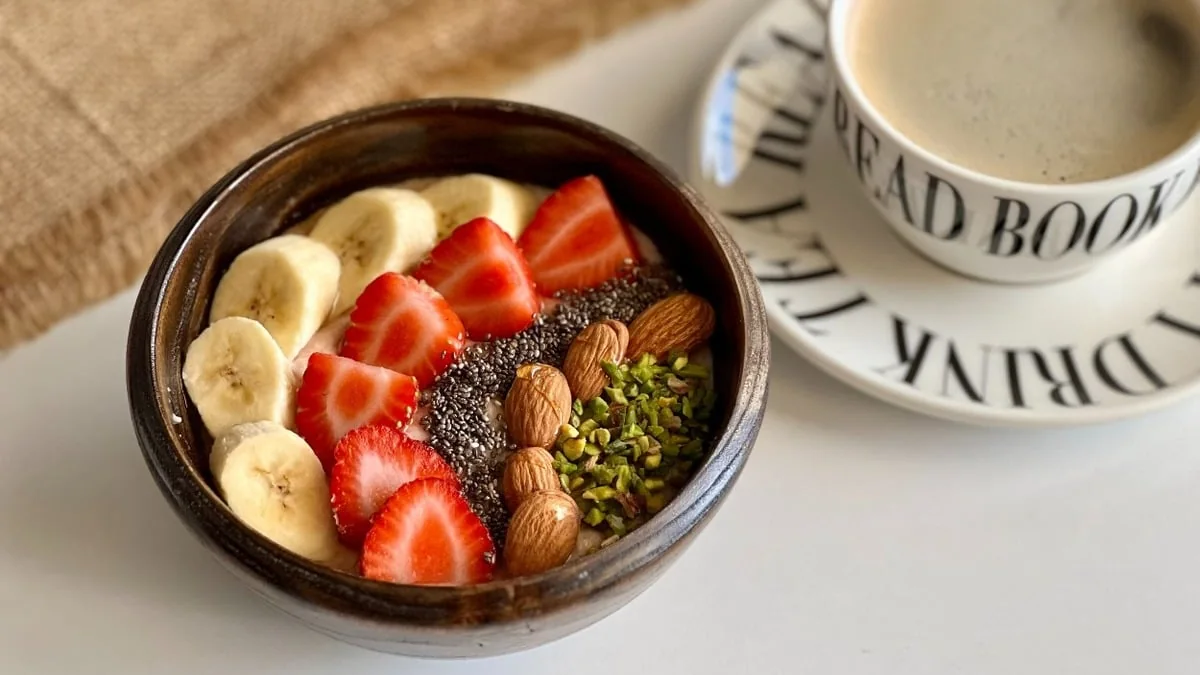
- You use it in recipes: the choice changes the whole dish. The smoothie bowl in our meal catalog uses 150 ml of plant milk and comes to about 340 kcal with 9 g of protein; making it with a soy drink or dairy milk raises the protein.
If you log your meals in Sporty, name the drink and whether it is sweetened, because "milk" on its own can mean anything from about 35 to 160 kcal a glass.
What about children and special situations?
The NHS advises that babies under 1 should not have cow's, goat's or sheep's milk as a main drink, nor plant drinks such as rice, oat or almond. Whole cow's milk can be a main drink from age 1, and skimmed or 1 % milk should not be the main drink for children under 5. The review also mentions concerns about arsenic in some rice drinks. If you are raising a child without dairy, are pregnant, or have a medical condition such as kidney disease, talk to a doctor or registered dietitian before making plant drinks the main milk in the family, and do not cut out dairy for a child without that advice.
Frequently asked questions
Which plant milk is closest to cow's milk?
Soy drink. It has about the same protein per glass as cow's milk, and fortified versions provide similar calcium.
Is almond milk good for weight loss?
Unsweetened almond drink is very low in calories, around 36 kcal per glass in label averages, but it has under 2 g of protein. It can help if you drink a lot of milk, as long as you get protein from other foods.
Is oat milk healthier than cow's milk?
Not automatically. It contains less protein than cow's or soy milk, and its calcium depends on fortification, so compare labels and choose an unsweetened, fortified version.
Do I need calcium-fortified plant milk?
If you rely on plant drinks instead of dairy, yes, fortified versions are an easy calcium source. Unfortified and homemade drinks can contain very little calcium.
Was this article helpful?
No ratings yet — be the first.
Tap a star to rate it — your rating helps us improve and helps other readers.
Sources
This article is general information, not medical advice. If you have a health condition, are pregnant or under 18, talk to a doctor or registered dietitian before changing your diet.