
Use your hand: a palm is about 75–80 g of cooked meat or chicken, a fist about one cup (150 g of vegetables or fruit), a handful of nuts about 30 g and a teaspoon of oil 5 g. A Cochrane review found larger portions consistently make people eat more, so rough portion control matters.
Key takeaways
- A Cochrane review of 72 studies found larger portions and plates consistently increase how much people eat.
- Turkey's TÜBER guide: palm = 75–80 g cooked meat, fist = 1 cup, handful = 30 g nuts.
- The average fist is about 249 ml, but men's fists are about 100 ml bigger than women's.
- Hands work well for meat, cheese and bread; use a checked bowl or ladle for rice and pasta.
- The same chicken and bulgur can make a 280 kcal or a 570 kcal plate depending on portions.
Why does portion size matter so much?
Portion size quietly drives how much we eat. A Cochrane review of 72 randomized studies found that people consistently eat more when they are served larger portions or use larger packages and plates. Pooling 58 of those studies with 6,603 participants, the authors estimated that if exposure to larger portions could be reduced across the whole diet, average daily intake could fall by 144–228 kcal, about 8.5–13.5%, in UK adults and children. That is a projection rather than a tested result, but it shows why getting portions roughly right matters as much as choosing the right foods.
The good news is that you do not need a kitchen scale for every meal. Turkey's official nutrition guide, TÜBER 2022, defines standard portions using hands, fingers, bowls, ladles and spoons, and notes that because your own hand stays the same size, it is a consistent personal measuring tool.
What does your hand measure?
These are the standard portions from TÜBER 2022, with calories from USDA FoodData Central where a matching food exists:
| Hand or kitchen measure | Standard portion | Approx. weight | Example kcal |
|---|---|---|---|
| Palm (about 10 cm across, 1 cm thick) | Cooked meat or chicken | 75–80 g cooked (about 100 g raw) | Chicken breast, 80 g: 132 kcal, 25 g protein |
| Whole hand, thin slice | Cooked fish | 150 g | Varies by fish |
| Fist (= 1 cup) | Cooked vegetables or one large fruit | 150 g | Apple, 150 g: about 78 kcal |
| 1 medium ladle, level (= ½ cup) | Rice or bulgur pilaf | 90–110 g | Cooked rice, 100 g: 130 kcal |
| 1 medium ladle, level | Pasta (side portion) | 75 g | Cooked pasta, 75 g: 119 kcal |
| 2 small ladles (= ¾ cup) | Cooked beans, chickpeas or lentils | 130 g | Cooked chickpeas, 130 g: 213 kcal |
| 3 fingers or 2 matchboxes | White cheese (feta type) | 60 g | Feta, 60 g: 159 kcal |
| 1 handful (about 30 hazelnuts) | Nuts | 30 g | Hazelnuts, 30 g: 188 kcal |
| 1 teaspoon | Oil | 5 g | Olive oil, 5 g: 44 kcal |
Two things stand out. Protein portions are smaller than many people expect: a standard portion of cooked chicken is only about 80 g. And fats are where small measures carry big numbers: one teaspoon of oil is about 44 kcal, and a tablespoon, about 13–14 g, is about 120 kcal.
How accurate is the hand method?
Hands are useful, but not perfect. A 2016 study from the University of Sydney measured how well 67 adults estimated 42 pre-weighed foods. The average fist was about 249 ml, close to one cup, but men's fists were about 100 ml larger than women's, and the tip of a thumb held about 4.8 ml, a little under a teaspoon. Using finger widths as a ruler for foods with a regular shape worked well: 80% of estimates were within 25% of the true weight, compared with 29% for cup and spoon estimates.
The fist did poorly for shapeless foods like rice, pasta or mashed dishes: only one of these foods was estimated within 25% of its real weight. TÜBER also warns that a "handful" changes a lot depending on how full it is. The practical lesson is to use your palm and fingers for meat, fish, cheese and bread, and to use a bowl or ladle you have checked once for rice, pasta, legumes and soup.
How do you calibrate your bowls and ladles?
TÜBER builds its measures around a 240 ml cup. A small bowl 12–14 cm across holds about one cup, a large bowl of 18–22 cm holds about two cups (480 ml), a standard soup portion is ¾ cup (180 ml), and a medium ladle (9 cm across) holds about 120 ml. Bowls at home vary, so the guide suggests filling yours with one or two cups of water once to see where the lines fall. After that, you can portion rice, yogurt or soup by eye with much more confidence.
What does a hand-measured plate add up to?
Here are two dinners built only with hand and ladle measures, using USDA values:
| Plate | Lighter plate | Bigger plate |
|---|---|---|
| Grilled chicken breast | 1 palm (80 g): 132 kcal | 2 palms (160 g): 264 kcal |
| Cooked bulgur | 1 medium ladle (100 g): 83 kcal | 2 ladles (200 g): 166 kcal |
| Cucumber salad | 1 fist (150 g cucumber): 23 kcal | 1 fist: 23 kcal |
| Olive oil | 1 teaspoon: 44 kcal | 1 tablespoon: about 120 kcal |
| Total | about 280 kcal, 29 g protein | about 570 kcal, 57 g protein |
The same foods can make a 280 kcal or a 570 kcal plate. Neither is wrong; the right one depends on your daily target and hunger. Our guide to macros explains how to split protein, carbohydrates and fat across the day.
How do restaurant and takeaway portions compare?
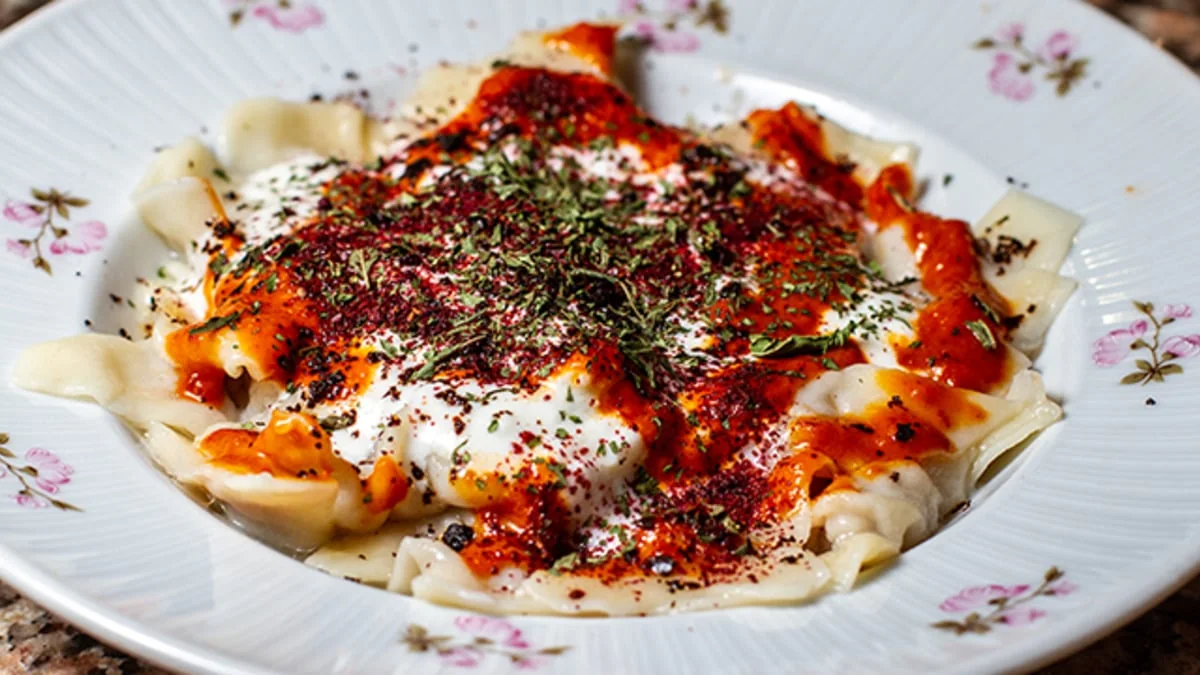
Restaurant portions are often bigger than standard ones. In Sporty's per-serving estimates, a margherita pizza made with 150 g dough and 80 g mozzarella is about 560 kcal, a hamburger with a 150 g beef patty about 640 kcal, and a plate of mantı with 200 g of dumplings about 560 kcal. That 150 g patty is already larger than TÜBER's palm-sized burger patty, which is made from about 115 g of raw mince. Real values depend on recipe and portion. A useful habit is to compare what is on your plate with your palm and fist before you start eating.
Are fruit and vegetable portions the same everywhere?
No, and this confuses many people. The NHS counts 80 g of fruit or vegetables as one adult portion of 5 A Day, while TÜBER uses a larger standard portion of 150 g, about one fist or one medium apple. The NHS also limits fruit juice and smoothies to 150 ml a day in total, counted as one portion at most, and a portion of dried fruit is about 30 g. Both systems agree on the main point: most people benefit from eating more vegetables and fruit, and these are the foods where a generous portion is rarely a problem.
When is a scale still worth using?
A scale is helpful for a week or two while you learn what 30 g of nuts, 100 g of rice or a tablespoon of oil actually looks like. After that, hands and familiar bowls are usually accurate enough for everyday tracking. Taking a photo of your plate, as with AI photo calorie counting, is another way to skip the scale, and Sporty estimates the portion from the picture. For snack-sized portions, see our list of healthy snacks under 200 calories.
If you have diabetes, kidney disease, are pregnant or have a history of disordered eating, a registered dietitian can set portion targets that suit you, and may recommend weighing certain foods.
Frequently asked questions
How big is a portion of meat without a scale?
About the size of your palm, roughly 10 cm across and 1 cm thick. That is about 75–80 g of cooked meat or chicken, or about 100 g raw.
How much is one portion of rice?
In Turkey's TÜBER guide, a standard portion of rice or bulgur pilaf is ½ cup, one level medium ladle, about 90–110 g cooked. That is about 130 kcal of plain cooked rice per 100 g.
How accurate is measuring food with your hands?
Reasonably accurate for regular-shaped foods like meat or cheese, but poor for shapeless foods like rice or pasta. Hand size also varies, so check your own fist against a cup once.
How many calories are in a handful of nuts?
A handful is about 30 g, which is roughly 175–190 kcal for almonds or hazelnuts based on USDA data.
Do I need a food scale to lose weight?
No. A scale helps for a week or two to learn what portions look like, but hand measures, familiar bowls or photo logging are usually enough for everyday tracking.
Sources
- T.C. Sağlık Bakanlığı, Türkiye Beslenme Rehberi (TÜBER) 2022
- Hollands et al. 2015, Portion, package or tableware size for changing selection and consumption of food (Cochrane review)
- Gibson et al. 2016, Accuracy of hands v. household measures as portion size estimation aids (J Nutr Sci)
- NHS, 5 A Day portion sizes
- USDA FoodData Central
This article is general information, not medical advice. If you have a health condition, are pregnant or under 18, talk to a doctor or registered dietitian before changing your diet.