

Adults need roughly 75 mg (women) to 90 mg (men) of vitamin C a day by US guidance, while the UK sets 40 mg. Peppers, broccoli, kiwi, strawberries and oranges are the richest sources; 100 g of raw pepper alone provides about 107–154 mg. Most people get enough from fruit and vegetables without supplements.
Key takeaways
- The US RDA is 90 mg a day for men and 75 mg for women; the UK recommends 40 mg for adults.
- Peppers (107–154 mg per 100 g) beat oranges (41–58 mg) gram for gram.
- Boiling in lots of water causes the biggest losses; steaming and freezing preserve more.
- Vitamin C helps the body absorb iron from plant foods.
- Regular vitamin C does not prevent colds in most people but may shorten them slightly.
What does vitamin C do?
Vitamin C (ascorbic acid) is a water-soluble vitamin with several everyday jobs. It helps protect cells, keeps skin, blood vessels, bones and cartilage healthy and supports wound healing. It also helps your body absorb iron from plant foods. Unlike most animals, humans cannot make vitamin C themselves because we lack the enzyme needed for the last step, so all of it has to come from food.
The body also cannot build up a large store of it, which is why the NHS advises getting some in your diet every day. A severe, long-lasting shortage causes scurvy, which is rare today: an intake of only about 10 mg a day is enough to prevent it in the general population.
How much vitamin C do you need per day?
Recommendations differ between countries, from about 40 to 120 mg a day for adults, because expert bodies set them with different goals in mind. Two common reference points:
| Group | US RDA (mg/day) | UK (NHS, mg/day) |
|---|---|---|
| Men, 19+ | 90 | 40 |
| Women, 19+ | 75 | 40 |
| Pregnancy, 19+ | 85 | - |
| Breastfeeding, 19+ | 120 | - |
The UK figure covers adults aged 19 to 64. Smokers need more: smoking lowers blood levels of vitamin C, and studies suggest an extra 35 mg a day or more. In practice, the US numbers are a sensible target if you want a buffer, and they are easy to reach with fruit and vegetables.
Which foods are highest in vitamin C?
Almost all vitamin C in a normal diet comes from fruit and vegetables. Animal foods contain little. Typical values per 100 g of fresh food, from a 2021 review in Nutrients (Doseděl et al.):
| Food | Vitamin C per 100 g |
|---|---|
| Peppers (sweet/bell) | 107–154 mg |
| Broccoli | 25–130 mg |
| Kiwi | 60–78 mg |
| Strawberries | 65 mg |
| Oranges | 41–58 mg |
| Lemon | 31 mg (juice: about 30 mg per 100 ml) |
| Potatoes | 8–30 mg |
| Tomatoes | 9–17 mg |
The ranges are wide because variety, ripeness, storage and growing conditions all matter. Two things stand out. First, peppers beat oranges per gram, so a pepper-heavy salad can cover a day's needs. Second, everyday foods such as potatoes and tomatoes are not top sources per 100 g, but they are eaten often and in large amounts, so they still contribute.
What does a day with enough vitamin C look like?
It takes less than many people expect. On many tables it happens almost by itself: tomato and pepper at breakfast, lemon squeezed over a salad at lunch and a bowl of seasonal salad next to dinner add up during the day. A few examples using the figures above:
- 100 g of raw pepper in a salad: about 107–154 mg, enough on its own for the US RDA.
- 100 g of strawberries plus 100 g of kiwi: about 125–143 mg.
- 100 g of orange plus 100 g of steamed broccoli: roughly 66–188 mg, depending on the broccoli.
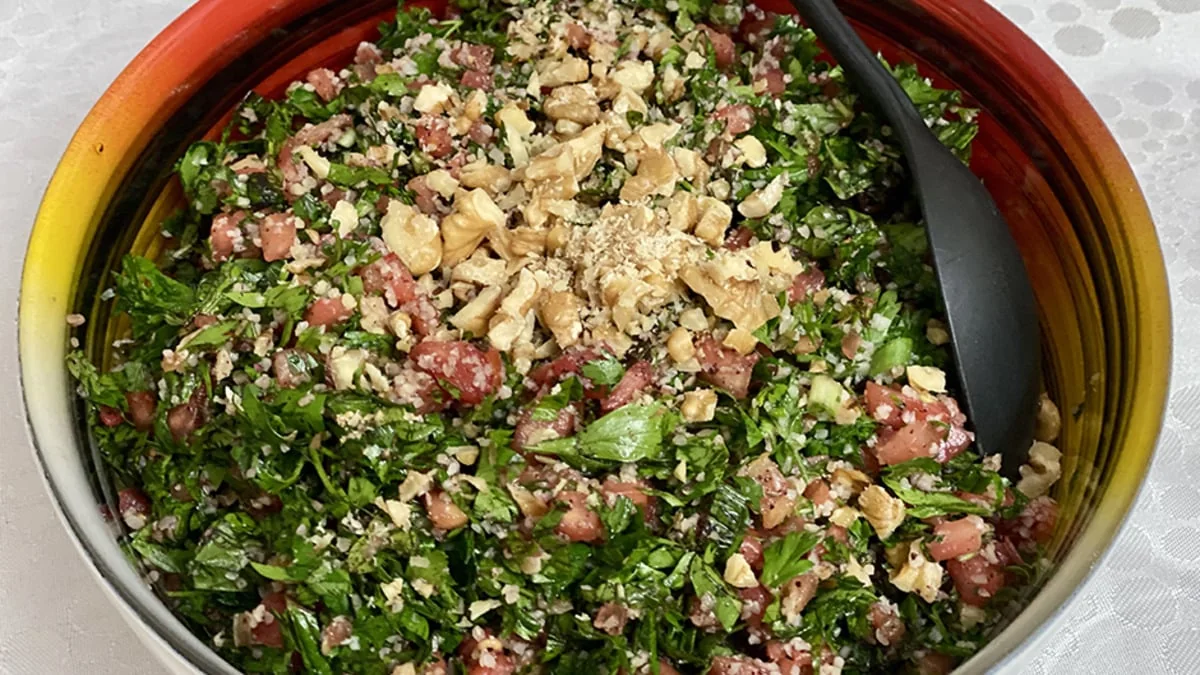
Many traditional dishes from around the world are built on these ingredients. A shepherd's salad of tomato, cucumber and pepper (about 160 kcal in Sporty's per-serving estimate), a lemony, parsley-rich tabbouleh (about 240 kcal) or a chilled gazpacho (about 170 kcal) all bring raw vegetables to the table with few calories. Real values depend on recipe and portion. The WHO recommends at least 400 g of fruit and vegetables a day; meeting that target usually covers vitamin C without any planning. Our guide to how many vegetable servings you need shows what that looks like.
Does cooking destroy vitamin C?
Partly. Vitamin C dissolves in water and breaks down with heat and oxygen, so how you cook matters:
- Boiling in lots of water causes the biggest losses, because the vitamin leaches into the water you pour away.
- Steaming or cooking in a little water is gentler.
- Blanching causes relatively large losses.
- Freezing is the gentlest long-term way to store vegetables, so frozen broccoli or peppers are a perfectly good option.
Practical tips: eat some fruit and vegetables raw, steam rather than boil, use soup or cooking liquid where you can, and do not chop vegetables long before cooking.
Does vitamin C help you absorb iron?
Yes. Vitamin C changes plant (non-heme) iron into a form the gut absorbs more easily, even at the amounts found in normal meals. This is why many iron supplements contain added vitamin C. If you eat little or no meat, pairing iron-rich plant foods with a vitamin C source is a simple habit: lentil soup with a squeeze of lemon, beans with a pepper salad, or fortified cereal with kiwi or strawberries. Read more in our guide to iron-rich foods and better absorption.
Does vitamin C prevent colds?
For most people, not really. A Cochrane review (Hemilä and Chalker, 2013) pooled 29 trial comparisons with 11,306 participants. Taking vitamin C regularly did not reduce how often people in the general population caught colds. It did shorten colds slightly, by about 8 % in adults and 14 % in children. In five trials with people under heavy physical stress, such as marathon runners, skiers and soldiers in subarctic conditions, regular vitamin C roughly halved the risk of a cold. Starting vitamin C only after symptoms began showed no consistent benefit.
Do you need a supplement, and can you take too much?
Most people can get all the vitamin C they need from a varied diet, and the NHS recommends doing exactly that. Supplements are not dangerous at modest doses, but more is not better. Taking more than 1,000 mg a day can cause stomach pain, diarrhoea and wind, and a 2021 review advises against routinely recommending doses above 1 g a day because of a higher risk of kidney stones.
Talk to a doctor before taking high-dose supplements if you have had kidney stones, have kidney disease or have a condition that causes iron overload (haemochromatosis). If you are pregnant or breastfeeding, ask your midwife, doctor or a registered dietitian about your needs. This article is general information, not medical advice.
If you are eating less to lose weight, fruit and vegetables are an easy way to keep vitamins up without many calories; our guide to vitamins and minerals in a calorie deficit covers the rest.
Frequently asked questions
How much vitamin C do I need per day?
US guidance sets 90 mg a day for men and 75 mg for women, with more in pregnancy and breastfeeding. The UK recommends 40 mg a day for adults aged 19 to 64. Smokers need more.
Which fruit has the most vitamin C?
Among common fruits, kiwi (60–78 mg per 100 g) and strawberries (65 mg) are higher than oranges (41–58 mg). Sweet peppers, a vegetable, are higher still at 107–154 mg per 100 g.
Can you take too much vitamin C?
More than 1,000 mg a day from supplements can cause stomach pain and diarrhoea, and high doses are linked with a higher risk of kidney stones. Food sources do not cause these problems.
Should I take vitamin C for a cold?
A Cochrane review found regular vitamin C did not reduce how often most people catch colds, though it shortened them slightly. Starting it after symptoms begin showed no consistent benefit.
Was this article helpful?
No ratings yet — be the first.
Tap a star to rate it — your rating helps us improve and helps other readers.
Sources
- Doseděl et al. 2021, Vitamin C: Sources, Physiological Role, Kinetics, Deficiency, Use, Toxicity, and Determination (Nutrients, review)
- Bhoot et al. 2023, Dietary Sources, Bioavailability, and Functions of Ascorbic Acid (Vitamin C) (Cureus, review)
- NHS, Vitamin C
- Hemilä and Chalker 2013, Vitamin C for preventing and treating the common cold (Cochrane review)
- WHO, Healthy diet fact sheet
This article is general information, not medical advice. If you have a health condition, are pregnant or under 18, talk to a doctor or registered dietitian before changing your diet.