

Thirst and hunger are separate signals, and there is little evidence that people routinely confuse them. Still, water helps in practical ways: it replaces sugary drinks, water-rich foods make meals more filling, and in one 12-week trial drinking 500 ml before meals helped dieting adults lose about 2 kg more. Real hunger needs food.
Key takeaways
- EFSA considers about 2.0 L of total water a day adequate for women and 2.5 L for men, including water from food.
- If an urge to eat comes on suddenly soon after a meal, try a glass of water and wait 10 to 15 minutes.
- In a 12-week trial of 48 older adults, 500 ml of water before meals led to about 2 kg more weight loss on a diet.
- Soup before a meal cut total lunch intake by about 20% in a lab study.
- Swapping sugary drinks and juice for water is the clearest calorie win.
Can thirst feel like hunger?
Possibly, but the popular claim that most "hunger" is really thirst is stronger than the evidence behind it. Thirst and hunger are separate signals, and there is little direct research showing that people routinely mistake one for the other. What is better supported is more practical: drinking water instead of sugary drinks saves calories, water-rich foods can make meals more filling for fewer calories, and in one trial drinking water before meals helped people on a diet lose a little more weight.
So a glass of water is a reasonable first step when you feel a vague urge to eat between meals. It is not a way to suppress real hunger, and it should never replace meals your body needs.
How much fluid do you actually need?
The European Food Safety Authority (EFSA) considers a total water intake of about 2.0 litres a day adequate for women and 2.5 litres for men. That total includes water from food as well as drinks. The UK's NHS suggests 6 to 8 cups or glasses of fluid a day as a rough guide, and notes you may need more if you are pregnant or breastfeeding, in a hot climate, active for long periods or unwell.
| Source | Guide | What counts |
|---|---|---|
| EFSA, women | About 2.0 L total water a day | Drinks and the water in food |
| EFSA, men | About 2.5 L total water a day | Drinks and the water in food |
| NHS | 6 to 8 cups or glasses of fluid a day | Water, lower-fat milk and lower-sugar drinks, including tea and coffee |
A simple check the NHS suggests is the colour of your urine: a clear, pale yellow usually means you are drinking enough. For more detail, see how much water you should drink per day.
How can you tell thirst from hunger?
The two signals usually feel different once you pay attention to them:
| Signal | More likely thirst | More likely hunger |
|---|---|---|
| Where you feel it | Dry mouth or throat | Empty or rumbling stomach |
| Timing | After exercise, heat, salty food or hours without a drink | Several hours after your last meal |
| What appeals | Something cold or fresh, like fruit or a drink | Most foods sound good, including plain ones |
| After a glass of water | The urge fades | The urge stays or grows |
| Other clues | Darker urine, mild headache | Low energy, trouble concentrating, irritability |
A practical test: if it has been less than three hours since a proper meal and the urge came on suddenly, drink a glass of water and wait 10 to 15 minutes. If you are still hungry, eat. Real hunger is not a problem to be solved with water; it is a sign that your body needs food.
Does drinking water before meals help with weight loss?
One randomised trial tested this directly. In 48 adults aged 55 to 75 following a reduced-calorie diet for 12 weeks, one group drank 500 ml of water before each of their three daily meals. The water group lost about 2 kg more than the group on the diet alone, and at the start of the study a water "preload" before a test breakfast was linked to eating about 40 kcal less at that meal (498 vs 541 kcal).
The study is useful but limited: it was small, only 41 people completed it, the difference in percentage of body weight lost was not statistically significant, and the meal-intake effect was no longer clear by week 12. It suggests water before meals may help some people a little, especially older adults, but it is not a weight-loss method on its own.
Which foods help with both hydration and fullness?
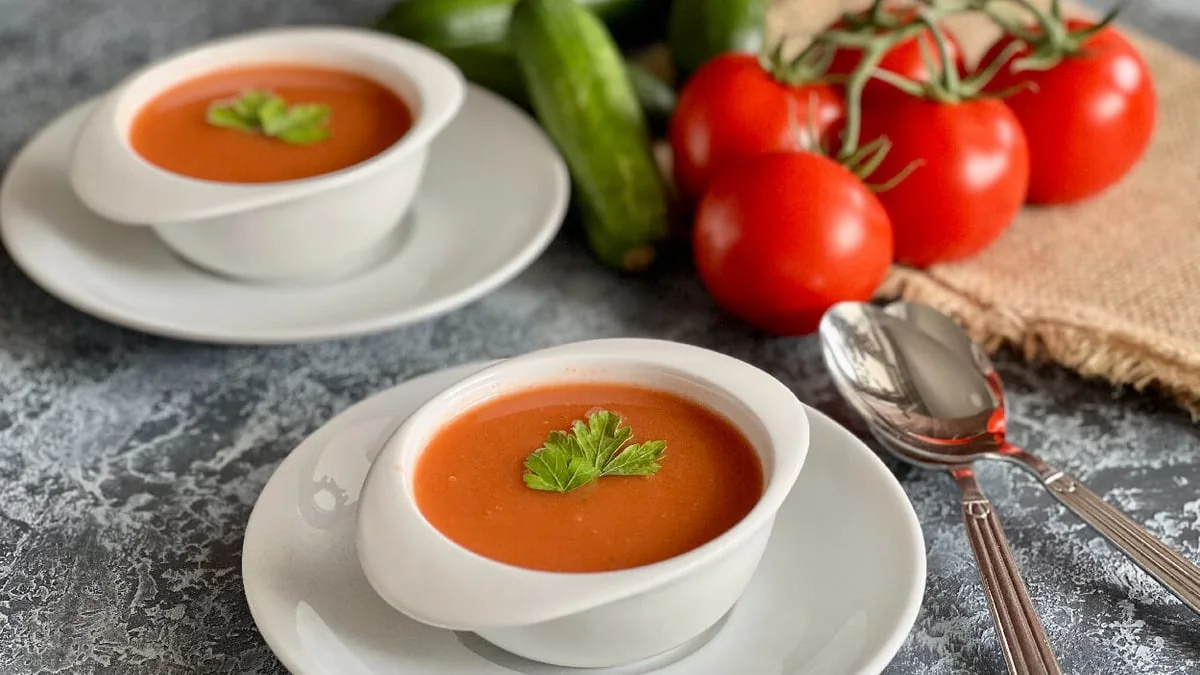
Foods that are mostly water add volume and weight to a meal for very few calories, which is the idea behind calorie density. Soup is the best-studied example. In a lab study of 60 adults, eating a vegetable soup before lunch reduced total lunch intake, including the soup, by about 20%, or roughly 134 kcal, compared with no soup. The form of the soup did not matter much.
A few water-rich dishes from Sporty's catalog, with Sporty's per-serving estimates (real values depend on recipe and portion):
| Dish | Calories | Protein |
|---|---|---|
| Shepherd's salad (tomato, cucumber, pepper, onion) | 160 kcal | 3 g |
| Gazpacho | 170 kcal | 3 g |
| Tomato soup | 200 kcal | 5 g |
| Smashed cucumber salad | 210 kcal | 4 g |
| Chicken soup | 260 kcal | 22 g |
Most of these are light starters rather than full meals. Pair them with a protein source, or choose a broth with chicken, fish, lentils or tofu, so the meal keeps you full for longer.
Do drinks count toward your calories?
Yes, and this is where hydration and weight connect most clearly. Water, plain tea and black coffee have practically no calories, but sugary drinks, juices, sweetened coffees and alcohol can add a lot without making you feel fuller. The NHS suggests swapping sugary drinks for water, adding lemon or lime if you do not like plain water, and keeping fruit juice and smoothies to one small glass (150 ml) a day with a meal. The WHO advises keeping free sugars below 10% of daily energy, and sugary drinks are one of the easiest places to cut them. The guide to liquid calories compares common drinks.
When you log drinks in Sporty, you can describe them in a few words or snap a photo, so a large latte or a glass of juice is counted along with your meals.
Simple habits that help
- Drink with every meal. A glass of water with each meal is an easy anchor that adds up through the day.
- Keep water visible. A bottle on your desk or in your bag makes it the default drink.
- Pause before snacking. If the urge appears soon after eating, try water first, then decide.
- Start some meals with soup or salad. Water-rich starters can take the edge off appetite.
- Do not skip meals to save calories. Very long gaps make real hunger stronger later; if you are often hungry, see how to feel fuller on fewer calories.
Who should be careful?
More water is not always better. If you have heart failure, kidney disease or another condition where your doctor has limited your fluid intake, follow that advice rather than general targets. Using water to ignore hunger, or drinking large amounts to feel full instead of eating, can be a sign of disordered eating. Eating very little is also not a safe shortcut: going below about 1,200 kcal a day for women or 1,500 kcal for men should only happen under medical supervision.
This article is general information, not medical advice. If you are pregnant or breastfeeding, under 18, managing a medical condition or have a history of eating disorders, talk to a doctor or registered dietitian.
Frequently asked questions
Is hunger often just thirst?
Sometimes a vague urge to eat fades after a drink, but there is little direct evidence that most hunger is really thirst. If you are still hungry 10 to 15 minutes after a glass of water, eat.
How much water should I drink to lose weight?
There is no special amount for weight loss. EFSA considers about 2.0 L of total water a day adequate for women and 2.5 L for men, including water from food; needs rise with heat and activity.
Does drinking water before meals reduce calories?
In one trial, 500 ml before a test breakfast was linked to eating about 40 kcal less, and dieters who drank water before meals lost about 2 kg more over 12 weeks. The effect is modest.
Do tea and coffee count toward fluid intake?
Yes. The NHS counts tea and coffee, along with water, lower-fat milk and lower-sugar drinks, toward daily fluid.
Was this article helpful?
No ratings yet — be the first.
Tap a star to rate it — your rating helps us improve and helps other readers.
Sources
- EFSA (2010), European dietary reference values for nutrient intakes (water)
- NHS, Water, drinks and your health
- Dennis et al. 2010, Water consumption increases weight loss during a hypocaloric diet intervention in middle-aged and older adults (RCT, n=48, Obesity)
- Flood & Rolls 2007, Soup preloads in a variety of forms reduce meal energy intake (Appetite, lab study, n=60)
- WHO, Healthy diet fact sheet
This article is general information, not medical advice. If you have a health condition, are pregnant or under 18, talk to a doctor or registered dietitian before changing your diet.