

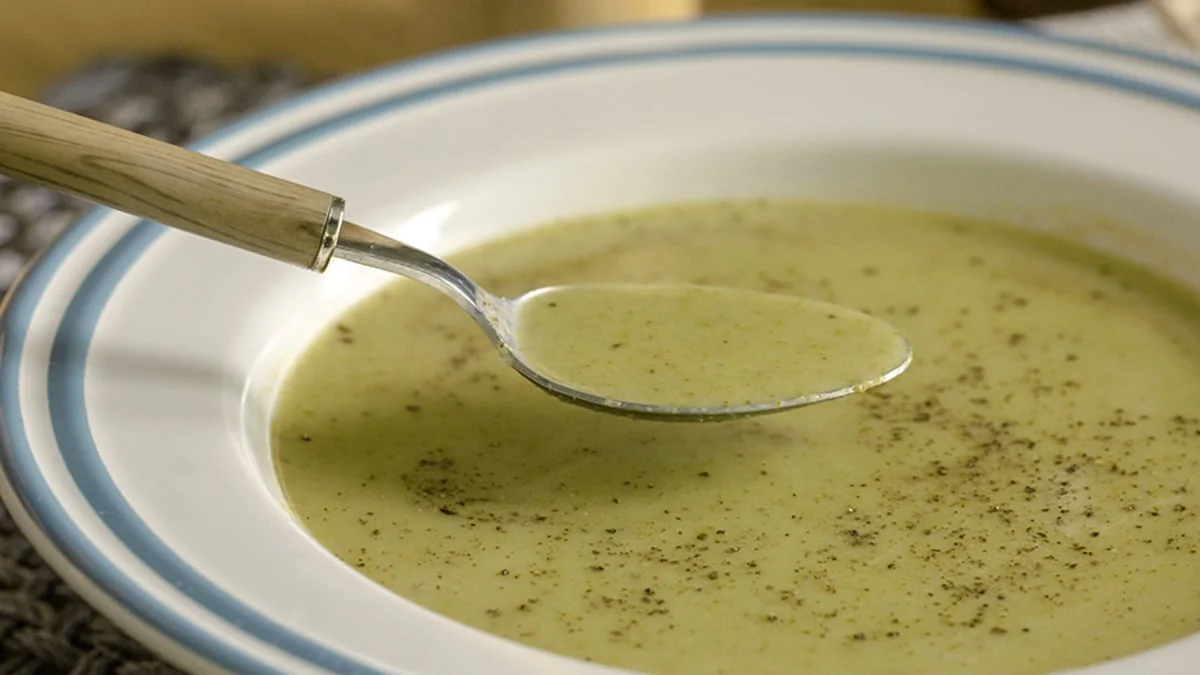
Calorie density is the number of calories in a given weight of food. Water-rich foods such as vegetables, fruit and broth soups have few calories per gram, so you can eat large portions. Dry, fatty foods such as crisps, cheese and oil pack many calories into small amounts. Building meals around low-density foods makes a deficit easier.
Key takeaways
- Calorie density = calories ÷ weight; water and fibre lower it, fat raises it.
- About 200 kcal is roughly 625 g of strawberries but only about 38 g of potato crisps (USDA data).
- In a year-long trial, women told to eat more water-rich foods ate more food by weight, felt less hungry and lost slightly more weight.
- Dense foods like nuts and olive oil are not bad; they just need measured portions.
- Very low-density eating is not right for everyone, such as children or people with small appetites.
What is calorie density?
Calorie density, also called energy density, is the number of calories in a given weight of food, usually shown as kcal per 100 g or per gram. To work it out, divide a food's calories by its weight. A food with a low calorie density gives you a large, heavy portion for few calories; a food with a high calorie density packs a lot of energy into a small bite.
The clearest example is fresh versus dried fruit. USDA FoodData Central lists fresh grapes at about 69 kcal per 100 g and golden raisins at about 301 kcal per 100 g. Drying removes most of the water, so the same fruit becomes more than four times as dense. A bowl of grapes and a small handful of raisins can carry the same calories, but they feel very different to eat.
What makes a food more or less calorie-dense?
Three things decide most of it:
- Water adds weight and volume with zero calories. Vegetables, fruit, broth-based soups, cooked grains and pulses are mostly water.
- Fibre adds bulk and provides few usable calories.
- Fat provides about 9 kcal per gram, more than twice the 4 kcal per gram of protein and carbohydrates. Foods that are both dry and fatty, such as crisps, crackers, nuts and pastries, sit at the top of the scale.
Here is a range of everyday foods from USDA FoodData Central, sorted from lightest to densest:
| Food | kcal per 100 g | How dense |
|---|---|---|
| Cucumber, with peel | 15 | Very low |
| Tomato | 18 | Very low |
| Strawberries | 32 | Very low |
| Broccoli | 34 | Very low |
| Apple, with skin | 52 | Low |
| Banana | 89 | Low |
| Lentils, cooked | 116 | Low |
| White rice, cooked | 130 | Low |
| Egg | 143 | Low |
| Chickpeas, cooked | 164 | Medium |
| White bread | 266 | Medium |
| Cheddar cheese | 410 | High |
| Saltine crackers | 418 | High |
| Potato crisps | 532 | High |
| Almonds | 579 | High |
| Butter | 717 | Very high |
| Olive oil | 884 | Very high |
The bands in the last column are a simple guide for this article, not an official scale.
Why does calorie density matter for weight loss?
Hunger responds to the amount of food you eat, not only to its calories. When meals are built from low-density foods, you can eat a satisfying volume while staying in a calorie deficit. Several studies support this idea:
- A year-long trial. In a 2007 randomised trial, 97 women with obesity were counselled either to cut fat or to cut fat and eat more water-rich foods, mainly fruit and vegetables. Neither group had a calorie target. Among the 71 who finished, the fruit-and-vegetable group lost about 7.9 kg against 6.4 kg, ate a greater weight of food and reported less hunger.
- A soup study. In a 2007 Penn State laboratory study with 60 adults, starting lunch with a low-energy vegetable soup lowered total lunch intake, soup included, by about 20 %, or 134 kcal.
- An ultra-processed food trial. In a 2019 NIH study, 20 adults lived on a research ward and could eat as much as they liked. On an ultra-processed diet they ate about 508 kcal a day more than on an unprocessed diet and gained about 0.9 kg in two weeks; on the unprocessed diet they lost about 0.9 kg. The solid foods in the ultra-processed diet were about 85 % more energy-dense, which the authors suggest probably contributed, although the study was not designed to prove that density alone was the cause.
These are different kinds of evidence, and none promises a specific result. But together they point in the same direction: more water-rich, fibre-rich food on the plate tends to make a deficit easier to live with.
What does 200 kcal look like at different densities?
Using the USDA figures above, here is roughly how much of each food gives about 200 kcal:
| Food | Amount for ≈ 200 kcal |
|---|---|
| Cucumber | about 1.3 kg |
| Strawberries | about 625 g |
| Broccoli | about 590 g |
| Apple | about 385 g (two to three apples) |
| Cooked lentils | about 170 g |
| Cooked white rice | about 155 g |
| White bread | about 75 g |
| Cheddar cheese | about 49 g |
| Potato crisps | about 38 g |
| Olive oil | about 23 g (under 2 tablespoons) |
The same idea works at meal level. In our meal catalog a bowl of red lentil soup is about 250 kcal and a shepherd's salad about 160 kcal; together they make a large lunch for about 410 kcal. Our per-serving estimates depend on recipe and portion, but the difference in volume is easy to see. You can find more low-calorie bowls in our guide to light Turkish soups.
How do you lower the calorie density of your meals?
- Fill half the plate with vegetables or salad. They add volume for very few calories.
- Start with a broth-based soup or a salad on days when you expect to be very hungry.
- Bulk up mixed dishes. Add extra vegetables to pasta, rice, omelettes and stews, and use a little less of the dense base.
- Choose fresh fruit over dried fruit and juice most of the time.
- Measure oil, butter and dressings. At 119 kcal per tablespoon of olive oil, a free pour is where many plates quietly gain calories.
- Include protein and pulses. Lentils, beans, chickpeas, eggs, yogurt, fish and chicken are moderate in density and help you stay full.
Are calorie-dense foods bad?
No. Calorie density describes how much energy a food carries, not whether it is healthy. Nuts and olive oil are dense but bring healthy fats and other nutrients, and they fit well into a weight-loss diet in measured portions; see our guide to healthy fats. The point is not to avoid them, but to notice that small amounts add up quickly, while vegetables and fruit give you room to eat freely.
Low density is also not always the goal. Children, older adults with small appetites, people who are underweight and anyone recovering from illness may need denser foods to meet their needs. Drinks are a special case too: sugary drinks are low in density but do little for fullness. If you have a medical condition, are pregnant or have a history of disordered eating, talk to a doctor or registered dietitian before changing how you eat.
How can you spot the dense foods in your own diet?
Look at portions that are small in size but large in calories: spreads, oils, cheese, pastries, crisps, nuts and sweets are the usual suspects. Logging your meals for a week, for example by photo in Sporty, shows which foods take up a large share of your calories for little volume. Swapping just one or two of them for lower-density foods is often enough to make a deficit feel more comfortable. For more ways to stay satisfied, read how to feel fuller on fewer calories.
Frequently asked questions
How do I calculate calorie density?
Divide the calories by the weight in grams. A food with 52 kcal per 100 g has a density of 0.52 kcal per gram; one with 532 kcal per 100 g has 5.32 kcal per gram.
Which foods have the lowest calorie density?
Non-starchy vegetables, most fresh fruit and broth-based soups. Cucumber, tomato, strawberries and broccoli are all under about 35 kcal per 100 g in USDA data.
Is calorie density the same as being healthy?
No. Nuts and olive oil are calorie-dense but nutritious, and some low-density drinks are sugary. Density is a tool for managing portions, not a health score.
Does drinking water with meals lower calorie density?
Water you drink alongside a meal is usually not counted, and it does not fill you up the way water inside food does. Water-rich foods and soups are more effective.
Was this article helpful?
No ratings yet — be the first.
Tap a star to rate it — your rating helps us improve and helps other readers.
Sources
- Ello-Martin et al. 2007, Dietary energy density in the treatment of obesity: a year-long trial comparing 2 weight-loss diets (Am J Clin Nutr, RCT, 97 women)
- Hall et al. 2019, Ultra-processed diets cause excess calorie intake and weight gain: inpatient randomized controlled trial (Cell Metabolism, 20 adults)
- Flood & Rolls 2007, Soup preloads in a variety of forms reduce meal energy intake (Appetite)
- USDA FoodData Central
- CDC, Losing weight
This article is general information, not medical advice. If you have a health condition, are pregnant or under 18, talk to a doctor or registered dietitian before changing your diet.