

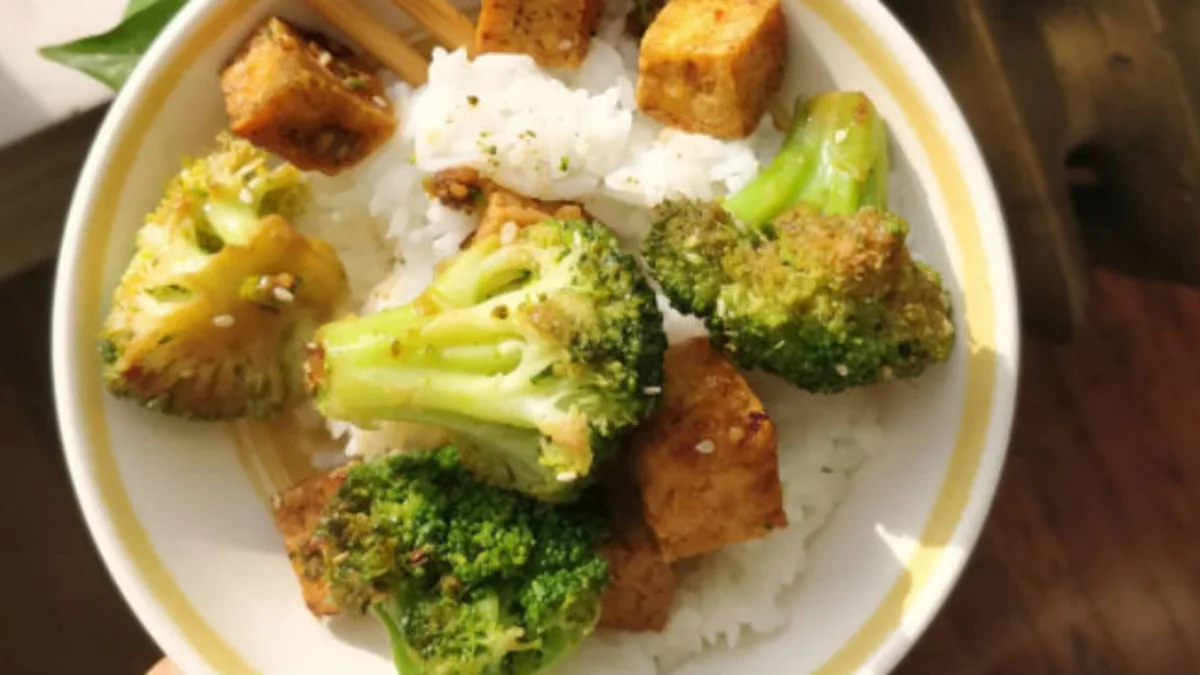
Soy foods such as tofu, tempeh, edamame and soy milk are a practical plant protein. A 2021 meta-analysis of 41 clinical studies found no effect of soy or isoflavones on men's testosterone, and observational studies link soy foods with lower breast cancer risk in Asian women. People with soy allergy or on MAOI antidepressants should take care.
Key takeaways
- Tofu dishes can rival chicken for protein; a tofu sauté gives about 32 g per serving by Sporty's estimates.
- A 2021 meta-analysis of 41 clinical studies found no effect of soy or isoflavones on male reproductive hormones.
- Soy foods are linked with lower, not higher, breast cancer risk in observational studies; supplements have not shown that benefit.
- EFSA found no harmful effect of isoflavone supplements on breast, uterus or thyroid in post-menopausal women.
- Soy's benefits for cholesterol and hot flushes are real but small.
What is soy, and what forms does it come in?
Soybeans are a legume, like lentils and chickpeas, but with an unusual profile: more protein and more fat than most other beans, and less starch. They have been eaten for centuries across East and Southeast Asia and are now found in kitchens everywhere. The main forms are:
- Tofu: soy milk curdled and pressed into blocks, from soft and silky to extra firm.
- Tempeh: whole soybeans fermented into a firm, nutty cake, popular in Indonesia.
- Edamame: young green soybeans, usually steamed in the pod.
- Soy milk and soy yogurt: common dairy alternatives.
- Miso, natto and soy sauce: fermented products used mainly for flavour.
- Textured soy protein: dried soy mince used in place of meat in sauces and fillings.
Soy also contains isoflavones, plant compounds with a structure similar to oestrogen. Isoflavones are the reason soy attracts so many myths, so it is worth looking at what the evidence actually says.
How does tofu compare as a protein source?
Tofu is one of the most practical plant proteins: cheap, quick to cook and neutral enough to take on any flavour. Here is how two tofu dishes compare with other everyday meals, using Sporty's per-serving estimates (real values depend on recipe and portion):
| Dish | kcal | Protein | Carbs | Fat |
|---|---|---|---|---|
| Tofu and vegetable sauté | 420 | 32 g | 34 g | 20 g |
| Tofu and broccoli rice | 460 | 22 g | 60 g | 15 g |
| Chicken sauté | 380 | 40 g | 14 g | 18 g |
| Chickpea stew | 360 | 16 g | 52 g | 10 g |
| Lentil kofte | 340 | 13 g | 56 g | 8 g |
A tofu sauté lands close to a chicken dish for protein and well above most bean or lentil dishes, which is why tofu is a staple for vegetarians who want to keep protein up while losing weight. For more options, see plant protein without meat and our high-protein vegetarian dinners.
Myth 1: "Soy lowers testosterone and feminises men"
This is the most persistent soy myth, and the clinical evidence does not support it. A 2021 meta-analysis by Reed and colleagues pooled 41 clinical studies in men and found no significant effect of soy protein or isoflavones on total testosterone, free testosterone, oestradiol, oestrone or sex hormone-binding globulin. The result held across different isoflavone doses and study lengths. Isolated case reports of problems tend to involve extreme intakes far beyond normal eating.
Myth 2: "Soy causes breast cancer"
The concern comes from the oestrogen-like structure of isoflavones, but human data point the other way. According to the US National Center for Complementary and Integrative Health (NCCIH), observational studies have linked higher soy intake among Asian and Asian-American women to a lower risk of breast cancer. Soy supplements, on the other hand, have not been shown to reduce risk, so the finding applies to soy foods in a normal diet, not to pills.
The European Food Safety Authority (EFSA) assessed isoflavone supplements in post-menopausal women in 2015 and concluded that the evidence did not suggest harmful effects on the breast, uterus or thyroid at doses typical of EU supplements, in studies lasting from about three months to nearly a year. EFSA also noted it had no data for women with a personal or family history of cancer. Anyone with a history of hormone-sensitive cancer should discuss soy supplements, though not usually soy foods, with their oncology team.
Myth 3: "Soy damages your thyroid"
In the same 2015 assessment, EFSA found no harmful effect of isoflavone supplements on the thyroid in post-menopausal women. People who take thyroid hormone medication are sometimes advised to space soy-rich meals and their tablet apart, so if you have a thyroid condition, ask your doctor or pharmacist how to time them. That is a medication-timing question, not a reason for most people to avoid soy.
Myth 4: "Soy is a superfood that fixes cholesterol and menopause"
Soy's benefits are real but modest. NCCIH summarises the evidence like this:
- Cholesterol: eating soy protein in place of other proteins may lower cholesterol to a small extent; isoflavone pills may not have the same effect.
- Hot flushes: soy isoflavone supplements or soy protein may reduce how often and how severely menopausal hot flushes occur, though the effect may be small and results have been inconsistent.
- Bones and blood pressure: isoflavones probably benefit bone density in post-menopausal women and may modestly lower blood pressure.
So soy is a good food, not a treatment. The biggest gain often comes from what it replaces: swapping some processed meat for tofu or beans changes the whole meal.
Who should be careful with soy?
- People with a soy allergy. Soy is a common allergen and must be declared on packaged food labels in many countries.
- People taking MAOI antidepressants. Some fermented soy products are high in tyramine, which can interact with these drugs and raise blood pressure dangerously. Check with your prescriber.
- Pregnant women. NCCIH notes that soy in amounts above typical food levels may be unsafe in pregnancy; normal food amounts are a different matter, but supplements are best avoided unless advised.
- Anyone watching salt. Soy sauce and miso are salty; the WHO recommends less than 5 g of salt a day, and a few splashes of soy sauce add up quickly.
Concentrated supplements are where the evidence is thinnest. Soy protein supplements have been used safely in studies for up to 16 weeks and isoflavone extracts for up to 6 months, and side effects such as bloating, constipation or nausea are possible. Food sources are the simpler choice.
How can you use soy in everyday meals?
- Press and pan-fry tofu. Wrap it in a clean tea towel under a heavy pan for 15 minutes, cube it and cook in a non-stick pan with a teaspoon of oil until golden.
- Add it to familiar dishes. Crumbled firm tofu works in a scramble, in place of some of the minced meat in a bolognese, or in a curry.
- Snack on edamame. A bowl of steamed pods with a pinch of salt is filling and slow to eat.
- Choose fortified soy milk if you use it instead of dairy; unfortified versions are lower in calcium. Our comparison of dairy and plant milks explains what to look for.
If you log a tofu stir-fry in Sporty, include the cooking oil and sauce, since they often make up a large share of the calories in an otherwise light dish.
Frequently asked questions
Does soy lower testosterone in men?
Clinical evidence says no. A 2021 meta-analysis of 41 studies found no significant effect of soy protein or isoflavones on testosterone, free testosterone or oestrogen levels in men.
Is tofu safe for women with breast cancer?
Observational studies link soy foods with lower breast cancer risk, but anyone with a history of hormone-sensitive cancer should discuss soy supplements with their oncology team.
Is tofu good for weight loss?
It can help. Tofu is high in protein for its calories, and a tofu and vegetable sauté gives about 420 kcal and 32 g protein by Sporty's estimates.
How much soy is too much?
Normal food amounts are fine for most people. Concentrated supplements are less studied, and soy in amounts above typical food levels may be unsafe in pregnancy.
Was this article helpful?
5.0 / 5 · 1 rating
Tap a star to rate it — your rating helps us improve and helps other readers.
Sources
This article is general information, not medical advice. If you have a health condition, are pregnant or under 18, talk to a doctor or registered dietitian before changing your diet.