

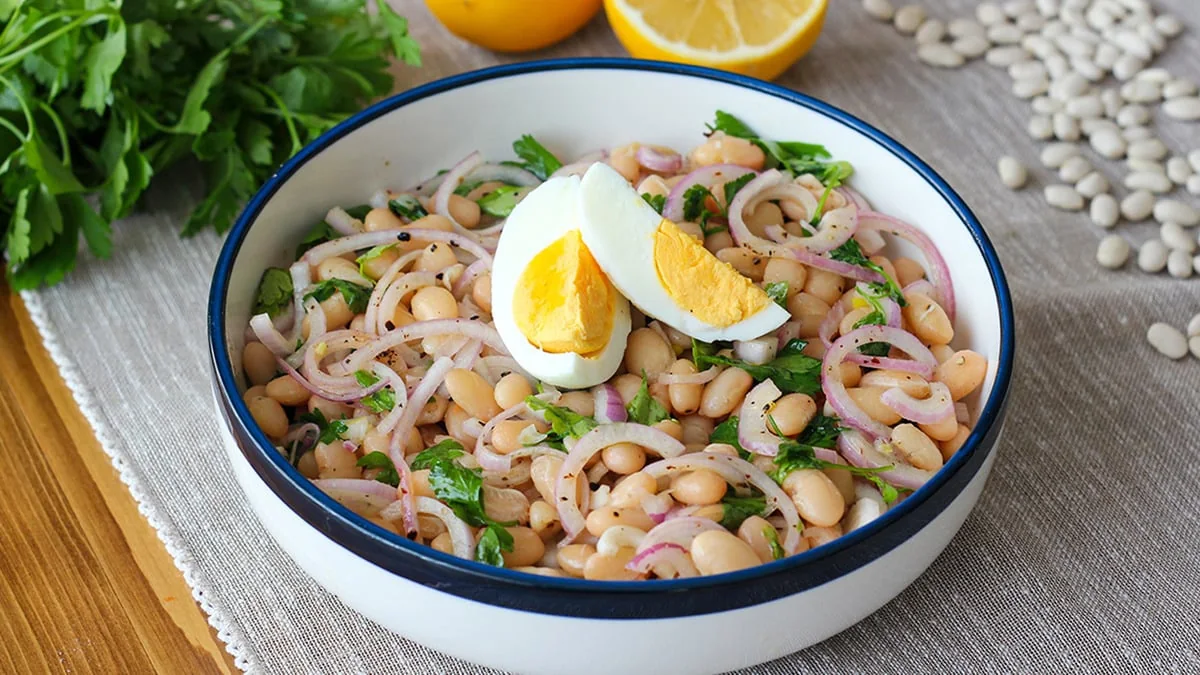
The most filling cold lunches combine a protein, a fibre-rich carb and plenty of vegetables. Tuna salad, a chicken quinoa bowl or a niçoise salad give 30–52 g of protein for 430–520 kcal by Sporty's estimates. Keep them cold: the CDC advises refrigerating perishable food within 2 hours, or within 1 hour above 32 °C.
Key takeaways
- Many classic dishes are meant to be eaten cold: grain salads, bean salads, onigiri, niçoise, gazpacho.
- Fish- or chicken-based cold lunches give 30–52 g of protein for under 550 kcal.
- Pair light dishes like gazpacho or tabbouleh with a protein so they keep you full.
- Refrigerate perishable food within 2 hours, or 1 hour above 32 °C (90 °F), and use an ice pack.
- One hour of batch cooking covers four or five cold lunches.
Why plan a lunch that doesn't need heating?
Plenty of people have no microwave at lunchtime: site workers, drivers, teachers on playground duty, students, nurses on a ward, or anyone in an office where the queue for the one microwave takes half the break. Without a plan, the fallback is usually a shop sandwich, a pastry or a packet of crisps, which tend to be either low in protein or high in calories for how little they fill you up.
The good news is that many of the world's most satisfying dishes are meant to be eaten cold or at room temperature: Middle Eastern grain salads, Mediterranean bean salads, Japanese rice balls, French niçoise, Spanish gazpacho and Turkish olive-oil dishes. A cold lunch can be every bit as filling as a hot one if it has three things: a solid protein, some fibre-rich carbohydrate and plenty of vegetables.
What are good cold lunches, and how many calories do they have?
The table shows dishes from the Sporty catalog that travel well and taste good cold. The numbers are Sporty's per-serving estimates; real values depend on recipe and portion.
| Dish | kcal | Protein | Carbs | Fat |
|---|---|---|---|---|
| Tuna salad and yogurt | 480 | 52 g | 28 g | 18 g |
| Chicken quinoa power bowl | 520 | 50 g | 45 g | 14 g |
| Chicken salad | 380 | 36 g | 14 g | 20 g |
| Protein wrap | 450 | 36 g | 40 g | 14 g |
| Niçoise salad | 430 | 30 g | 24 g | 24 g |
| Protein-packed vegan salad | 420 | 20 g | 44 g | 18 g |
| Mediterranean chickpea salad | 430 | 19 g | 58 g | 14 g |
| Lentil salad | 320 | 16 g | 42 g | 9 g |
| White bean salad (piyaz) | 330 | 14 g | 40 g | 12 g |
| Onigiri rice balls | 280 | 10 g | 54 g | 3 g |
| Gazpacho | 170 | 3 g | 16 g | 11 g |
The top half of the table is built around fish or chicken and gives 30–50 g of protein for under 550 kcal. The bean, lentil and chickpea salads are lower in protein but high in fibre, and they are some of the cheapest lunches you can make.
How do you turn a light dish into a full lunch?
Some cold dishes are better as half of a lunch than the whole thing. Gazpacho, tabbouleh (240 kcal, 6 g protein) or kısır (340 kcal, 8 g protein) are refreshing, but on their own they are low in protein and may leave you hungry by mid-afternoon. Pair them:
- Gazpacho + chicken salad: about 550 kcal and 39 g protein.
- Tabbouleh + hummus and raw vegetables: about 500 kcal and 17 g protein, fully plant-based.
- Kısır + cacık: about 460 kcal and 15 g protein; add a tin of chickpeas or tuna on the side for more.
- Onigiri + lentil salad: about 600 kcal and 26 g protein.
A simple rule: if the lunch has no obvious protein (fish, chicken, eggs, cheese, yogurt, tofu, beans or lentils), add one. Our guide to salads that actually fill you up covers the same principle in more depth.
How do you keep a cold lunch safe?
Cold food is only safe if it stays cold. The CDC advises keeping the fridge at 4 °C (40 °F) or below and refrigerating perishable foods, including cooked leftovers, cut fruit, meat, fish and dairy, within 2 hours. If the food is somewhere above 32 °C (90 °F), such as a hot car, that window drops to 1 hour. Between about 4 °C and 60 °C (40–140 °F) bacteria can multiply quickly.
In practice that means:
- Keep the lunch in the fridge until you leave, and in a work fridge if there is one.
- Without a fridge, use an insulated bag with an ice pack or a frozen bottle of water, which doubles as a cold drink later.
- Cool cooked grains, chicken or fish quickly after cooking and refrigerate them in shallow containers before packing.
- Keep dressings and juicy tomatoes separate until you eat, which also stops salads going soggy.
- If a dish has been warm for longer than the guidance allows, do not eat it.
How do you prepare a week of cold lunches?
Cold lunches are ideal for batch cooking because they do not suffer from reheating. One hour on a Sunday can cover four or five days:
- Cook a grain. A pot of bulgur, quinoa or rice. Cool it, then refrigerate.
- Cook or open a protein. Bake a tray of chicken breasts, boil a few eggs, or drain tins of tuna, chickpeas and beans.
- Chop sturdy vegetables. Cucumber, peppers, carrots, red onion, cabbage and radishes stay crisp for days; add leaves and tomatoes on the day.
- Make one dressing. Olive oil, lemon, garlic and herbs, or yogurt with mint. Keep it in a small jar.
- Assemble each morning, or the night before, so ingredients stay fresh.
Our simple meal-prep plan walks through this in more detail. Wraps are another option: a wholemeal wrap with chicken, hummus and salad holds up well for a few hours, and our guide to lighter sandwiches and wraps has more fillings.
What should a cold lunch include?
For most adults, a lunch of 400–600 kcal with 25–40 g of protein, a fist-sized portion of grains or beans and at least two handfuls of vegetables is a sensible target, though your own numbers depend on your daily goal. The WHO recommends at least 400 g of fruit and vegetables a day, and a vegetable-heavy cold lunch can cover a good part of that in one go. Olive oil adds flavour and helps you enjoy vegetables, but it is calorie-dense at 9 kcal per gram of fat, so measure the dressing rather than pouring freely.
When your lunch comes from a box rather than a menu, logging it is easy: take a photo of the open container in Sporty before you eat, and the estimate goes into your diary with no weighing needed.
Frequently asked questions
What can I eat for lunch without a microwave?
Grain and bean salads, chicken or tuna salads, wraps, onigiri, niçoise salad, hummus with vegetables and cold soups such as gazpacho all work well without heating.
How long can a packed lunch stay out of the fridge?
The CDC advises refrigerating perishable food within 2 hours, or within 1 hour if it is above 32 °C (90 °F). An insulated bag with an ice pack helps keep it cold.
Are cold lunches less filling than hot ones?
Not if they contain enough protein, fibre and vegetables. A chicken quinoa bowl or tuna salad can be just as filling as a hot meal.
Can I eat cooked rice cold?
Yes, if it was cooled quickly after cooking and kept in the fridge. Do not leave cooked rice at room temperature for long.
Was this article helpful?
No ratings yet — be the first.
Tap a star to rate it — your rating helps us improve and helps other readers.
Sources
This article is general information, not medical advice. If you have a health condition, are pregnant or under 18, talk to a doctor or registered dietitian before changing your diet.