

Over a year, low-carb and low-fat diets produce similar weight loss. In the DIETFITS trial, 609 adults lost 6.0 kg on a healthy low-carb diet and 5.3 kg on a healthy low-fat diet, a difference that was not statistically significant. Both work by creating a calorie deficit, so the best choice is the one you can keep.
Key takeaways
- In DIETFITS, a 12-month trial of 609 adults, weight loss was 6.0 kg (low-carb) vs 5.3 kg (low-fat), not a significant difference.
- A meta-analysis of 48 trials found about 7.3 kg loss at 12 months for both diet types compared with no diet.
- Both diets work by cutting calories; neither genotype nor insulin secretion predicted who did better.
- Fat has 9 kcal per gram and carbs 4, so the same calories look very different on the plate.
- Talk to a doctor before a very low-carb diet if you take diabetes or blood pressure medicines.
What do "low-carb" and "low-fat" actually mean?
Neither term has one official definition, which is part of why the debate never ends. A useful reference point is the Acceptable Macronutrient Distribution Range (AMDR) from the National Academies: for adults, about 45–65% of calories from carbohydrates, 20–35% from fat and 10–35% from protein. Diets called "low-carb" go below that carbohydrate range, sometimes far below it, as in ketogenic diets. "Low-fat" diets sit at or below the bottom of the fat range.
Calories per gram explain why the two approaches look so different on a plate. Carbohydrates and protein each provide 4 kcal per gram, while fat provides 9 kcal per gram. Cutting 20 g of fat removes 180 kcal; cutting 20 g of carbohydrate removes 80 kcal.
Which loses more weight: low-carb or low-fat?
When people actually follow either diet for a year, the results are remarkably close. The best evidence comes from long, randomised trials and meta-analyses:
| Study | What it compared | Result |
|---|---|---|
| DIETFITS (Gardner et al., JAMA 2018) | 609 adults with overweight or obesity, randomised to a healthy low-fat or healthy low-carb diet for 12 months | −5.3 kg (low-fat) vs −6.0 kg (low-carb); the 0.7 kg difference was not statistically significant |
| Johnston et al., JAMA 2014 (meta-analysis) | 48 randomised trials, 7,286 adults on popular named diets | At 12 months, about 7.3 kg loss vs no diet for both low-carb and low-fat; differences between individual diets were small |
| Hall et al., Nature Medicine 2021 | 20 adults in a metabolic ward eating as much as they wanted of a plant-based low-fat diet or an animal-based ketogenic diet, 2 weeks each | People ate about 689 kcal a day less on the low-fat diet over the 2 weeks |
The meta-analysis authors concluded that their findings support recommending whichever diet a person will stick to. DIETFITS also tested whether genotype patterns or insulin secretion could predict who would do better on which diet, and found that neither did.
Why do both diets work about equally well?
Because both are ways of eating fewer calories than you burn. Low-carb diets remove a big category of energy-dense foods (bread, pastries, sweets, sugary drinks, many snacks). Low-fat diets remove a different one (fried food, fatty meats, creamy sauces, butter, a lot of oil). Either change can create a calorie deficit, and that deficit is what drives fat loss.
The Hall study is a useful reminder that the popular idea "carbs cause weight gain through insulin" does not hold up neatly: in that tightly controlled setting, people ate less on the high-carbohydrate, low-fat diet. It was short and small, though, and two weeks of free eating in a hospital ward does not tell us what happens over a year at home. The long trials say the gap mostly disappears.
What does each approach look like in a day?
Here are two days built from our meal catalog with almost identical calories. These are Sporty's per-serving estimates; real values depend on recipe and portion.
| Meal | Lower-carb day | Lower-fat day |
|---|---|---|
| Breakfast | Menemen and white cheese (460 kcal) | Oats, yogurt and fruit (390 kcal) |
| Lunch | Chicken Caesar salad (480 kcal) | Red lentil soup (250 kcal) + yogurt and fruit (230 kcal) |
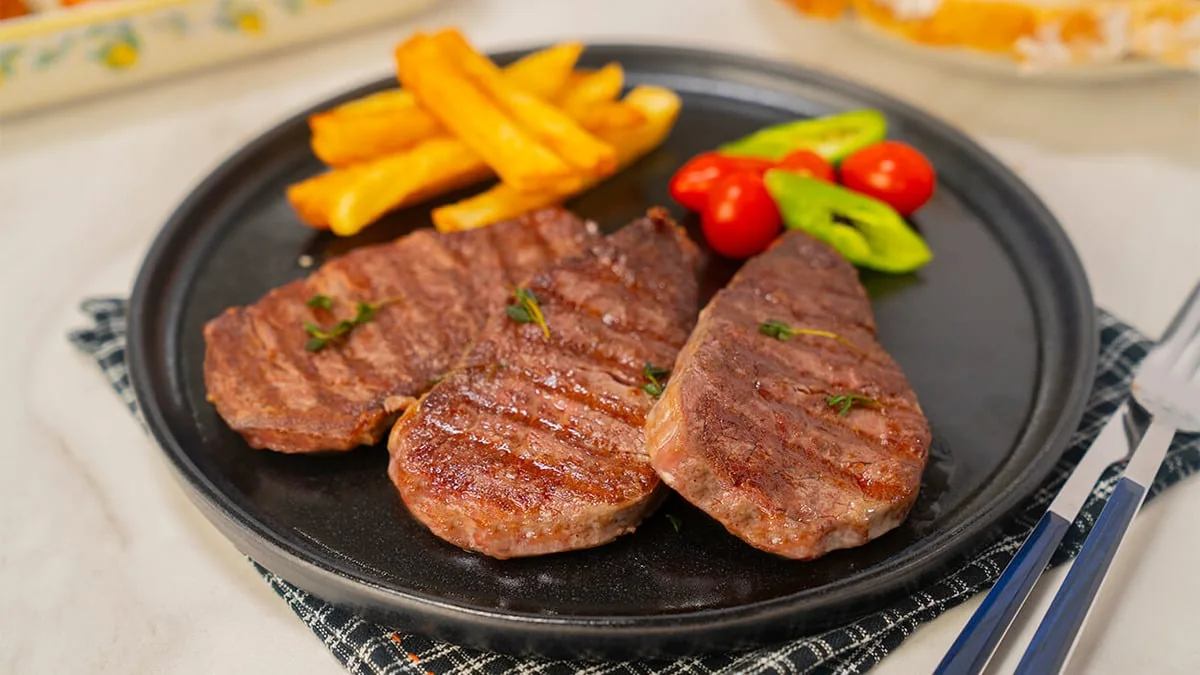
| Dinner | Grilled sirloin steak and asparagus (580 kcal) | Grilled chicken, bulgur and cacık (640 kcal) |
| Total | 1,520 kcal | 1,510 kcal |
| Protein | 120 g | 109 g |
| Carbohydrates | 52 g (about 14% of calories) | 190 g (about 50%) |
| Fat | 90 g (about 53%) | 38 g (about 23%) |
Both days have the same energy and plenty of protein, so on paper both would produce the same deficit for the same person. The question is which day you would happily repeat. Notice too that the lower-carb day goes well above the 35% upper end of the fat AMDR, which is common on stricter low-carb plans.
How many grams is that on 1,800 kcal?
In DIETFITS, the average diets ended up much less extreme than their names suggest: the low-fat group ate about 48% carbohydrate, 29% fat and 21% protein, and the low-carb group about 30% carbohydrate, 45% fat and 23% protein. Applied to an 1,800 kcal day, those splits look like this:
| Macro | Low-fat split | Low-carb split |
|---|---|---|
| Carbohydrates | ≈ 216 g | ≈ 135 g |
| Fat | ≈ 58 g | ≈ 90 g |
| Protein | ≈ 95 g | ≈ 104 g |
Both groups were also coached to focus on diet quality: vegetables, whole foods and minimally processed ingredients, with fewer added sugars and refined grains. Our guides to carbohydrates and healthy fats explain what that looks like in practice.
How do you choose the right one for you?
Since the average results are so close, personal fit matters most. A few practical questions help:
- What do you miss most when it is gone? If a day without bread or rice feels like punishment, a lower-fat approach may be easier. If you would rather keep olive oil, cheese and eggs, lower-carb may suit you better.
- What does your household eat? Turkish home cooking leans on bulgur, rice, bread, legumes and olive oil. A moderate approach that trims portions of both is often easier than removing a whole food group.
- What keeps you full? Protein and fibre help on either diet. Vegetables, legumes and lean protein fit both styles.
- Can you eat this way in a year? The CDC frames lasting weight loss around healthy habits you can keep, not a short sprint.
Who should be careful with either approach?
Very low-carb and ketogenic diets can change blood sugar quickly; in the Hall study one participant withdrew because of low blood sugar on the low-carb diet. If you take medicines for diabetes or blood pressure, are pregnant or breastfeeding, are under 18, have kidney disease or a history of disordered eating, talk to your doctor or a registered dietitian before making large changes. Whatever the macro split, do not go below about 1,200 kcal a day (women) or 1,500 kcal (men) without medical supervision.
The simplest test is to run your own experiment for four weeks, track calories and weekly average weight, and keep what works. Sporty shows calories, protein, carbs and fat for each meal you log, so you can see which pattern you are actually following rather than guessing.
Frequently asked questions
Is low-carb better than low-fat for weight loss?
Not over the long term. In the 12-month DIETFITS trial, the difference was 0.7 kg and not statistically significant, and a meta-analysis of 48 trials found similar results.
Why do people lose weight fast at the start of a low-carb diet?
Part of the early drop is water, because the body stores carbohydrate with water. Fat loss still depends on the calorie deficit.
Can I eat carbs and still lose weight?
Yes. A lower-fat day with oats, lentil soup, bulgur and fruit can be just as low in calories as a low-carb day; the total calories decide fat loss.
Is a ketogenic diet safe?
It can change blood sugar quickly and is not suitable for everyone. If you take medicines for diabetes or blood pressure, are pregnant or have kidney disease, talk to a doctor first.
Was this article helpful?
No ratings yet — be the first.
Tap a star to rate it — your rating helps us improve and helps other readers.
Sources
- Gardner et al. 2018, DIETFITS randomized clinical trial (JAMA)
- Johnston et al. 2014, Comparison of weight loss among named diet programs: a meta-analysis (JAMA)
- Hall et al. 2021, Plant-based low-fat vs animal-based ketogenic diet on ad libitum energy intake (Nature Medicine)
- National Academies, Dietary Reference Intakes for Energy and Macronutrients
- CDC, Losing weight
This article is general information, not medical advice. If you have a health condition, are pregnant or under 18, talk to a doctor or registered dietitian before changing your diet.