

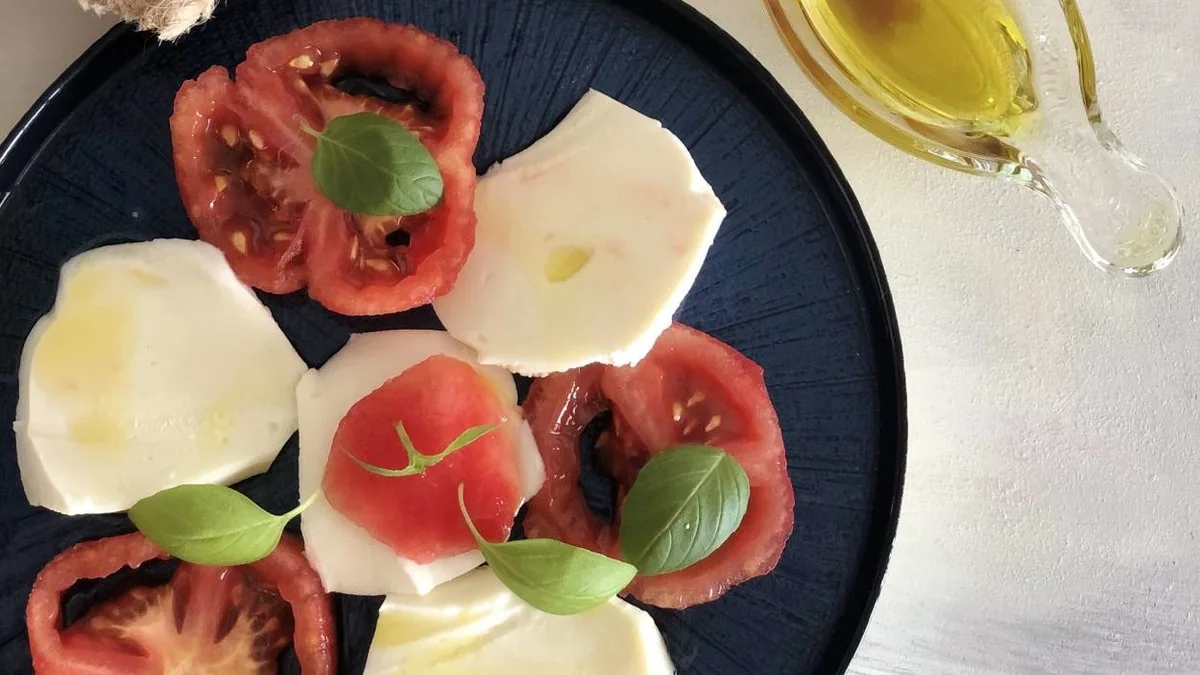
Cheese ranges from about 100 kcal per 100 g for cottage cheese to roughly 400 kcal for cheddar, according to USDA data. A 30 g piece of cheddar is about 120 kcal and 7 g of protein. Fresh cheeses give the most protein per calorie, while hard cheeses pack more fat and salt into small portions.
Key takeaways
- Calories in cheese range from about 100 kcal per 100 g (cottage cheese) to around 400 kcal (cheddar).
- Cottage cheese, part-skim mozzarella and parmesan give the most protein per calorie.
- A 30 g portion, about the size of a matchbox, is a practical reference for hard cheese.
- Many cheeses are high in salt and saturated fat, so portion size matters more than the type.
- Cheese fits a weight-loss plan when you choose the amount on purpose.
How many calories are in cheese?
Cheese is concentrated milk: most of the water is removed, and what remains is protein, fat and a little carbohydrate. That is why calories vary so much between types. Fresh, moist cheeses such as cottage cheese sit at around 100 kcal per 100 g, while hard and aged cheeses such as cheddar and parmesan reach roughly 390–400 kcal. The difference comes mainly from fat, which provides 9 kcal per gram, against 4 kcal per gram for protein.
The figures below are rounded values from USDA FoodData Central. Brands and recipes differ, so check the label of the cheese you actually buy.
| Cheese | kcal per 100 g | Protein per 100 g | Fat per 100 g | Protein per 100 kcal |
|---|---|---|---|---|
| Cottage cheese (about 4% fat) | about 98 | 11 g | 4 g | about 11 g |
| Mozzarella, part-skim | about 254 | 24 g | 16 g | about 9.6 g |
| Parmesan, hard | about 392 | 36 g | 26 g | about 9 g |
| Mozzarella, whole milk | about 300 | 22 g | 22 g | about 7.4 g |
| Cheddar | about 400 | 23–25 g | 33 g | about 6 g |
| Feta | about 264 | 14 g | 21 g | about 5.4 g |
| Cream cheese | about 340–350 | 6 g | 34 g | under 2 g |
Two things stand out. First, cheese is a genuinely useful protein source, especially cottage cheese, part-skim mozzarella and parmesan. Second, most cheeses bring as much fat as protein or more, so a small amount carries a lot of energy. Cream cheese is closer to a spread than a protein food. Brined white cheeses common around the eastern Mediterranean are similar in style to feta, while firmer sliced cheeses tend to sit closer to cheddar. For exact numbers, the label on the pack is always the best guide.
What does a portion of cheese look like?
The Dietary Guidelines for Americans count 1½ ounces (about 42 g) of natural cheese as one cup-equivalent of dairy, the same as a cup of milk or yogurt. In everyday life, a 30 g piece is a handy reference: roughly the size of a matchbox, or two thumb-sized cubes. Our guide to portion sizes without a scale shows how to calibrate these by eye.
| Portion | Approx. calories | Approx. protein |
|---|---|---|
| 30 g cheddar | 120 kcal | 7 g |
| 30 g whole-milk mozzarella | 90 kcal | 7 g |
| 30 g feta | 80 kcal | 4 g |
| 1 tablespoon grated parmesan (about 5 g) | 20 kcal | 2 g |
| 150 g cottage cheese | about 145 kcal | 17 g |
These are simple arithmetic on the per-100 g values above. The gap between a measured 30 g and a cheese board where you keep cutting slices is where most of the extra calories hide; two or three generous slices can easily reach 100 g of cheddar, or about 400 kcal.
How much does cheese add to a meal?
Cheese often turns a light dish into a richer one. A few examples from our meal catalog show how much it contributes. These are our per-serving estimates, and real values depend on recipe and portion:
- Caprese salad: 100 g fresh mozzarella with tomatoes, basil and olive oil, about 320 kcal, 16 g protein and 25 g fat. That fat alone accounts for about 225 kcal.
- Greek salad: 60 g feta with tomato, cucumber, olives and olive oil, about 290 kcal and 9 g protein.
- Margherita pizza: 80 g mozzarella on 150 g dough, about 560 kcal and 23 g protein.
- Mac and cheese: 60 g cheddar in a creamy sauce with pasta, about 620 kcal and 24 g protein.
- Cottage cheese and walnut fruit bowl: 150 g cottage cheese with strawberries and walnuts, about 280 kcal and 26 g protein.
The cottage cheese bowl gives the most protein for the fewest calories on this list, while the salads with mozzarella or feta get much of their energy from cheese and oil together. None of them needs to be avoided; knowing where the calories come from simply makes it easier to plan.
What about salt and saturated fat?
Many cheeses, especially brined and aged types such as feta, halloumi and parmesan, are high in salt. The WHO advises adults to keep salt below 5 g a day, and cheese can be a meaningful part of that total alongside bread, olives and processed meats. Our guide to salt and sodium limits explains how to read sodium on a label.
Cheese is also one of the main sources of saturated fat in many diets. Both the WHO and the Dietary Guidelines for Americans suggest keeping saturated fat below 10% of daily energy. On a 2,000 kcal day that is 200 kcal, or about 22 g of saturated fat. You do not need to count every gram; it is enough to notice that a large serving of a full-fat cheese can use a good share of that room. For more on fat types, see how much fat you should eat.
How can you enjoy cheese while losing weight?
- Measure once, then estimate. Weigh a 30 g piece of your usual cheese so you know what a portion looks like on your plate.
- Choose strong flavours. A small amount of parmesan, aged cheddar or blue cheese gives a lot of taste per gram, so less goes further.
- Grate instead of slicing. Grated cheese spreads over a dish more evenly, and a tablespoon of parmesan is only about 20 kcal.
- Use fresh cheeses for protein. Cottage cheese, part-skim mozzarella or ricotta add protein with less fat than most hard cheeses.
- Pair it with volume. Cheese with tomatoes, cucumber, salad or fruit makes a fuller plate than cheese with crackers alone.
- Log it as its own item. If you track meals, add the cheese separately rather than hiding it inside the dish. In Sporty you can adjust the grams before saving, so a sprinkle and a thick slice are not logged the same way.
Is cheese healthy?
Cheese can be part of a balanced diet. It provides protein and calcium, and it counts towards the dairy group in the Dietary Guidelines. The main points to watch are portion size, salt and saturated fat, not the food itself. Most people do best by enjoying the cheeses they like in amounts they choose on purpose.
If you have high blood pressure, kidney disease or high cholesterol, have been told to limit salt or saturated fat, are pregnant (some soft and unpasteurised cheeses carry food-safety advice), are under 18 or have a history of disordered eating, talk to a doctor or registered dietitian about what fits your situation.
Frequently asked questions
Which cheese has the fewest calories?
Fresh, moist cheeses such as cottage cheese are lowest, at around 100 kcal per 100 g in USDA data. Part-skim mozzarella and feta are in the middle, while cheddar and parmesan are near 400 kcal per 100 g.
Which cheese has the most protein?
Per 100 g, hard parmesan is highest at about 36 g. Per calorie, cottage cheese leads with roughly 11 g of protein per 100 kcal, followed by part-skim mozzarella.
How much cheese is one portion?
A practical portion of hard cheese is about 30 g, roughly the size of a matchbox. The Dietary Guidelines for Americans count 1½ ounces (about 42 g) of natural cheese as one cup-equivalent of dairy.
Can I eat cheese and still lose weight?
Yes. Weight change depends on your overall calorie balance, not on one food. Measuring your usual portion and pairing cheese with vegetables or fruit makes it easier to fit into your day.
Was this article helpful?
No ratings yet — be the first.
Tap a star to rate it — your rating helps us improve and helps other readers.
Sources
This article is general information, not medical advice. If you have a health condition, are pregnant or under 18, talk to a doctor or registered dietitian before changing your diet.