

Start by estimating your maintenance calories, eat about 300 to 500 kcal less, and build most meals around protein, vegetables and a measured starch. Log food for a few weeks, walk more, and aim for about 0.5 to 1 kg (1 to 2 lb) a week. Change two or three habits at a time, not everything at once.
Key takeaways
- A moderate deficit of about 300–500 kcal a day is enough for most beginners; you do not need extreme cuts.
- A sensible pace is about 0.5–1 kg (1–2 lb) a week, and even a 5% loss can improve blood pressure, cholesterol and blood sugar.
- Build each meal around a protein, half a plate of vegetables and one measured starch.
- Log everything you eat and drink for a few weeks to see where the calories really come from.
- Pick two or three specific goals at a time and expect setbacks; consistency matters more than a perfect week.
Where should a beginner actually start?
Start with a calorie target, a few simple meals and two or three small habits, not a complete life overhaul. Weight loss comes from eating somewhat less energy than you use over weeks and months. Every popular diet, from low-carb to intermittent fasting, works through that same deficit, so the best plan for a beginner is the one you can repeat on an ordinary Tuesday.
The CDC describes a gradual loss of about 1 to 2 pounds (roughly 0.5 to 1 kg) a week as the pace people are more likely to keep off. It also notes that losing even 5% of your starting weight can improve blood pressure, cholesterol and blood sugar. For someone who weighs 90 kg (198 lb), that first milestone is 4.5 kg (about 10 lb).
Step 1: How do you set your calorie target?
Most calculators start with the Mifflin-St Jeor equation for resting energy, then multiply it by an activity factor (1.2 for sedentary, 1.375 for lightly active, 1.55 for moderately active, 1.725 and 1.9 for very active people). Here is a worked example for a 35-year-old woman who is 165 cm tall, weighs 75 kg and is lightly active:
- Resting energy: 10 × 75 + 6.25 × 165 − 5 × 35 − 161 = about 1,445 kcal
- Maintenance: 1,445 × 1.375 = about 1,990 kcal a day
- Target with a 500 kcal deficit: about 1,490 kcal a day
A daily deficit of 500 kcal adds up to 3,500 kcal a week. Using the rough rule that about 7,700 kcal equals 1 kg of body fat, that is close to 0.45 kg a week. The rule is approximate, and early weeks often show a faster drop because of water, but it gives you a realistic expectation. Our guide to how many calories to eat to lose weight explains the maths in more detail, or use the calculator below.
Mifflin-St Jeor equation × activity factor. Capped at the usual minimum (1,200 kcal women / 1,500 kcal men); going lower needs medical supervision. Estimates only.
Do not go lower to speed things up. Eating below about 1,200 kcal a day for women or 1,500 kcal a day for men should only happen under medical supervision, and very large cuts are harder to sustain.
Step 2: What should your meals look like?
You do not need special foods. A simple template works for most cuisines: a palm-sized portion of protein, half a plate of vegetables or salad, one measured portion of starch, and a small amount of added fat. Protein and vegetables make meals more filling for their calories, and a measured starch keeps the total predictable.
Here is a sample day built from Sporty's per-serving estimates (real values depend on recipe and portion):
| Meal | Example | Calories | Protein |
|---|---|---|---|
| Breakfast | Oats, yogurt and fruit | 390 kcal | 22 g |
| Lunch | Red lentil soup + shepherd's salad | 410 kcal | 16 g |
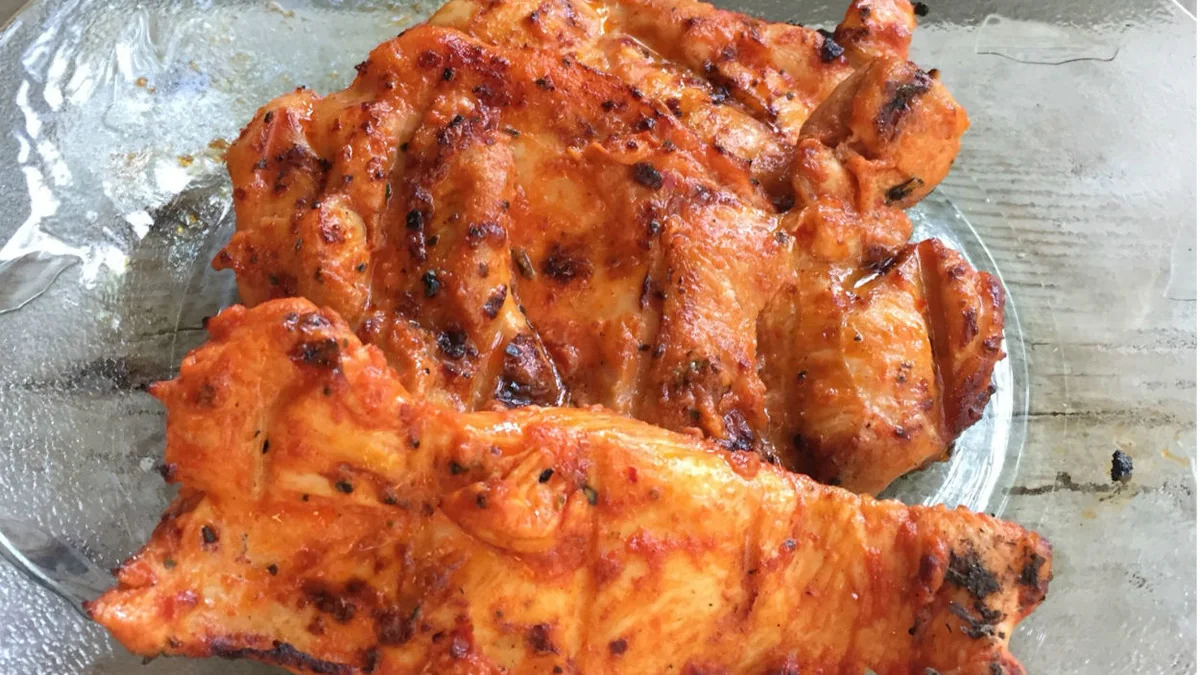
| Dinner | Chicken shish with salad | 380 kcal | 46 g |
| Snack | Yogurt and fruit | 230 kcal | 16 g |
| Total | 1,410 kcal | 100 g |
That leaves room for a drizzle of oil, milk in coffee or a piece of fruit within a 1,490 kcal target. A larger dinner such as grilled chicken, bulgur and cacık (about 640 kcal and 58 g protein) fits on days when lunch is lighter.
How much protein do you need?
The basic recommendation for adults is 0.8 g per kg of body weight, about 60 g a day for a 75 kg person. People who exercise regularly may benefit from 1.4 to 2.0 g per kg, according to the International Society of Sports Nutrition. Spreading protein over your meals is an easy way to stay fuller; see how much protein you need per day.
Step 3: Why track what you eat at first?
The CDC suggests keeping a food and drink diary for a few days to spot patterns, and tracking is also how you check whether your target is real or only on paper. Most people underestimate cooking oil, sauces, drinks and snacks eaten standing up. Log everything for the first two to four weeks, including weekends. Sporty lets you log a meal by photo, barcode, voice or text, which keeps that early phase quick. After a few weeks you will know your usual meals well enough to track more loosely if you prefer.
If you do not have a kitchen scale, hand-size portions are good enough to start; our guide to portion sizes without a scale shows how.
Step 4: How much should you move?
Food creates most of the deficit, but activity helps you keep muscle, sleep better and maintain your weight later. The CDC suggests starting with a goal you can actually do, such as a 15-minute walk after dinner three days a week, then building up. Walking is the simplest place to start; read how many steps a day help with weight loss for realistic targets.
What does the first month look like?
| Week | Focus | Habit to add |
|---|---|---|
| 1 | Set your target and log honestly | Log every meal and drink, even on busy days |
| 2 | Build three go-to meals | Plan breakfast and one main meal in advance |
| 3 | Protein and vegetables at every meal | Fill half the plate with vegetables or salad |
| 4 | Movement and review | Add a daily walk and compare your weekly average |
Keep it to two or three specific goals at a time, which is also how the CDC frames it. "Walk 15 minutes after dinner" is a goal you can check off; "be healthier" is not.
Which beginner mistakes are most common?
- Starting with a target that is too low. A few days of very little food followed by a loss of control usually moves slower than a moderate deficit kept for weeks.
- Not counting drinks. Sugary drinks, juices and syrup coffees add calories without filling you up. The WHO advises keeping free sugars below 10% of daily energy, about 50 g on a 2,000 kcal day.
- Ignoring fat. Fat has 9 kcal per gram against 4 kcal for protein and carbohydrate, so a few free-poured spoons of oil can erase a good part of the day's deficit.
- Forgetting vegetables. The WHO recommends at least 400 g of fruit and vegetables a day. They are bulky and low in calories, so they fill the plate.
- Watching only the scale. Waist size, how clothes fit, energy and sleep are part of progress too.
What if you slip up?
Setbacks are normal. A birthday dinner or a stressful week does not cancel a month of progress. Get back to your usual meals at the next one instead of skipping food to compensate. Your weight will also move up and down from day to day because of water and salt, so judge progress over weeks, not mornings.
This plan is general information, not medical advice. If you have diabetes, kidney disease or another medical condition, are pregnant or breastfeeding, are under 18 or have a history of disordered eating, talk to a doctor or registered dietitian before you change how you eat.
Frequently asked questions
How many calories should a beginner eat to lose weight?
Estimate your maintenance calories and subtract about 300 to 500 kcal a day. Do not go below about 1,200 kcal (women) or 1,500 kcal (men) without medical supervision.
How fast will I lose weight as a beginner?
A typical safe pace is about 0.5 to 1 kg (1 to 2 lb) a week. The first week often drops faster because of water, then it settles.
Do I need to exercise to start losing weight?
The calorie deficit comes mostly from food, but regular walking or other activity helps you keep muscle, feel better and maintain your weight later.
Should I cut out carbs to start?
No. Carbs, fat and protein can all fit. A measured portion of starch with protein and vegetables is easier to keep up than cutting a food group.
Was this article helpful?
No ratings yet — be the first.
Tap a star to rate it — your rating helps us improve and helps other readers.
Sources
This article is general information, not medical advice. If you have a health condition, are pregnant or under 18, talk to a doctor or registered dietitian before changing your diet.