

Oil-based sauces carry the most calories: about 120 kcal per tablespoon of olive oil, 95 kcal for regular mayonnaise and 90 kcal for tahini, according to USDA data. Ketchup, mustard, vinegar and soy sauce have under 20 kcal per tablespoon, but ketchup adds sugar and soy sauce adds a lot of salt.
Key takeaways
- Fat-based sauces such as oil, mayonnaise and tahini have roughly 90–120 kcal per tablespoon.
- Vinegar, mustard, soy sauce and ketchup are low in calories, but watch salt and sugar.
- One tablespoon of soy sauce has about 880 mg of sodium, close to half of the WHO daily limit.
- Measuring sauce with a spoon is one of the simplest ways to keep a meal close to its estimate.
- Yogurt, lemon, vinegar, herbs and spices add flavour for very few calories.
Why do sauces matter so much for calories?
Sauces and dressings are small in volume but can be large in energy. The reason is fat: it provides about 9 kcal per gram, compared with 4 kcal per gram for protein and carbohydrate. A sauce that is mostly oil, such as a vinaigrette, mayonnaise or pesto, packs a lot of energy into one spoon, while a sauce based on water, vinegar or tomatoes stays light.
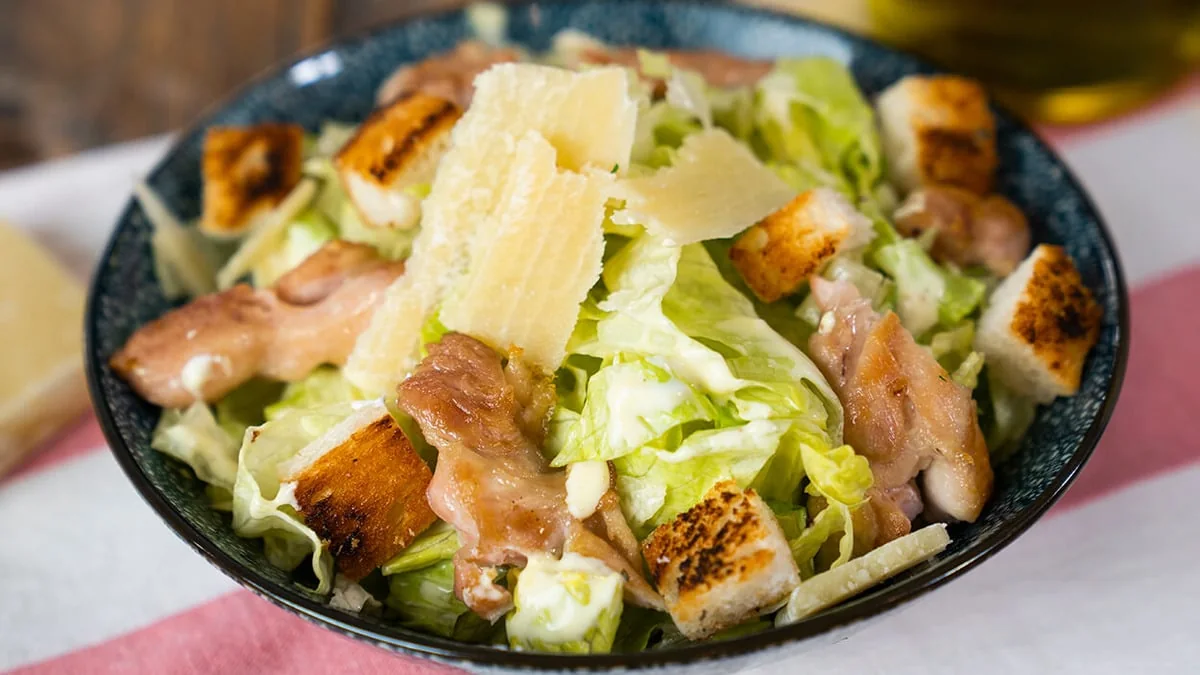
That is why two salads with the same vegetables and chicken can differ by a hundred calories or more. In our meal catalog, a chicken Caesar salad comes to 480 kcal with 28 g of fat, while a chicken salad dressed with olive oil and lemon is 380 kcal with 20 g of fat. Protein is almost identical (38 g and 36 g); the croutons, parmesan and creamy dressing make most of the difference. These are our per-serving estimates, and real values depend on recipe and portion.
How many calories are in common sauces?
The table uses USDA FoodData Central values per 100 g, converted to a typical tablespoon. Spoon weights differ slightly because some sauces are denser than others.
| Sauce (1 tablespoon) | Weight | kcal | Main thing to watch |
|---|---|---|---|
| Olive oil | 13.5 g | about 119 | Fat (calories) |
| Mayonnaise, regular | 14 g | about 95 | Fat (calories) |
| Tahini | 15 g | about 89 | Fat (calories) |
| Honey | 21 g | about 64 | Sugar |
| Ketchup | 17 g | about 17 | Sugar and salt |
| Balsamic vinegar | 16 g | about 14 | Little |
| Plain whole-milk yogurt | 15 g | about 9 | Little |
| Yellow mustard | 15 g | about 9 | Salt |
| Soy sauce | 16 g | about 8 | Salt |
The pattern is clear. Anything built on oil, egg yolk and oil (mayonnaise) or ground seeds (tahini) sits near 90–120 kcal per tablespoon. Most creamy bottled dressings, such as Caesar or ranch, are also made mainly from oil, so they tend to land much closer to mayonnaise than to vinegar; the label tells you exactly. Sauces based on vinegar, tomatoes, mustard or yogurt stay below about 20 kcal per spoon.
What about salt and sugar in low-calorie sauces?
Low in calories does not always mean low in everything else. Soy sauce has around 5,500 mg of sodium per 100 g in USDA data, so a single tablespoon delivers roughly 880 mg. The World Health Organization recommends less than 5 g of salt a day for adults, which is about 2,000 mg of sodium, so one generous spoon of soy sauce covers close to half of that. Reduced-salt versions, a smaller dipping dish and fresh ginger, garlic, chilli or lime for flavour all help. Our guide to salt and sodium limits covers other hidden sources.
Ketchup is the sugar example. In USDA data it has about 21 g of sugar per 100 g, so a tablespoon carries around 3.6 g and three tablespoons with fries come to roughly 11 g. The WHO advises keeping free sugars below 10 % of energy intake, which is 50 g on a 2,000 kcal day. Sweet glazes and dips such as teriyaki, sweet chilli, barbecue sauce and honey mustard follow the same idea, and our article on sugar and its hidden sources has more examples.
How do sauces change real meals?
A few dishes from our meal catalog show how sauce fits into a complete plate. Each estimate already includes the sauce listed in the recipe.
- Teriyaki chicken with rice (520 kcal): the recipe uses 2 tablespoons of teriyaki sauce. Doubling the glaze adds more sugar and salt than calories.
- Chicken döner wrap (560 kcal): includes 2 tablespoons of yogurt sauce. A garlic mayonnaise in the same amount would add noticeably more fat.
- Club sandwich (560 kcal): mayonnaise is spread between three slices of toast; every extra tablespoon adds about 95 kcal.
- Greek salad (290 kcal): olive oil and feta supply most of its 23 g of fat, so the pour of oil sets the final number.
Restaurant and takeaway portions are where sauces are hardest to judge. A ladle of dressing or a small pot of dip often holds two to four tablespoons. With an oil-based dressing, that is roughly 200–450 kcal on its own. Asking for sauce on the side lets you decide how much goes on.
How can you keep the flavour and cut the calories?
- Measure the oil. One tablespoon of olive oil (about 120 kcal) whisked with lemon juice or vinegar dresses a large salad. Our comparison of cooking oils shows that all oils are similar in calories, so the amount matters more than the type.
- Change the ratio. A classic vinaigrette uses about three parts oil to one part vinegar. Equal parts oil and vinegar, or a spoon of mustard to help it emulsify, gives a lighter dressing with the same tang.
- Use yogurt as a base. Plain yogurt with garlic, herbs, lemon and a teaspoon of olive oil makes a creamy sauce at a fraction of the energy of mayonnaise. Tzatziki and cacık work this way.
- Thin rich sauces. Mix tahini or peanut butter with water and lemon juice so one spoon goes further.
- Dip, do not pour. Keep the dressing on the side and dip your fork before each bite.
- Lean on free flavours. Herbs, spices, chilli, citrus zest, garlic and vinegar add a lot of taste for almost no energy.
None of this means sauces are something to avoid. Olive oil and tahini bring unsaturated fats, and a good sauce is often what makes vegetables enjoyable. The aim is simply to know what a spoon adds, so it does not surprise you. If you are reducing calories, keep in mind that intakes below about 1,200 kcal a day for women or 1,500 kcal for men should only happen under medical supervision, and anyone with high blood pressure, kidney disease or another medical condition should ask a doctor or registered dietitian about salt.
How do you log sauces accurately?
Sauces are the part of a meal most often forgotten when tracking. Log them separately and by the spoon rather than as part of a vague "salad". For a packaged sauce, the per 100 g values on the label let you work out a portion; for a homemade dressing, add up the oil, since it carries almost all of the energy. In Sporty you can note "2 tbsp mayo" when you log a photo, or add the dressing by voice or text so it is counted along with the rest of the plate.
Frequently asked questions
Which salad dressing has the fewest calories?
Dressings based on vinegar, lemon juice, mustard or plain yogurt are the lightest, usually well under 20 kcal per tablespoon before oil is added. Oil-based and creamy dressings are much higher because they are mostly fat.
How many calories are in a tablespoon of mayonnaise?
Regular mayonnaise has about 680 kcal per 100 g in USDA FoodData Central, so a 14 g tablespoon is about 95 kcal. Light versions vary, so check the label.
Is soy sauce high in calories?
No, a tablespoon has only about 8 kcal. It is very high in salt, though, with roughly 880 mg of sodium per tablespoon, close to half of the WHO daily limit.
Do I need to count sauces when tracking calories?
Yes, especially oil-based ones. A ladle of dressing can hold several tablespoons and add a few hundred kilocalories, more than some of the other foods on the plate.
Was this article helpful?
No ratings yet — be the first.
Tap a star to rate it — your rating helps us improve and helps other readers.
Sources
This article is general information, not medical advice. If you have a health condition, are pregnant or under 18, talk to a doctor or registered dietitian before changing your diet.