

The glycemic index (GI) ranks carbohydrate foods by how quickly they raise blood sugar compared with glucose, on a 100-point scale. For weight it matters less than people think: a 2023 Cochrane review of 10 trials with 1,210 people found low-GI diets probably make little to no difference to weight. Total calories, fibre and protein matter more.
Key takeaways
- GI compares how fast a food's carbohydrate raises blood sugar against glucose; 55 or below counts as low.
- Dairy, legumes, pasta and most fruits are usually low GI; most potatoes are high GI.
- A 2023 Cochrane review found low-GI diets probably make little to no difference to body weight.
- GI says nothing about calories or portion size, so a low-GI food can still be very energy dense.
- For weight, total calories, fibre-rich carbs and enough protein are the more useful levers.
What is the glycemic index?
The glycemic index (GI) is a way of ranking carbohydrate-containing foods by how quickly they raise blood sugar after you eat them. Researchers give volunteers a portion of a food that provides a fixed amount of available carbohydrate, measure their blood sugar over the next two hours, and compare the result with the same amount of pure glucose. Glucose is set at 100, so every other food gets a score relative to it.
The international GI tables published in 2021 list more than 4,000 food items. In that review, foods scoring 55 or below on the 100-point glucose scale are described as low GI. Foods well above that are digested and absorbed faster and give a quicker, higher rise in blood sugar.
Which foods are low GI and which are high?
The 2021 tables found some clear patterns that held up around the world:
- Usually low GI: dairy products, legumes (lentils, chickpeas, beans), pasta and most fruits.
- Usually high GI: most potato varieties, although some specific low-GI varieties have now been identified.
- It depends: breads, breakfast cereals, rice and savoury snacks come in high-, medium- and low-GI versions. Even whole-grain products varied widely, most likely because of how they were processed.
That last point surprises many people. "Whole grain" on a label does not guarantee a low GI, and two loaves of bread that look similar can behave very differently. GI is a lab measurement of one food, eaten alone, under standard conditions.
What is glycemic load, and why is it more realistic?
GI only describes the speed of the carbohydrate, not the amount on your plate. Glycemic load (GL) adds portion size: it multiplies a food's GI by the grams of carbohydrate in a serving and divides by 100. A food with a fairly high GI but little carbohydrate per serving ends up with a low glycemic load, while a large plate of a medium-GI food can have a high one.
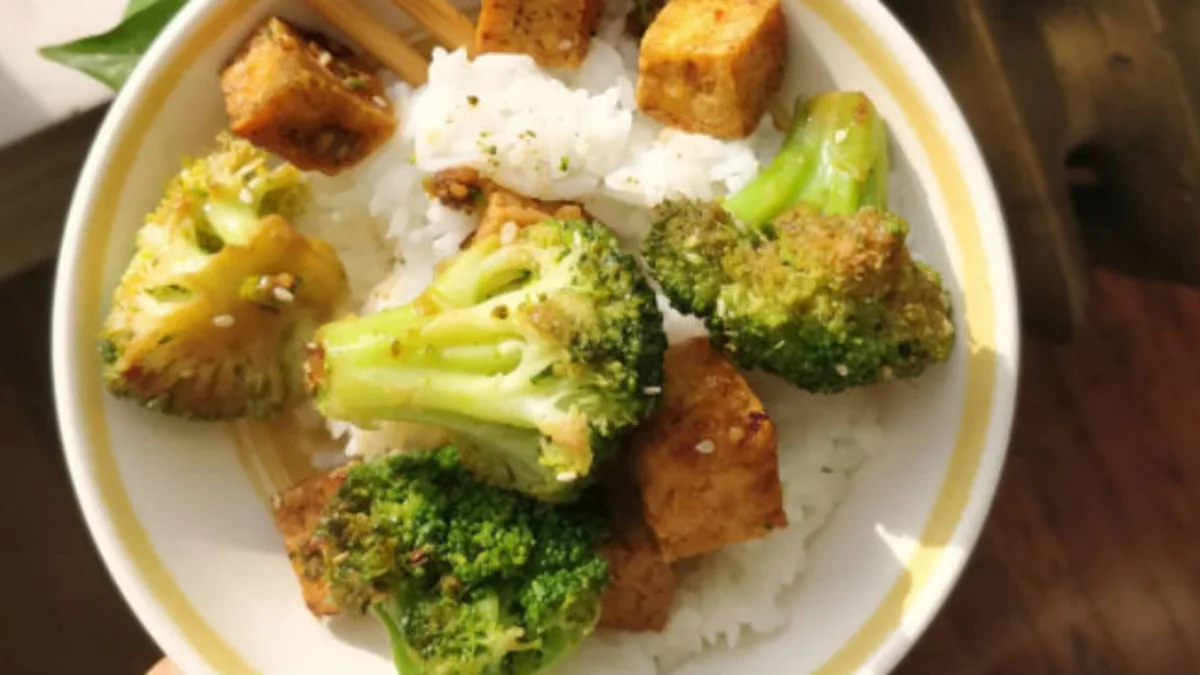
Even GL has limits. You rarely eat a carbohydrate on its own. Protein, fat, fibre and acid in the same meal slow digestion, and cooking time, ripeness and processing all shift the response. A bowl of red lentil soup with bread, or rice served with tofu and broccoli, is not the same as either food eaten alone in a lab.
Does a low-GI diet help you lose weight?
The idea sounds logical: slower carbs, steadier blood sugar, less hunger, less eating. But when it has been tested in controlled trials, the effect on weight is small or absent.
A Cochrane systematic review published in 2023 pooled 10 randomised controlled trials with 1,210 adults with overweight or obesity. It compared low-GI or low-GL diets with higher-GI diets and with other weight-loss diets. The reviewers concluded that low-GI/GL diets probably result in little to no difference in weight, and rated the certainty of the evidence as moderate to very low because the trials were small and had risks of bias.
A large series of systematic reviews in The Lancet (Reynolds et al., 2019), covering 185 prospective studies and 58 clinical trials, pointed in the same direction for wider health. Higher intakes of dietary fibre and whole grains were linked to lower body weight in trials and to lower risk of heart disease, type 2 diabetes and colorectal cancer in observational studies. Low-GI diets showed smaller or no risk reductions, and the certainty for GI was graded low to very low. Benefits were greatest at about 25–29 g of fibre a day.
Why can GI mislead you about calories?
GI tells you nothing about energy. Fat and protein have no meaningful GI because they contain almost no carbohydrate, so foods rich in fat can score low even when they are very energy dense. Fat has 9 kcal per gram, compared with 4 kcal per gram for carbohydrate and protein.
Compare two meals from the Sporty catalog (per-serving estimates; real values depend on recipe and portion):
| Dish | Calories | Protein | Carbs | Fat |
|---|---|---|---|---|
| Red lentil soup | 250 kcal | 13 g | 38 g | 6 g |
| Chickpea stew | 360 kcal | 16 g | 52 g | 10 g |
| Bulgur pilaf | 290 kcal | 8 g | 50 g | 7 g |
| Tofu and broccoli rice | 460 kcal | 22 g | 60 g | 15 g |
| Eggs with sucuk | 450 kcal | 24 g | 3 g | 38 g |
| Kumpir stuffed potato | 620 kcal | 18 g | 76 g | 28 g |
Eggs with sucuk have almost no carbohydrate, so their glycemic effect is tiny, yet they carry nearly twice the calories of a bowl of red lentil soup. The kumpir is built on a potato, a typically high-GI food, but a good share of its 620 kcal comes from the butter, kaşar cheese and toppings, which the GI does not capture. Legume dishes such as lentil soup and chickpea stew are low GI and moderate in calories with useful protein and fibre, which is why they are a good fit for weight loss. The GI is a side benefit, not the reason.
So when does GI matter?
GI is still a meaningful idea in some situations:
- Diabetes and blood sugar management. People managing diabetes may use GI or GL alongside carbohydrate amount, ideally with guidance from their doctor or a registered dietitian.
- Choosing between similar foods. If you are deciding between two breads or two breakfast cereals with similar calories, the one with more fibre and less processing is usually the better daily choice, and it often has the lower GI too.
- Before long exercise. Some athletes think about how quickly carbohydrate is absorbed around training. For most people working out for an hour, total intake matters more than timing.
For weight, though, GI works best as a tie-breaker, not as the main rule.
What matters more than GI for weight?
- Total calories over time. Weight change follows energy balance. A calorie deficit is what drives fat loss, whatever the GI of your meals.
- Fibre. Vegetables, legumes, whole grains and fruit add volume and fibre, which help with fullness and long-term health. See how much fibre you need.
- Protein at each meal. Protein is filling and helps preserve muscle in a deficit.
- Carbohydrate quality, not avoidance. The WHO recommends keeping free sugars below 10% of daily energy and getting carbohydrate mainly from whole grains, vegetables, fruit and pulses. Our guide to good carbs and bad carbs covers this in more detail.
- Portions of energy-dense extras. Oil, butter, sauces and cheese often decide whether a meal is 400 or 700 kcal.
Logging what you eat for a couple of weeks shows these patterns quickly. Sporty estimates calories, protein, carbs and fat from a photo of your plate, so you can see which meals are actually heavy instead of guessing from a GI list.
The bottom line
The glycemic index is a real, well-studied measure of how fast carbohydrate reaches the bloodstream. It is useful for blood sugar management and as a hint about food processing. But on its own it is a weak guide to weight: it ignores calories and portion size, it changes with cooking and food combinations, and trials show little to no extra weight loss from low-GI diets. Build meals around fibre-rich carbohydrates, enough protein and a sensible portion of fat, and the GI tends to take care of itself.
This article is general information, not medical advice. If you have diabetes, kidney disease, are pregnant or are under 18, talk to a doctor or registered dietitian before changing how you eat.
Frequently asked questions
What is a low glycemic index?
In the 2021 international GI tables, foods scoring 55 or below on the 100-point glucose scale are classed as low GI. Dairy, legumes, pasta and most fruits usually fall in this range.
Does eating low-GI foods make you lose weight?
Not by itself. A 2023 Cochrane review of 10 trials found low-GI diets probably make little to no difference to weight. Weight loss depends mainly on eating fewer calories than you use.
Is glycemic load better than glycemic index?
It is more realistic because it accounts for how much carbohydrate a serving contains. But neither measure tells you the total calories of a meal.
Should people with diabetes use the glycemic index?
GI and GL can help with blood sugar management, together with the amount of carbohydrate. A doctor or registered dietitian can advise on how to use them.
Was this article helpful?
No ratings yet — be the first.
Tap a star to rate it — your rating helps us improve and helps other readers.
Sources
- Cochrane 2023, Low glycaemic index or low glycaemic load diets for overweight and obesity (10 RCTs, 1,210 participants)
- Atkinson et al. 2021, International tables of glycemic index and glycemic load values 2021: a systematic review (Am J Clin Nutr)
- Reynolds et al. 2019, Carbohydrate quality and human health: systematic reviews and meta-analyses (The Lancet)
- WHO, Healthy diet fact sheet
This article is general information, not medical advice. If you have a health condition, are pregnant or under 18, talk to a doctor or registered dietitian before changing your diet.