

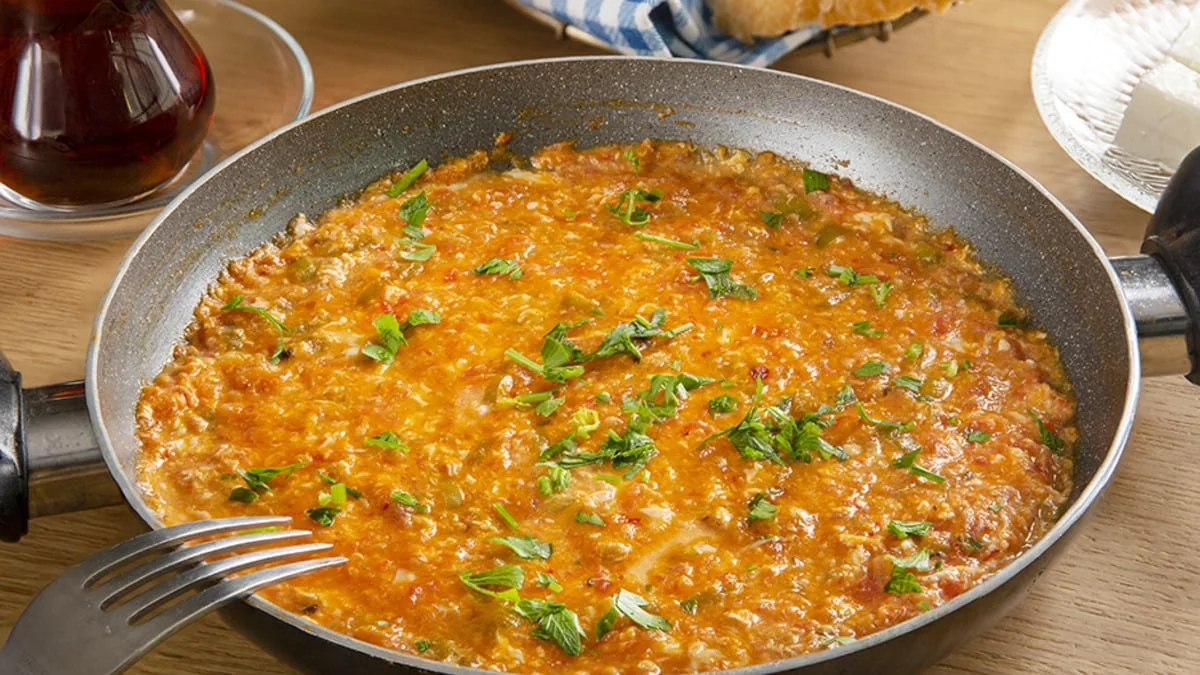
Egg dishes make fast, high-protein dinners: in Sporty's estimates most land between 300 and 460 kcal with 20–28 g of protein. A spinach omelette with shepherd's salad comes to about 460 kcal and 24 g of protein. Keep oil, butter, cheese and processed meat modest, and add vegetables or soup for a complete plate.
Key takeaways
- Most egg dishes give 20–28 g of protein for 300–460 kcal in Sporty's estimates.
- Fat, not the eggs, makes the difference: eggs with sucuk have 38 g of fat, a spinach omelette 21 g.
- Pair eggs with salad, soup or hummus and vegetables to turn them into a complete dinner.
- Use a teaspoon of oil, plenty of vegetables and cheese as a flavour rather than a filling.
- For runny yolks, follow your national egg safety advice, especially in pregnancy.
Why are eggs such a good dinner option?
Eggs are usually filed under breakfast, but they solve a classic weeknight problem: you are tired, the fridge looks empty and you want something warm, filling and high in protein in under 20 minutes. Eggs cook fast, are cheap almost everywhere, keep well and pair with whatever vegetables you have left. Many cuisines already treat them as dinner: Turkish menemen and çılbır, Spanish tortilla, Italian frittata, North African shakshuka, Korean bibimbap topped with a fried egg and the French omelette.
The challenge is not the eggs themselves but what surrounds them. Cheese, butter, processed meat and a lot of bread can turn a light egg dinner into a heavy one. The ideas below keep eggs at the centre and build a balanced plate around them. For the nutrition basics and the cholesterol question, see our guide to eggs and how many to eat.
How do popular egg dishes compare?
These are Sporty's per-serving estimates; real values depend on recipe and portion, especially the amount of oil, butter and cheese.
| Egg dish | kcal | Protein | Carbs | Fat |
|---|---|---|---|---|
| Spinach omelette | 300 | 21 g | 6 g | 21 g |
| Vegetable omelette | 320 | 22 g | 10 g | 21 g |
| Vegetable frittata | 340 | 22 g | 10 g | 23 g |
| Çılbır (poached eggs with garlic yogurt) | 380 | 20 g | 8 g | 30 g |
| Avocado toast with poached eggs | 410 | 22 g | 32 g | 20 g |
| Eggs with sucuk (Turkish sausage) | 450 | 24 g | 3 g | 38 g |
| Menemen with white cheese | 460 | 28 g | 24 g | 28 g |
| Bibimbap (with egg) | 560 | 28 g | 72 g | 18 g |
Most egg dishes land between 300 and 460 kcal with 20–28 g of protein, which makes them a solid base for dinner. The main difference is fat: eggs with sucuk carry 38 g, mostly from the sausage, while an omelette packed with vegetables stays near 21 g.
How do you turn eggs into a complete dinner?
An omelette on its own can feel light by evening. Adding a side brings fibre, volume and sometimes extra protein. Here are combinations built entirely from Sporty's catalog estimates:
| Dinner | kcal | Protein |
|---|---|---|
| Spinach omelette + shepherd's salad (tomato, cucumber, pepper, onion) | 460 | 24 g |
| Vegetable frittata + red lentil soup | 590 | 35 g |
| Vegetable omelette + hummus and raw vegetables | 580 | 33 g |
| Çılbır + shepherd's salad | 540 | 23 g |
| Menemen with white cheese, on its own with a little bread on the side | 460 + bread | 28 g + |
For comparison, our guide to high-protein dinner ideas lists meat, fish and plant-based dinners in the same calorie range.
Seven quick egg dinners
1. Loaded vegetable omelette
Two or three eggs with whatever vegetables need using up: peppers, onions, mushrooms, spinach, tomatoes, courgette. Cook the vegetables first in a teaspoon of oil, then pour the eggs over. Serve with a big salad.
2. Menemen or shakshuka
Eggs gently cooked in a pan of tomatoes, peppers and onions. Menemen scrambles them in; shakshuka poaches them on top with cumin and paprika. Both are one-pan dinners. Add white cheese or feta sparingly; according to the NHS, cheese with more than 17.5 g of fat per 100 g counts as high in fat.
3. Sheet-pan frittata
Whisk eggs with a splash of milk, pour over roasted vegetables in a tray and bake until set. One tray gives several portions, so it works for meal prep and for lunch the next day.
4. Çılbır with a big salad
Poached eggs on garlic yogurt with a drizzle of spiced butter or oil. Keep the drizzle small, because that is where most of the 30 g of fat comes from, and serve it with shepherd's salad instead of a lot of bread.
5. Egg-topped rice or grain bowl
Leftover rice or bulgur, quick-cooked vegetables, a fried or soft-boiled egg and a spoon of chilli sauce or soy sauce. This is the idea behind bibimbap, and it takes ten minutes with cooked grains.
6. Avocado and egg toast with salad
Wholegrain toast, a little smashed avocado and two poached eggs. It is closer to a light dinner than a heavy one, so a side salad or a bowl of soup rounds it out.
7. Egg and vegetable soup
Bring stock to a simmer with vegetables, then stir in beaten egg for silky ribbons, as in Chinese egg drop soup or Italian stracciatella. Serve with a slice of bread and a piece of cheese, or add a fried egg to a bowl of lentil soup.
How can you keep egg dinners lighter?
- Measure the fat. A non-stick pan and one teaspoon of oil is enough for most omelettes. Butter and oil, not the eggs, are what push calories up.
- Go big on vegetables. They add volume and fibre for very few calories, and they make two eggs feel like a full meal.
- Use cheese as a flavour, not a filling. A small amount of a strong cheese goes further than a handful of a mild one. The NHS suggests reduced-fat hard cheeses, which usually have 16–22 g of fat per 100 g.
- Treat processed meat as occasional. Sucuk, bacon and sausage add a lot of fat and salt; WHO recommends less than 5 g of salt a day.
- Choose the bread deliberately. A slice of wholegrain bread is a reasonable side; half a loaf to mop up the pan is a different meal.
Are runny eggs safe?
That depends on where you live and who is eating. In the UK, the NHS says hen eggs with the British Lion stamp or produced under the Laid in Britain scheme can be eaten raw or with a runny yolk, even in pregnancy, as long as they are within their use-by date. Other hen eggs, and duck, goose and quail eggs, should only be eaten well-cooked by pregnant women. Outside the UK, follow your national food safety advice; when in doubt, and for anyone pregnant, very young, older or with a weakened immune system, cook eggs until the white and yolk are firm.
How do you log an egg dinner?
Eggs are easy to log; the cooking fat and cheese are what people forget. In Sporty you can photograph the plate and then add "1 tsp olive oil, 30 g feta" before saving, or simply describe it by voice or text, for example "three-egg omelette with spinach and mushrooms, cooked in a teaspoon of butter, with a tomato salad". For more fast weeknight options, see our 15-minute healthy dinners.
Frequently asked questions
Is an omelette a good dinner for weight loss?
Yes. A vegetable omelette is about 320 kcal with 22 g of protein in Sporty's estimates. Add a large salad or a bowl of soup so it is filling enough for an evening meal.
How many eggs should I use for dinner?
Two or three eggs is a typical dinner portion. Whether that suits you depends on the rest of your day; our eggs guide covers how many eggs a day are reasonable.
Which egg dish is the lightest?
Among Sporty's estimates, a spinach omelette (300 kcal) and a vegetable omelette (320 kcal) are the lightest, while menemen with white cheese (460 kcal) and eggs with sucuk (450 kcal) are the heaviest.
Can I eat runny eggs when pregnant?
In the UK, the NHS says British Lion or Laid in Britain hen eggs can be eaten runny in pregnancy; other eggs should be well-cooked. Elsewhere, follow your national advice and ask your midwife or doctor.
Was this article helpful?
No ratings yet — be the first.
Tap a star to rate it — your rating helps us improve and helps other readers.
Sources
This article is general information, not medical advice. If you have a health condition, are pregnant or under 18, talk to a doctor or registered dietitian before changing your diet.