
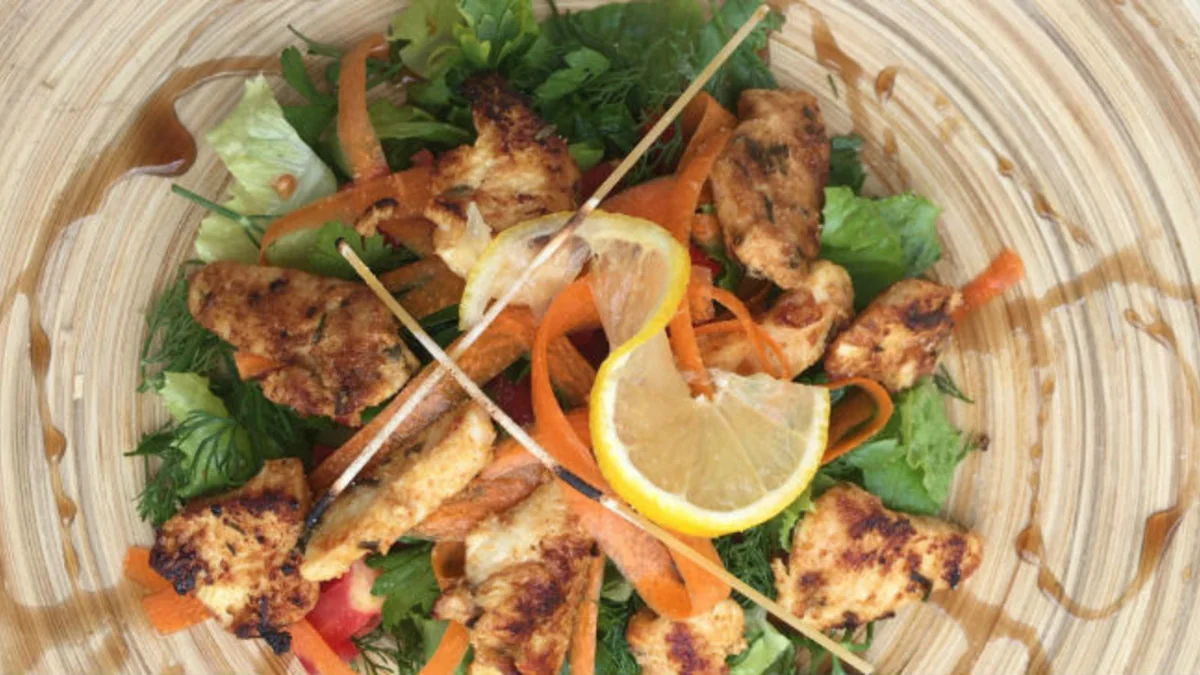
Voice and text logging turns your description of a meal into a calorie and macro estimate, so the more specific you are, the better the result. Say what you ate, how much, how it was cooked and what was added, especially oil, sauces and drinks, then check the result before saving.
Key takeaways
- The model cannot see your plate, so the quality of the estimate depends on your description.
- A good description covers what, how much, how it was cooked and what was added.
- Counts, cups, spoons and hand sizes all work when you have no scale.
- Cooking oil, sauces, drinks and toppings are the details most often forgotten.
- Check that every item and amount was understood before you save the meal.
How does voice and text meal logging work?
When you describe a meal in words, by typing it or saying it out loud, an AI model does a job similar to photo logging, just from language instead of pixels. It picks out the foods you mention, works out the amounts from the words you use ("two eggs", "a big bowl", "150 g") or from typical serving sizes when you give none, and then converts those amounts into calories, protein, carbs and fat using nutrition reference data, the same kind of per-100 g values found in databases such as USDA FoodData Central.
The result is an estimate, and its quality depends almost entirely on what you say. The model cannot see your plate. If you say "salad", it has to guess which salad, how big and with how much dressing. If you say "chicken salad with 150 g grilled chicken, half an avocado and a tablespoon of olive oil", there is very little left to guess. This guide is about closing that gap.
When is voice or text better than a photo?
Each logging method has its strengths, as our guide to AI photo calorie counting explains. Describing a meal in words is often the better choice when:
- You have already eaten. The plate is empty, but you remember what was on it.
- A photo is awkward. A business lunch, a dark restaurant, a snack eaten while walking.
- The important parts are invisible. Oil in the pan, sugar in the coffee, butter melted into rice. You know they are there; a camera does not.
- You know the exact amounts. If you weighed or measured the food, saying "80 g dry oats" is more precise than any visual guess.
Voice is fastest when your hands are busy or you want to log several items at once. Text is handy in quiet places and makes it easy to add exact numbers from a package.
What makes a good meal description?
A useful description answers four questions: what, how much, how it was cooked and what was added. Compare these two descriptions of the same lunch:
| Vague | Specific | What the extra detail fixes |
|---|---|---|
| "Chicken salad" | "Chicken salad with about 150 g grilled chicken, mixed greens, tomatoes, cucumber, half an avocado and 1 tbsp olive oil with lemon" | Portion of chicken, the avocado and the oil, the three biggest calorie sources |
| "Pasta" | "A large plate of spaghetti bolognese, roughly two cups of cooked pasta, with grated parmesan" | Portion size and the cheese on top |
| "Coffee and a sandwich" | "Latte with semi-skimmed milk, no sugar, and a chicken wrap with yogurt sauce" | Milk type, sugar and the filling |
| "Burrito" | "Beef burrito with rice, black beans, cheese and salsa, no sour cream, I ate all of it" | Fillings, what was left out and how much was eaten |
For a sense of scale, the specific chicken salad above matches a dish in Sporty's per-serving catalog estimates at about 380 kcal, 36 g protein and 20 g fat; a beef burrito is about 650 kcal. Real values depend on recipe and portion, which is exactly why the details matter.
How do you describe portions without a scale?
You do not need to weigh anything to give a useful amount. Any of these is better than nothing:
- Counts: two eggs, three slices of bread, one banana, six pieces of sushi.
- Household measures: one cup of rice, two tablespoons of hummus, a teaspoon of honey.
- Hand sizes: a palm-sized piece of chicken, a fist of pasta, a thumb of butter. Our guide to portion sizes without a scale shows what each one roughly equals.
- Relative words: "small", "regular", "large" or "half the plate" still help the model choose a sensible portion.
- Package amounts: for packaged food, read the weight or serving from the label, as explained in how to read a nutrition label.
Also say how much you actually ate. "Half of a large pizza" and "two slices left over" change the result as much as the recipe does.
Which details do people most often forget?
The same few items go missing in most food logs, and they are usually calorie-dense:
- Cooking fat. Fat provides 9 kcal per gram, and one tablespoon of olive oil adds roughly 120 kcal (USDA FoodData Central). "Fried in oil" or "with a knob of butter" is worth saying every time.
- Sauces and dressings. Mayonnaise, creamy dressings, tahini, pesto and cheese sauces. Say whether there was a drizzle or a lot.
- Drinks. Juice, soft drinks, alcohol, milky coffee. They are easy to forget because they are not "food".
- Extras on the side. Bread before the meal, a handful of nuts, a biscuit with tea.
- Toppings. Cheese, croutons, seeds, honey, sugar in tea or coffee.
A worked example: you log "grilled chicken with rice and salad" but forget the tablespoon of olive oil on the salad. That is about 120 kcal missing from one meal, or roughly 840 kcal over a week of similar lunches. A five-word addition to your description fixes it.
How should you describe mixed dishes and restaurant meals?
For dishes with many ingredients, such as stews, curries, lasagna or paella, start with the name of the dish, because it brings a typical recipe with it, then add what you know is different: "chicken tikka masala with rice, a large portion, extra creamy sauce" or "homemade lasagna, one large square, made with lean mince". For restaurant meals, mention the restaurant style and the parts of the meal: "Mexican restaurant, chicken fajitas with two tortillas, guacamole and cheese".
If you are unsure, it is fine to estimate. A best guess logged today is more useful than a perfect entry you never make.
How do you check the result before saving?
Whatever method you use, treat the result as a first draft:
- Did it understand every item? Look for anything missing or misheard, especially with voice. "Feta" heard as "pita" is a different food.
- Do the amounts look right? If you said "large" and the portion looks small, correct it.
- Does the total feel plausible? A heavy restaurant dinner logged at 300 kcal or a small snack at 900 kcal is a sign to look again.
Small random errors tend to even out over weeks. The ones that matter are systematic, such as always leaving out cooking oil or drinks. If your logged intake and your weight trend disagree for several weeks, review your most frequent meals first. The CDC suggests keeping a food and beverage diary for a few days as a starting point for understanding your habits, and voice or text makes that diary quick to keep.
A quick template for describing any meal
When in doubt, follow this order: dish or foods, amount, cooking method, added fats and sauces, drinks, how much you ate. For example: "Two scrambled eggs cooked in a teaspoon of butter, one slice of wholegrain toast, half an avocado, black coffee, ate everything." In Sporty, you can log a meal this way by voice or text, and it shows calories and macros alongside the rest of your day. If you are pregnant, have a medical condition, are under 18 or have a history of disordered eating, talk to a doctor or registered dietitian before tracking food closely.
Frequently asked questions
Is voice logging as accurate as a photo?
It depends on the meal and on your description. Words can capture things a camera misses, such as cooking oil or exact amounts, while a photo shows portion size without you having to describe it.
What should I say when logging a meal by voice?
Name the dish or foods, the amount, how it was cooked, any added fats, sauces or drinks, and how much you actually ate. For example: two scrambled eggs in a teaspoon of butter with one slice of toast.
Do I need to weigh my food for text logging?
No. Counts, household measures such as cups and tablespoons, or hand sizes give the model a useful amount. Weighing helps most for calorie-dense foods like oils, nuts and cheese.
What if I forgot to log a meal earlier?
Describe it as soon as you remember, with your best guess of the amounts. An approximate entry is more useful than a missing one.
Sources
This article is general information, not medical advice. If you have a health condition, are pregnant or under 18, talk to a doctor or registered dietitian before changing your diet.