

Baklava has about 440 kcal per 100 g in USDA FoodData Central, so a 30 g piece is roughly 130 kcal. Rice pudding like sütlaç is about 108 kcal per 100 g, or around 160 kcal for a 150 g bowl. Künefe combines pastry, butter, cheese and syrup, so treat it as one of the richest choices and share it.
Key takeaways
- Baklava: about 440 kcal, 29 g fat and 13 g sugars per 100 g (USDA). Around 60% of its energy comes from fat.
- Rice pudding (sütlaç-style): about 108 kcal per 100 g, so gram for gram baklava has roughly four times the energy.
- Künefe has no reliable standard database entry; it combines shredded pastry, butter, cheese and syrup, so share a portion.
- Milk puddings give a larger, more filling portion for the same calories than syrup pastries.
- Plan a dessert into your day instead of compensating afterwards; one sweet does not undo a week.
Why are Turkish desserts so calorie-dense?
Most classic Turkish desserts fall into two families: syrup-soaked pastries such as baklava, künefe and revani, and milk puddings such as sütlaç, kazandibi and muhallebi. The first family is built from thin pastry or shredded dough, a lot of butter, nuts and a sugar syrup, which packs a lot of energy into a small piece. The second family is mostly milk, rice or starch and sugar, which gives a bigger, softer portion for fewer calories.
Neither is a "bad" food. Desserts are part of celebrations, bayram visits, family tables and café culture well beyond Turkey, from Greek galaktoboureko to Middle Eastern knafeh. The goal of this guide is simply to show the numbers so you can choose a portion that fits your day.
How many calories are in baklava?
USDA FoodData Central lists baklava at about 440 kcal per 100 g, with 6.6 g protein, 29.3 g fat, 37.6 g carbohydrate and 12.8 g sugars. Fat has 9 kcal per gram, so fat alone supplies about 264 kcal, or roughly 60% of the energy. Recipes vary a lot: pistachio baklava from a Turkish pastry shop is often more heavily syruped than the recipe in the database, so treat these figures as a reasonable middle estimate.
Piece sizes differ between bakeries, so weight is the most honest way to compare:
| Baklava portion | Calories | Fat | Sugars |
|---|---|---|---|
| 1 small piece (about 30 g) | about 130 kcal | about 9 g | about 4 g |
| 2 pieces (about 60 g) | about 265 kcal | about 18 g | about 8 g |
| 4 pieces (about 120 g) | about 530 kcal | about 35 g | about 15 g |
| 100 g | about 440 kcal | 29.3 g | 12.8 g |
A four-piece plate, a common café serving, has about as many calories as a full main meal. Two pieces with tea is a very different choice from four with ice cream on the side.
How many calories are in künefe?
Künefe is shredded kadayıf dough layered with a soft, unsalted cheese, baked in butter, soaked in syrup and often topped with pistachios. There is no reliable standard entry for künefe in the main food composition databases, and restaurant portions vary widely, so we will not quote a single figure. What we can say from its ingredients is that it combines the high-fat pastry and syrup of baklava with a layer of melted cheese, served warm in one generous portion. It is best treated as one of the richest desserts on the menu.
A practical approach is to share one künefe between two or three people, skip any extra ice cream or cream on top, and log it as a large dessert. If you photograph it, you can compare the logged estimate with how much you actually ate.
How many calories are in sütlaç?
Sütlaç is Turkish rice pudding, often baked until the top browns (fırın sütlaç). USDA lists rice pudding at about 108 kcal per 100 g, with 3.2 g protein, 2.2 g fat, 18.4 g carbohydrate and 11.6 g sugars. Part of the sugar comes naturally from milk, the rest is added.
| Rice pudding portion | Calories | Protein | Sugars |
|---|---|---|---|
| Small bowl (about 150 g) | about 160 kcal | about 5 g | about 17 g |
| Large bowl (about 200 g) | about 215 kcal | about 6.5 g | about 23 g |
Gram for gram, baklava has about four times the energy of rice pudding: 100 g of baklava has roughly the same calories as 400 g of rice pudding. That is why milk puddings tend to feel like a more satisfying dessert for the calories, especially when you want a full bowl rather than a bite.
How do other desserts compare?
For context, here are two desserts from Sporty's catalog. These are per-serving estimates; real values depend on the recipe and portion.
| Dessert | Calories | Protein | Carbs | Fat |
|---|---|---|---|---|
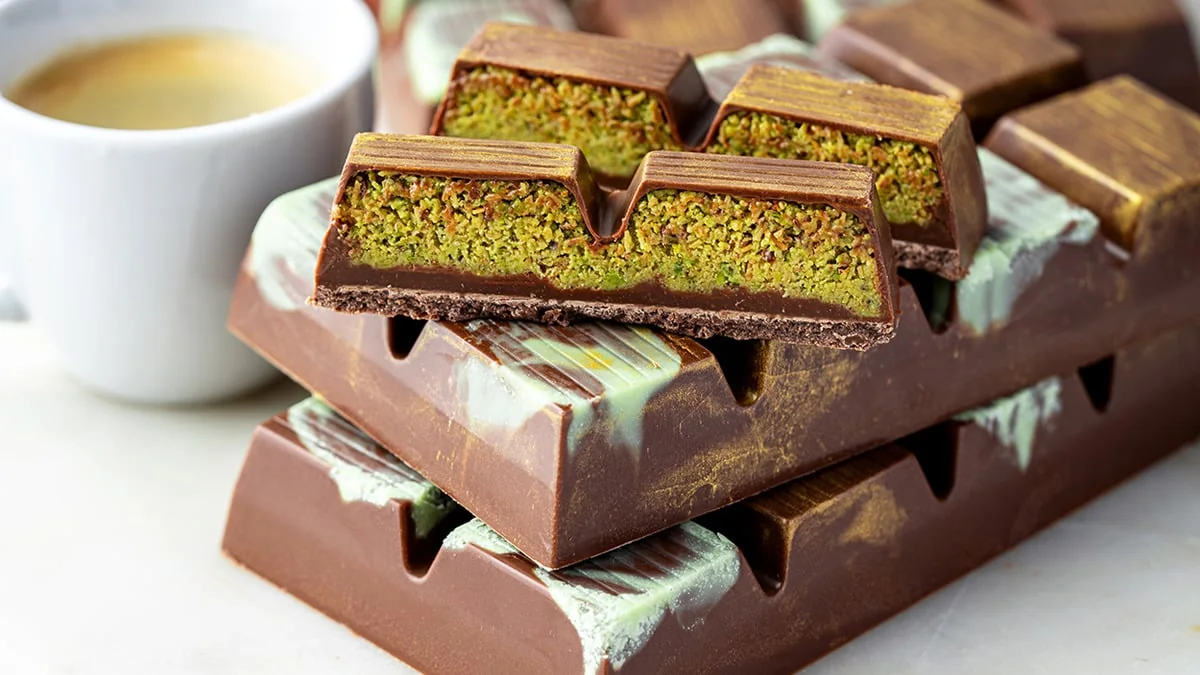
| Dubai chocolate (with kadayıf and pistachio) | 260 kcal | 5 g | 24 g | 16 g |
| Tiramisu | 380 kcal | 9 g | 33 g | 24 g |
| Baklava, 2 pieces (USDA, about 60 g) | about 265 kcal | about 4 g | about 23 g | about 18 g |
| Rice pudding, 150 g (USDA) | about 160 kcal | about 5 g | about 28 g | about 3 g |
Desserts built on pastry, butter, cream or chocolate tend to sit high in fat, while milk puddings are mostly carbohydrate with a little protein.
The same logic works for desserts not listed here. Kazandibi, muhallebi and keşkül belong to the milk-pudding family; revani, şekerpare and tulumba belong to the syrup family, and tulumba is also deep-fried. Aşure contains pulses, grains and dried fruit, so it has more fibre, but it is still sweet. Lokum (Turkish delight) looks harmless because each piece is small, yet several in a row add up quickly.
How much sugar is too much?
The WHO advises keeping free sugars below 10% of daily energy, which is about 50 g on a 2,000 kcal day, and suggests that going below 5% may bring extra benefit. The NHS sets a practical maximum of 30 g of free sugars a day for adults. A large bowl of rice pudding with about 23 g of total sugars, or a generous plate of syrupy pastry, can use most of that allowance in one sitting. More on hidden sugars is in the guide to sugar limits and sources.
How to enjoy Turkish desserts while losing weight
- Plan it in. If you know there will be baklava at a bayram visit, keep lunch lighter rather than skipping the dessert or "making up for it" the next day.
- Choose the portion first. Decide on one or two pieces before the tray arrives.
- Pick the pudding when you want volume. A bowl of sütlaç or muhallebi gives a bigger serving for fewer calories than syrup pastries.
- Share the rich ones. Künefe and large baklava plates are easy to split.
- Skip the extras. Kaymak, clotted cream or ice cream on top add a lot of fat.
- Drink tea without sugar. The dessert is sweet enough.
For more ideas, see lighter desserts and swaps. Weight change follows your intake over weeks, not one dessert, and there is no need to cut food drastically afterwards; going below about 1,200 kcal a day for women or 1,500 kcal for men should only happen under medical supervision. If you have diabetes, talk to your doctor or dietitian about how desserts fit your plan.
This article is general information, not medical advice.
Frequently asked questions
How many calories are in one piece of baklava?
USDA lists baklava at about 440 kcal per 100 g, so a small 30 g piece has roughly 130 kcal. Larger or more syrupy pieces have more.
Is sütlaç lower in calories than baklava?
Yes, per gram. Rice pudding has about 108 kcal per 100 g against about 440 kcal for baklava, so a 150 g bowl is around 160 kcal.
How many calories are in künefe?
There is no reliable standard database value, and portions vary. It combines pastry, butter, cheese and syrup, so treat it as one of the richest desserts and consider sharing.
Can I eat Turkish desserts while losing weight?
Yes. Choose the portion in advance, plan it into your day and keep the rest of your meals balanced. One dessert does not undo a week of steady habits.
Was this article helpful?
No ratings yet — be the first.
Tap a star to rate it — your rating helps us improve and helps other readers.
Sources
This article is general information, not medical advice. If you have a health condition, are pregnant or under 18, talk to a doctor or registered dietitian before changing your diet.